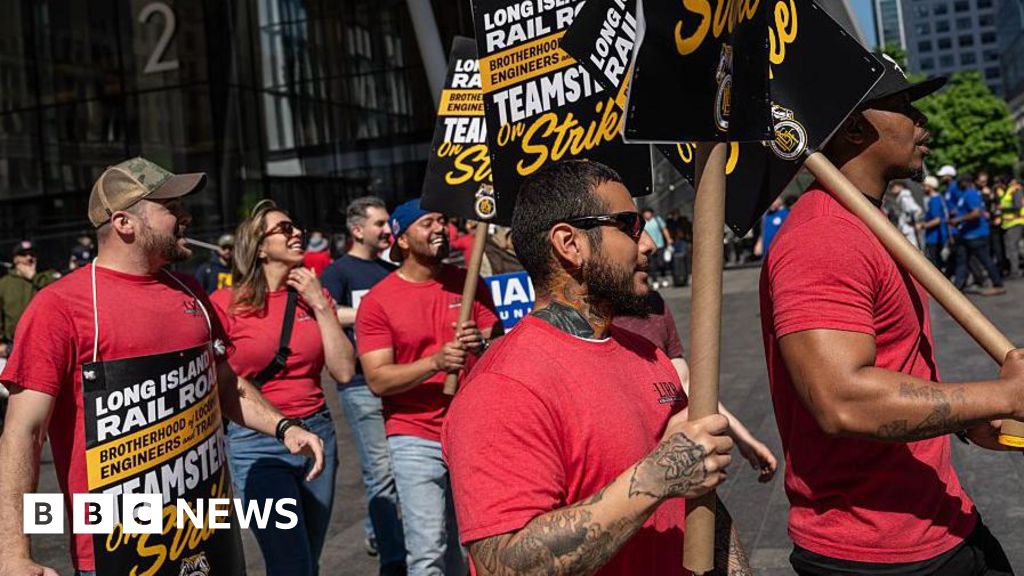
The Long Island Rail Road strike entered its second day, disrupting travel for around 3,500 workers and threatening major delays for hundreds of thousands of commuters ahead of Monday’s rush. The MTA says there is no substitute for the railroad and has warned of severe congestion, while limited shuttle services are being offered. The shutdown is already affecting regional travel and events, with the dispute centered on pay and work rules after three years without raises.
The immediate market read-through is not the rail operator itself, but the cluster of businesses that monetize friction in commuting. Short-horizon beneficiaries are ride-hailing, parking, and nearby food/service spend, while losers are any discretionary demand anchored to predictable weekday footfall in Long Island/Queens/Manhattan. The more important second-order effect is that this kind of disruption tends to pull forward employer policy changes: even a 48-72 hour commute shock can accelerate hybrid-work adoption for firms that were already softening on office attendance, which is structurally negative for transit-dependent retail corridors and positive for suburban services.
For MTA, the key issue is less this strike in isolation than the precedent it sets on labor cost inflation and political constraints. The agency is boxed in by a budget ceiling on one side and voter tolerance on the other, so any settlement that looks generous will likely raise the expected wage path across other public transport systems. That matters because even if service resumes quickly, the damage to reliability perception lingers for months and can widen a willingness-to-pay gap: riders shift incremental trips to cars, rideshare, and remote meetings, reducing elasticity back toward rail utilization after the strike ends.
The contrarian view is that the market may overestimate the duration while underestimating the reputational reset. A fast deal would likely produce a sharp snapback in commuter volume, but not a full recovery in confidence; after a visible labor stoppage, institutions typically build in a higher probability of future disruption and diversify commuting patterns. That makes the trade asymmetric: the next few sessions are about congestion and inconvenience, but the next few quarters are about a slow leakage of demand from rail to alternative mobility and a harder negotiating stance in other municipal labor actions.
AI-powered research, real-time alerts, and portfolio analytics for institutional investors.
Request DemoOverall Sentiment
strongly negative
Sentiment Score
-0.55
Ticker Sentiment
