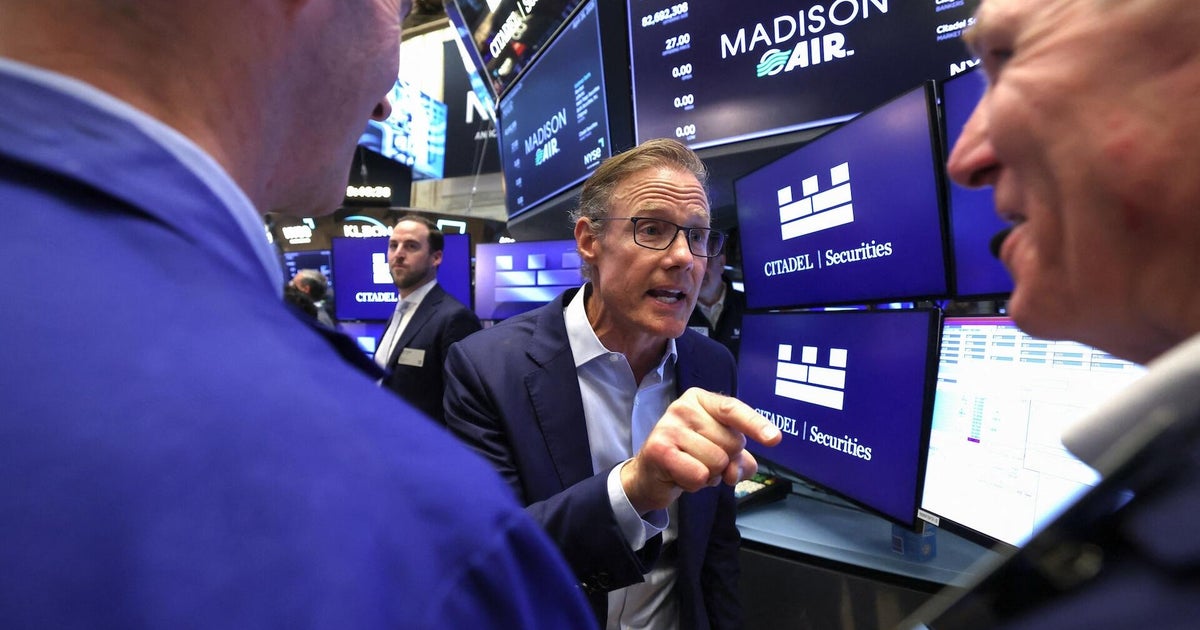
U.S. stocks rose on Tuesday despite renewed fighting in Iran, with the S&P 500 up 48 points, or 0.7%, to 7,522, the Dow up 0.2%, and the Nasdaq up 1%. Benchmark U.S. crude fell $3.67 to $92.97 a barrel even as Brent rose $3.03 to $96.45, reflecting investor optimism that a U.S.-Iran deal could reopen the Strait of Hormuz and ease energy pressure. Gasoline prices have already eased to $4.49 a gallon from $4.53 a week earlier, helping support risk sentiment despite ongoing geopolitical uncertainty.
The market is pricing a tactical de-escalation, but the bigger signal is that equities are now treating a geopolitical risk premium as temporarily financeable rather than structurally damaging. That usually favors the most rate-sensitive and duration-heavy parts of the tape first: software, semis, and long-duration growth can continue to outperform if oil keeps backing off, because the inflation impulse is the real transmission channel into discount rates and margins. The second-order effect is that consumer-discretionary and transport stocks get a double benefit from lower fuel costs and less fear of demand destruction, while industrials remain the laggards if shipping lanes normalize only gradually.
The setup is fragile because the market is leaning on a binary narrative: open Strait, lower oil, lower inflation, risk-on. If negotiations stall, the downside reaction will likely be sharper than the upside because positioning has already migrated toward a benign outcome; that argues for skewing exposure toward structures that benefit from a fade in volatility rather than outright directional risk. A renewed spike in oil would hit not just energy-sensitive sectors but also the parts of the market most dependent on multiple expansion, which means the reverse trade is much broader than a simple crude beta short.
The more interesting contrarian view is that even a successful deal may not fully unwind energy prices quickly enough to restore pre-conflict inflation trends. Physical supply chains and tanker routing can normalize slower than headlines, and if inventories are still tight, gasoline relief could be shallower than the market expects. That creates a window where equities celebrate diplomacy, but macro data remains sticky for several prints — enough to keep the Fed hawkish and cap the upside in cyclicals.
The cleanest expression here is to own lower-input-cost beneficiaries while hedging the geopolitical headline risk. The path dependency is short in days, but the inflation implications are multi-month, so the trade should be designed to monetize a fast repricing without assuming a full normalization regime. If crude fails to extend lower over the next 1-2 weeks, this move likely becomes a crowded relief rally rather than a durable factor rotation.
AI-powered research, real-time alerts, and portfolio analytics for institutional investors.
Request DemoOverall Sentiment
mildly positive
Sentiment Score
0.15
