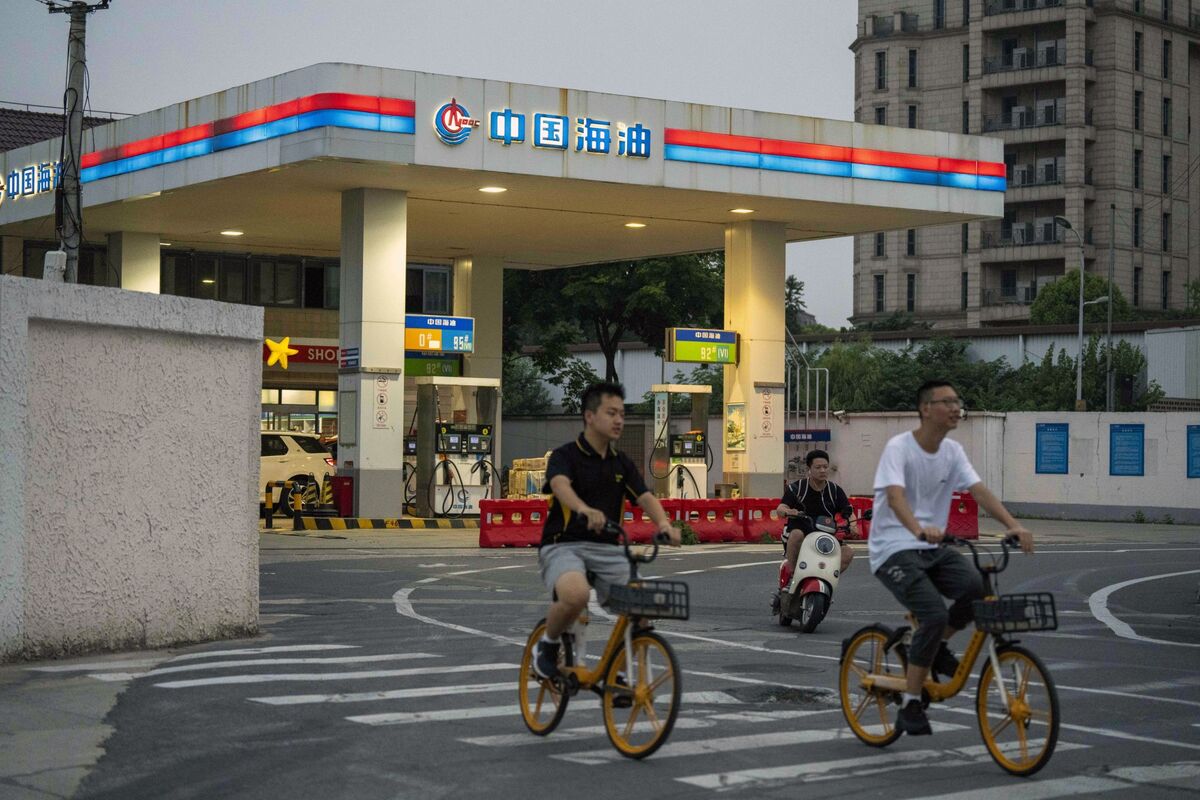
Cnooc reported first-quarter net income of 39.14 billion yuan, up from 36.6 billion yuan a year earlier, as higher crude prices tied to the Middle East war boosted results. The company benefited from stronger global oil markets, supporting offshore driller fundamentals. The print is positive for Cnooc and modestly supportive for the energy sector, though the article contains no guidance or other major catalyst.
This is less about one upstream producer and more about a near-term transfer of cash flow from consumers to producers across the entire integrated energy stack. The first-order winner is offshore E&Ps and national oil companies with high operating leverage to benchmark crude, but the second-order winner is the services segment: sustained pricing above marginal supply should improve utilization and dayrates with a lag of 1-2 quarters. The loser set is broader than airlines and refiners; any Asia-heavy industrials exposed to imported energy could see margin compression before end-demand rolls over.
The market is likely underestimating the duration risk: war premiums can fade quickly, but physical supply disruptions tend to embed in forward curves only after inventories draw for several weeks. That creates a tradeable window of days to a few months where equities can rerate before the commodity market fully normalizes. The bigger reversal catalyst is diplomatic de-escalation or a visible increase in spare-capacity utilization, which would pressure realized prices faster than headline geopolitics suggest.
From a positioning standpoint, the cleaner expression is relative rather than outright long crude. Integrated producers with downstream exposure are less attractive here because refining/marketing can lag if feedstock costs rise faster than product pricing; pure-play upstream or offshore names should outperform on a 1-3 month horizon. A second-order hedge is to fade high-energy-intensity sectors in Asia where margin sensitivity is highest and where pass-through is weakest.
The contrarian view is that the market may be overreacting to a geopolitical headline that adds a risk premium without yet changing barrels. If shipping lanes and export infrastructure remain intact, the profit boost may prove transitory and mean reversion in crude can happen before consensus rotates capital into energy. That argues for disciplined profit-taking into strength and for using options rather than cash equity to express the view.
AI-powered research, real-time alerts, and portfolio analytics for institutional investors.
Request DemoOverall Sentiment
mildly positive
Sentiment Score
0.35
