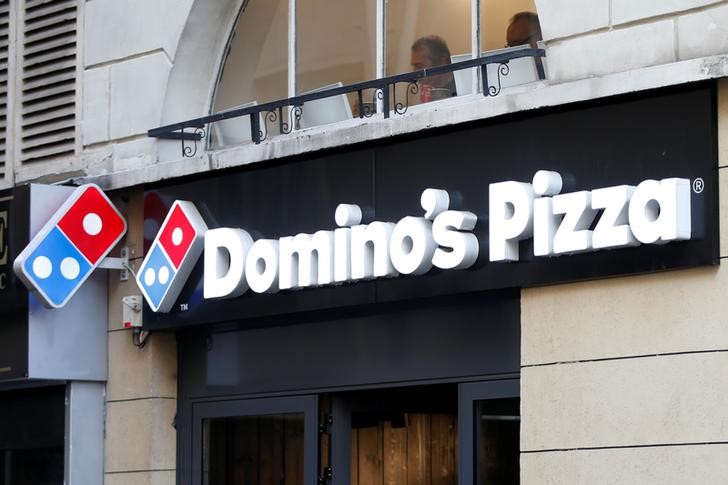
Domino’s Pizza shares fell 10% after U.S. same-store sales rose just 0.9%, well below the 2.3% analyst estimate, and management cut full-year U.S. same-store sales guidance to low-single-digit growth from 3%. CEO Russell Weiner flagged weak consumer sentiment, winter weather, and rising fuel prices tied to the U.S.-Israeli war with Iran as headwinds, while also citing increased competition from Papa John’s and Pizza Hut. The print raises risk for other quick-service and pizza chains ahead of upcoming reports from Starbucks, Yum Brands, and Papa John’s.
This reads less like a one-off miss and more like an early warning that discretionary lower-income food spend is rolling over while pricing power is fading. The important second-order effect is that quick-service chains are simultaneously getting hit from both sides: traffic weakens as consumers trade down or skip meals, and promotional intensity rises as competitors try to defend share, which compresses margins across the group even if unit volumes stabilize. That sets up a weak read-through for broader restaurant earnings, especially for brands with high exposure to value menus and delivery mix.
YUM looks the cleanest short on a relative basis because it has the most moving parts and the greatest exposure to near-term guidance risk across multiple concepts. KFC and Taco Bell can offset some pressure, but if U.S. consumer sentiment remains soft into summer, the market will likely punish any sign that traffic is being bought rather than earned. The bigger issue is that promotion-led share defense can mask underlying demand deterioration for one or two quarters before margin erosion shows up, so estimates may still be too high even if comps look merely “okay.”
The contrarian angle is that the market may already be discounting a lot of the bad news in restaurant names, but consensus still may be underestimating how long weather and fuel-driven sentiment weakness can linger. If gasoline stays elevated, the hit is not just to demand but to order frequency and basket size, which tends to bleed into delivery and late-night occasions first. A surprisingly resilient Starbucks or Chipotle print would likely be read as evidence that premium and occasion-based demand are holding up, but a broader weak restaurant tape would reinforce a multi-month de-rating of the sector.
AI-powered research, real-time alerts, and portfolio analytics for institutional investors.
Request DemoOverall Sentiment
strongly negative
Sentiment Score
-0.56
Ticker Sentiment
