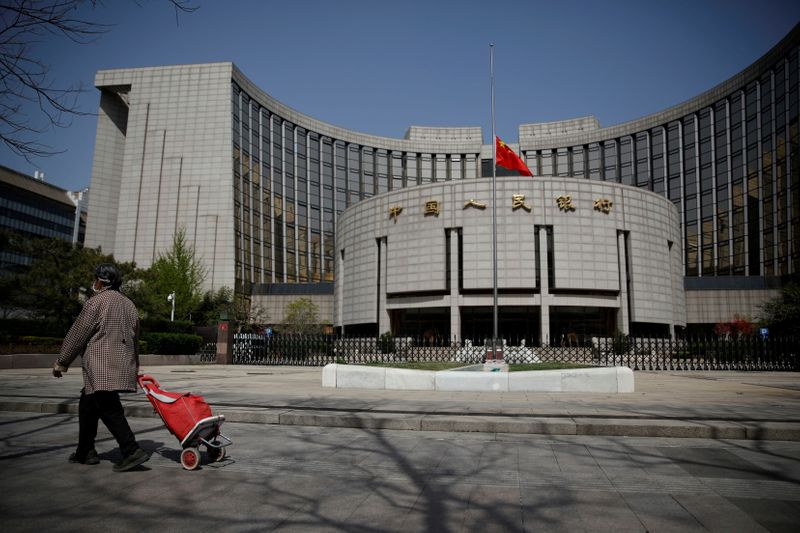
China left its one-year loan prime rate unchanged at 3.00% and the five-year LPR at 3.50% for an eleventh straight month, matching expectations. The hold signals policy stability as first-quarter growth held near 5%, reducing pressure for broad easing even as the PBOC may rely more on targeted liquidity measures. Inflation is firming and external risks remain, keeping the policy stance cautious but not materially market-moving.
The signal here is not “China easing” but “China refusing to panic,” which matters more for cross-asset vol than for outright beta. Holding the policy rate steady while growth is firm and inflation is edging up removes the near-term tailwind for duration assets, but it also reduces the odds of a disorderly credit impulse that would have supported cyclicals at the expense of margins. In practice, that favors quality over leverage: businesses that can grow without depending on China’s broad liquidity cycle should outperform, while highly rate-sensitive balance-sheet stories lose a marginal source of support.
For semis and AI infrastructure, the second-order effect is subtle: stable Chinese rates reduce the probability of a sharper yuan depreciation, which lowers immediate FX translation headwinds for U.S. multinational tech and eases imported component volatility. That is supportive for names like SMCI and APP only insofar as it keeps global risk appetite intact; it does not create a new demand leg. The bigger implication is that any disappointment in China data over the next 4-8 weeks is more likely to be met with targeted liquidity tools than large rate cuts, which tends to produce slower, more uneven ripples through global growth proxies.
The contrarian miss is that “no cut” can still be bullish for Chinese risk assets if it confirms policymakers see growth as self-sustaining. The market may be underestimating how much that shifts the burden onto fiscal and sector-specific support, which is usually better for selective equity performance than broad commodity rallies. The risk case is a renewed external shock or a sudden inflation uptick forcing a tighter stance; that would hit duration-sensitive sectors first and reprice emerging-market sentiment over days, while any real downside in China growth would unfold over months.
From a trading standpoint, the setup argues for fading the most rate-sensitive long-duration expression rather than betting on an outright macro turn. The cleaner expression is to own profitable AI infra names on weakness and avoid businesses whose multiple expansion depends on global easing. If China stays on this path for another 1-2 months, the market will likely rotate from macro beta into earnings durability, which is where the best risk/reward lives right now.
AI-powered research, real-time alerts, and portfolio analytics for institutional investors.
Request DemoOverall Sentiment
neutral
Sentiment Score
0.05
Ticker Sentiment
