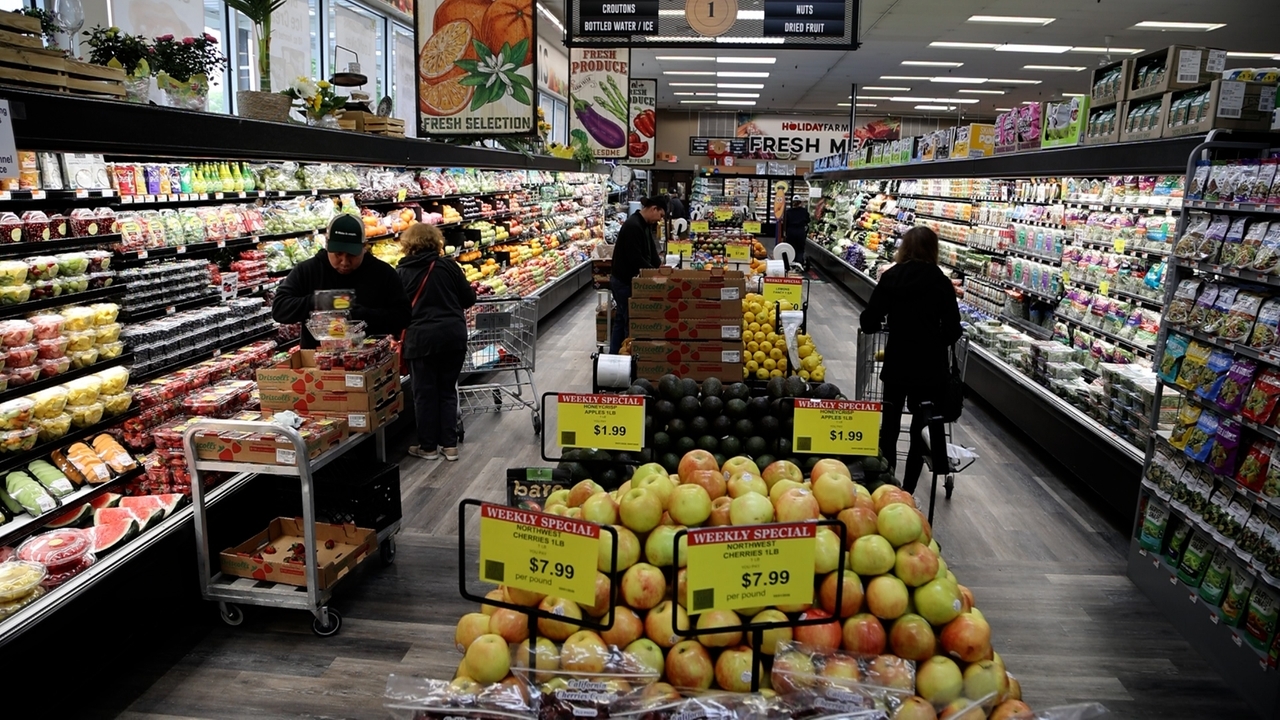
Grocery inflation in the New York metro area accelerated to 5.9% year over year in April, the fastest annual pace since April 2023, after a 1.5% month-over-month increase, the largest since July 2022. The article cites war-related fuel shipping disruptions, extreme weather reducing crop output, and rising labor and operating costs as drivers, while consumers shift to discount grocers and cheaper store brands. Farmers are seeing little benefit: only 5.8 cents of every grocery dollar now goes to them, down from 7.4 cents in 2014.
The immediate winner is not the grocer; it is the low-cost, high-turn inventory model. When shoppers trade down under food inflation stress, basket migration accelerates toward discounters and private label, which mechanically widens share for the most price-transparent players while pressuring full-service chains’ traffic and mix. The second-order effect is that the “inflation” story can coexist with margin compression for incumbents: higher top-line ticket values do not offset wage, utility, shrink, and delivery-cost inflation when consumers become more elastic.
For AMZN, the read-through is less about grocery share directly and more about household budget reallocation. As food absorbs a larger share of disposable income, nonessential online baskets get deferred, and customers consolidate trips around value-oriented channels, which can slow discretionary GMV growth at the margin. The bigger risk is that this forces Amazon to lean harder on price perception in consumables and same-day essentials, where it is still building habitual share and where fulfillment economics are least forgiving.
The inflation impulse looks sticky over the next 1-2 quarters because it is being reinforced by supply-side shocks rather than demand overheating. That said, the move is vulnerable to a fast reversal in two scenarios: fuel relief from geopolitics and a normalization in weather-sensitive produce after the next harvest cycle. If either hits, food inflation can decelerate quickly even if headline CPI stays noisy, so the trade should be structured around the persistence of input-cost pressure rather than a broad inflation beta.
Consensus is probably underestimating how little of the inflation gets passed through to upstream agriculture and how much of it is absorbed or redistributed inside the retail channel. That means the obvious “short the consumer” trade can be wrong if investors focus only on sticker shock; the cleaner expression is long the value winners versus short margin-fragile grocers. For AMZN specifically, the overhang is more about near-term discretionary basket pressure than any durable erosion of its competitive moat.
AI-powered research, real-time alerts, and portfolio analytics for institutional investors.
Request DemoOverall Sentiment
moderately negative
Sentiment Score
-0.35
Ticker Sentiment
