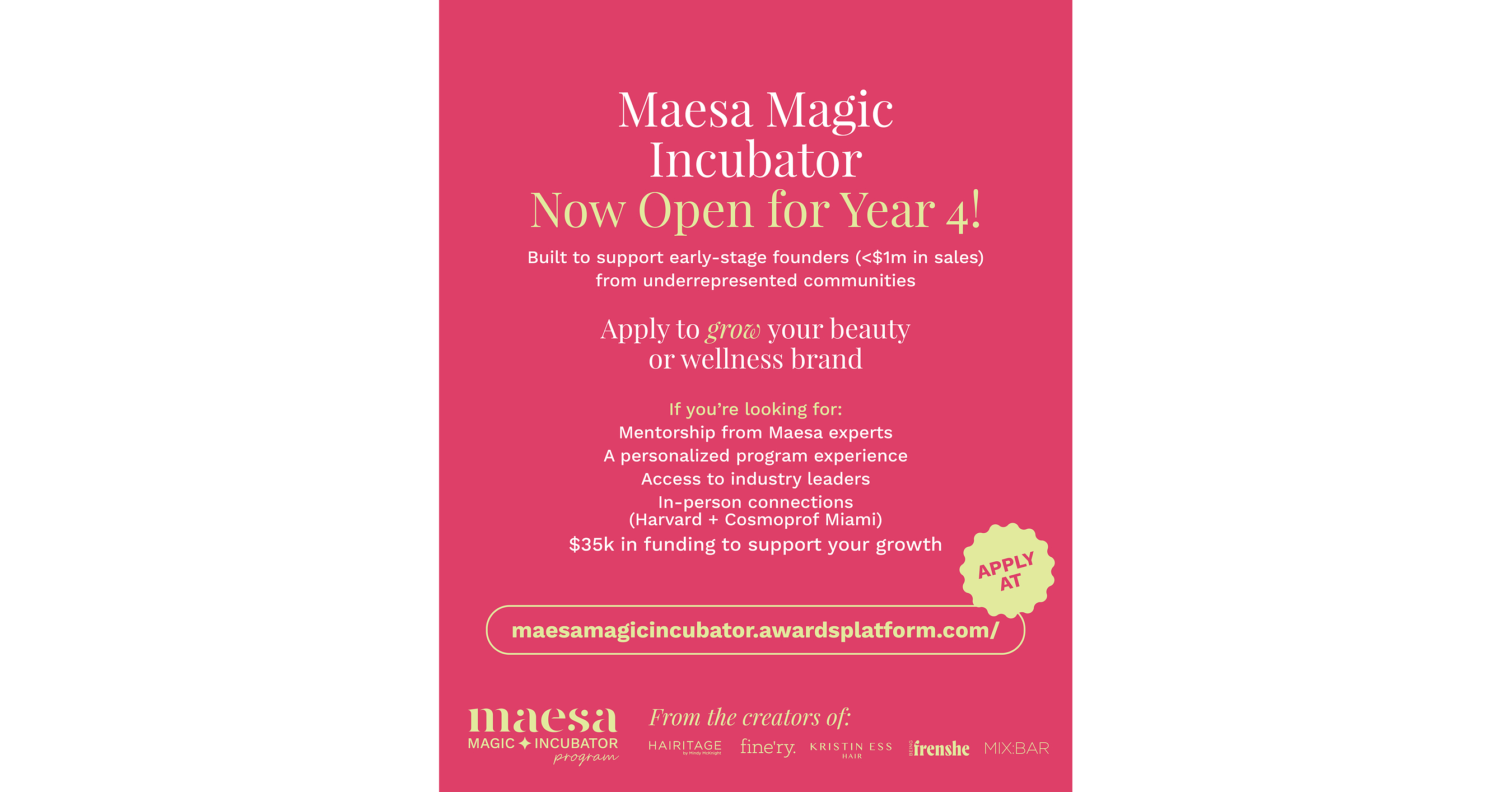
Maesa opened applications for the 2027 Maesa Magic Incubator (deadline Aug 7, 2026) and said the program’s first three years backed underrepresented founders with $315,000 in total funding across nine founders. For the 2027 cohort, each winner will receive $35,000 in grants and benefit from tailored mentorship plus in-person industry access (including Harvard/Emerson executive education focused on AI transforming consumer commerce and a fully funded Cosmoprof North America Miami experience). The 2027 advisory board includes new additions such as Topicals’ Olamide Olowe and Bubble’s Shai Eisenman, alongside returning advisors.
This is more signaling than financials: Maesa is effectively buying an option on future brand creation and using the incubator to widen its sourcing funnel. The second-order implication is that competitive advantage in beauty is shifting toward platforms that can underwrite, mentor, and industrialize small brands faster than traditional CPG can, which modestly favors asset-light incubators and retailers with discovery engines over legacy house-of-brands models.
Near term, I would not expect measurable P&L impact for public equities; the grant pool is immaterial and the real payoff is a richer pipeline of brands that may eventually feed wholesale doors or private-label adjacency. Over 6-18 months, the more relevant read-through is that premium beauty growth is increasingly being manufactured through ecosystem building, which can pressure incumbents with slower innovation cycles and weaker indie access, especially in prestige color and wellness.
The contrarian point: this may actually be a symptom of a tougher funding environment for founders, not just altruism. If venture/seed capital remains scarce, incubators become the cheapest way to source optionality—meaning the program’s existence says more about constrained early-stage capital than about robust category health. That makes this supportive for channel partners and service providers, but not a strong standalone bullish signal for any listed beauty name.
AI-powered research, real-time alerts, and portfolio analytics for institutional investors.
Request DemoOverall Sentiment
mildly positive
Sentiment Score
0.25
Ticker Sentiment
