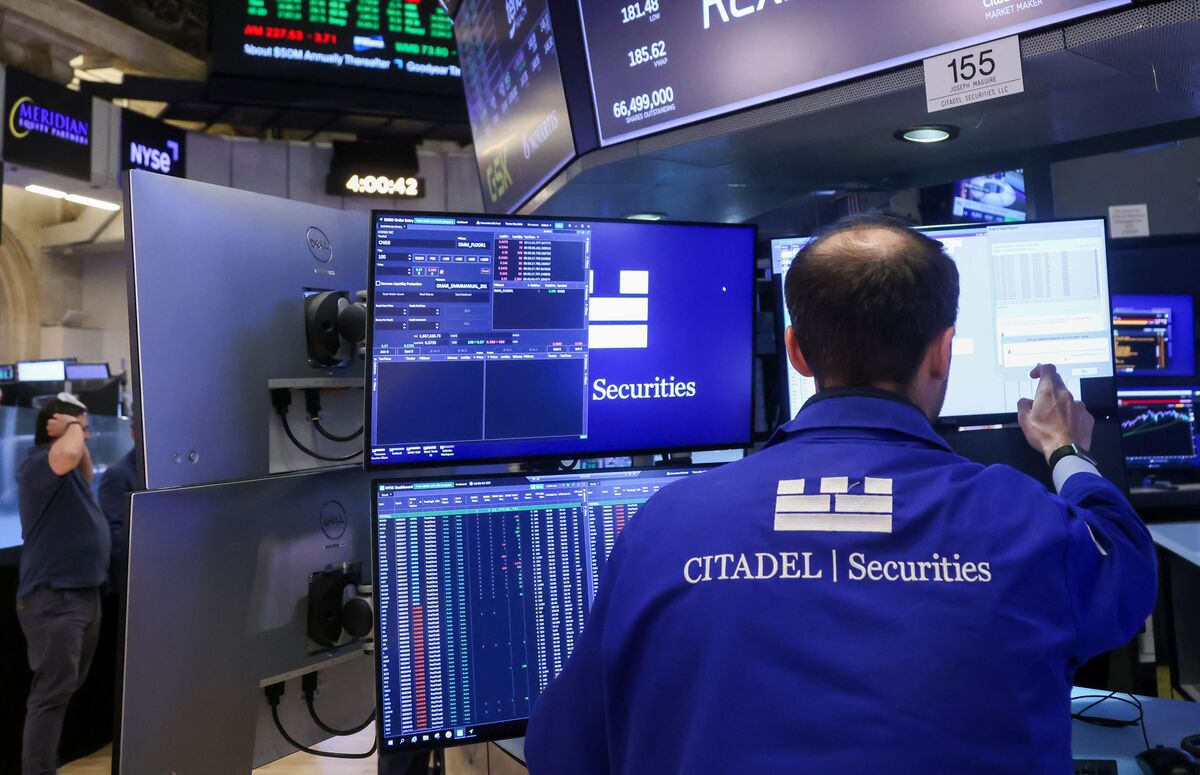
Citadel Securities is making a push into equity block trades, a business traditionally dominated by JPMorgan and other large banks. The article frames the move as a competitive challenge in Wall Street market structure rather than a direct earnings or regulatory event. Jamie Dimon’s rare mention of Citadel Securities in his shareholder letter underscores the intensity of the competition.
The strategic threat is not that Citadel Securities will immediately displace JPM in block trading, but that it can compress economics in the most profitable part of the franchise by undercutting the implicit tax clients pay for immediacy and distribution. If a non-bank can internalize more of the spread and win order flow on a few large mandates, the second-order effect is lower wallet share for traditional brokers, weaker attach rates across financing/prime/derivatives, and a gradual erosion of the “relationship premium” that has historically justified JPM’s pricing. The market should care less about near-term revenue loss and more about margin pressure if this becomes a repeatable workflow rather than a one-off beachhead.
JPM’s most vulnerable period is the next 6-18 months, when clients test alternatives but counterparties have not yet fully repriced execution risk. The key catalyst is not headlines but proof points: even a handful of publicized block wins by Citadel could force banks to defend share with tighter spreads, more balance sheet, or bundled concessions in adjacent products. That would be bearish for the entire brokerage complex, but JPM is best positioned to absorb the hit because its diversified earnings base can subsidize more aggressive pricing than smaller peers.
The contrarian view is that this may be less about Citadel “taking” the business and more about banks being forced to expose how much value was sitting in their distribution monopoly. If the pie is still growing via better liquidity and faster execution, JPM could lose margin but keep enough volume to make the headline overstated. The deeper risk is regulatory: if banks respond by lobbying for capital/market-structure constraints on non-bank intermediaries, the competitive threat could stall, but that would likely take quarters, not weeks.
From a market-technical angle, this is a slow-burn multiple compression story rather than an immediate earnings shock. The clearest tell will be whether block-trading fee disclosure, equity underwriting commentary, or prime services commentary start showing erosion before the next earnings cycle; that would validate the thesis that competition is leaking into the broader client wallet, not just one product line.
AI-powered research, real-time alerts, and portfolio analytics for institutional investors.
Request TrialOverall Sentiment
neutral
Sentiment Score
0.10
Ticker Sentiment
