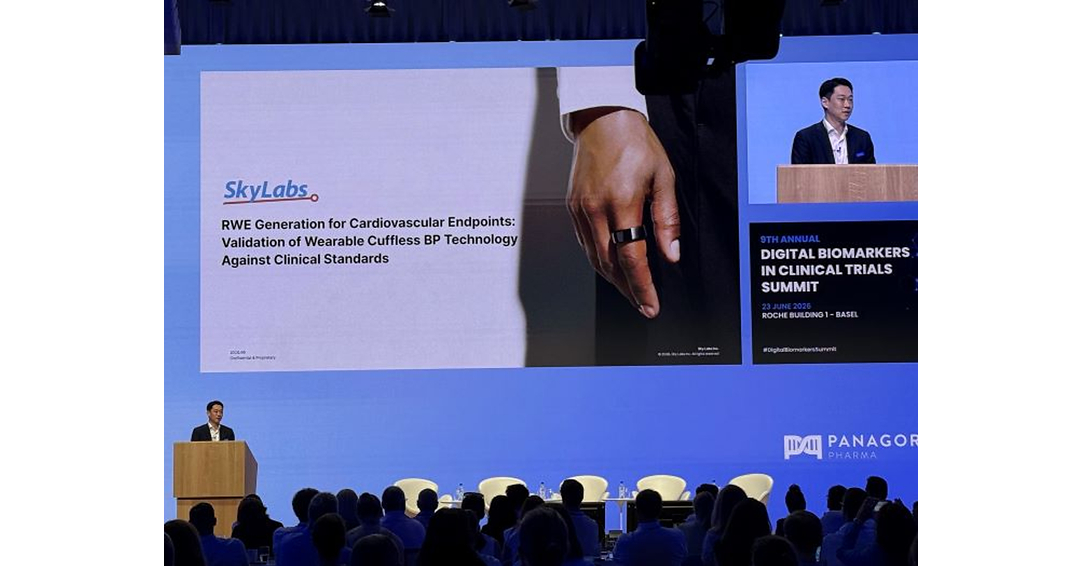
Sky Labs showcased its ring-shaped, cuffless blood pressure device CART BP pro as a platform for global clinical trials and real-world evidence (RWE), highlighting key ABPM drawbacks (e.g., 70.2% of conventional ABPM users reported sleep disturbances; incomplete 24-hour data reached 50.0% in low-tolerance groups). The company notes CART BP pro is already reimbursed in South Korea and was recommended in updated hypertension treatment guidelines, supporting broader adoption. Management reiterated plans to expand use in trials via strategic partnerships with global pharma.
This reads more like a validation signal for decentralized-trial infrastructure than a near-term P&L event. If cuffless, sleep-friendly BP capture meaningfully lowers dropout and missing-data rates, the economic value accrues to sponsors through faster enrollment, fewer repeat visits, and cleaner longitudinal datasets; that matters most in hypertension, cardio-renal, and outcomes-heavy programs where endpoint quality is costly. For large pharma such as NVS, the upside is optionality in trial efficiency and RWE generation, not incremental revenue today.
The second-order winner is likely the data-integrator layer, not the hardware vendor: CROs and platform providers that can ingest, audit, and harmonize wearable data will capture more spend than point-solution devices. That creates a read-through to IQVIA and other trial-operating-system names if sponsors start requiring continuous vitals in protocol design. By contrast, legacy ABPM incumbents face a slow erosion of volume only if regulators and payers accept cuffless devices as equivalent in multicenter studies; that is a 6-18 month question, not a one-week headline.
Contrarian view: the market may be overconfident about regulatory portability. Korean reimbursement and guideline acceptance are helpful, but global trial adoption hinges on FDA/EMA-grade validation, interoperability, and data provenance controls. The key falsifier is the next sponsor-led protocol: if no major pharma announces a funded study using the platform within 1-3 quarters, this remains conference theatre rather than a monetization story.
AI-powered research, real-time alerts, and portfolio analytics for institutional investors.
Overall Sentiment
mildly positive
Sentiment Score
0.20
Ticker Sentiment
