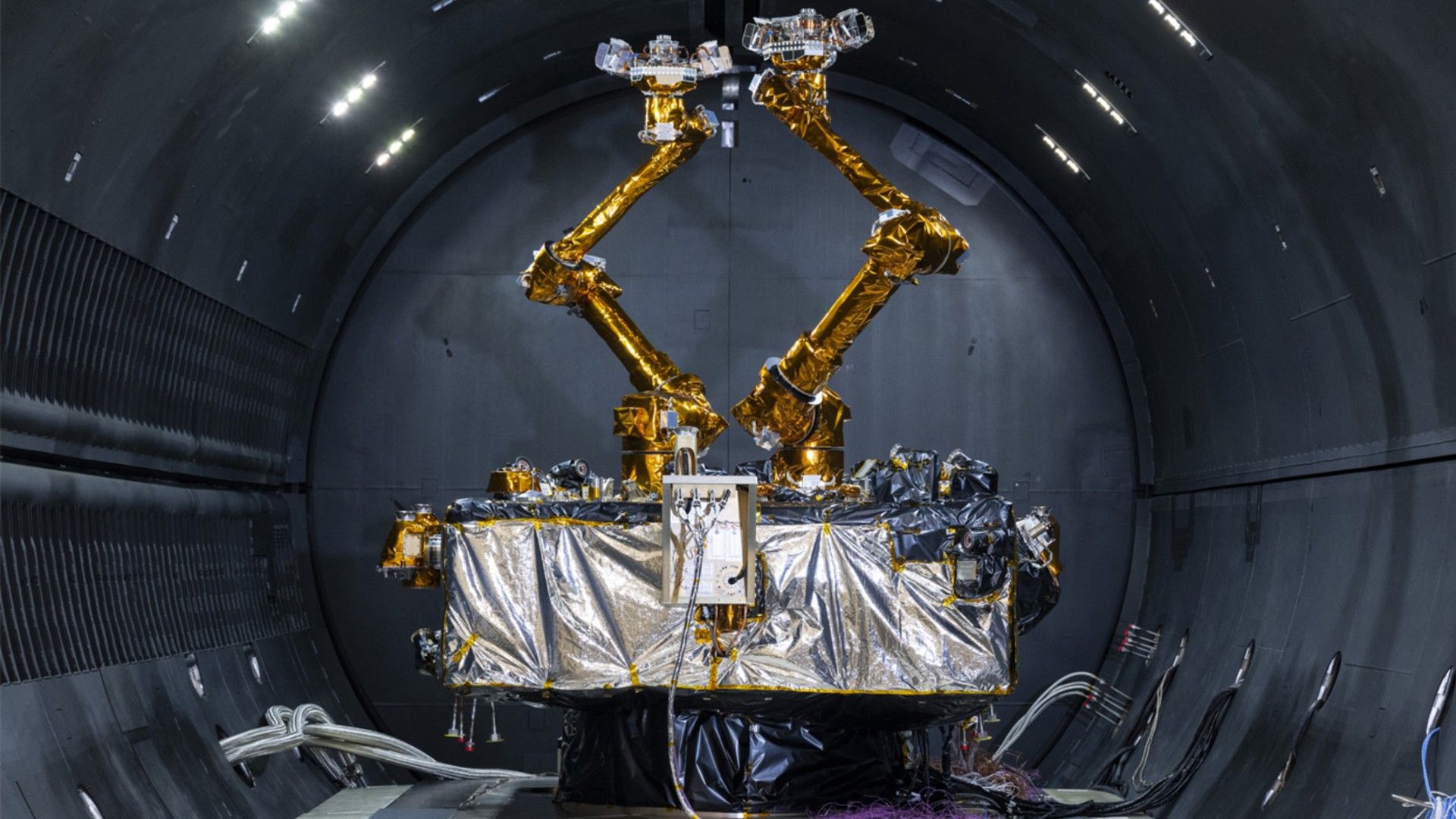
DARPA says its long-delayed Robotic Servicing of Geosynchronous Satellite (RSGS) demonstrator is slated to launch as soon as this summer, with on-orbit operations expected to begin in 2027 after a 10-month transit to GEO. The mission centers on a highly dexterous robotic servicing suite designed for refueling, inspections, anomaly resolution, orbit adjustments, payload upgrades, and satellite relocation. While the article is mainly a program update rather than a financial event, it underscores growing activity in space servicing and defense-adjacent space infrastructure.
The investable implication is less about a single launch milestone and more about a proof point for a high-margin after-market business model in orbit. If servicing works economically in GEO, satellite OEMs with installed bases gain a recurring revenue layer that looks more like aerospace MRO than one-time hardware sales, which should compress the historical boom-bust cyclicality of new-build orders. That is structurally favorable for the prime integrator with the most credible servicing stack, but also for component suppliers that can attach to inspection, docking, capture, and propulsion subsystems.
Second-order, the biggest loser may be the legacy “build harder, launch new” economics of GEO operators: the need for oversized fuel tanks, redundant systems, and early replacement could begin to fade if life-extension becomes a real option. That shifts value from upfront satellite mass and launch providers toward in-orbit mobility, robotics, autonomy software, and electric propulsion. The ripple effect should be slow at first—commercial adoption likely measured in years, not quarters—but once one or two anchor customers validate the model, procurement could re-rate quickly because the ROI is easy to explain: defer a $300M-$500M replacement by even 12-24 months and the economics are compelling.
The near-term risk is execution slippage rather than market demand; this is a long-duration catalyst with binary milestones. Any failed rendezvous, docking, or servicing demonstration would likely delay broad commercial uptake and reset expectations for the entire in-orbit servicing category. Conversely, a clean initial operational period would validate not just one program but the broader thesis that GEO assets can be managed as durable, upgradable infrastructure.
Contrarian view: the market may be underestimating how narrow the first commercial aperture is. GEO is a small, high-value niche, so even a successful demo may not translate into immediate step-function revenue for incumbents; the first monetization may come from defense and government missions rather than telecom. That means the right way to express the theme is through names with option value on servicing, not through a broad basket of space equities.
AI-powered research, real-time alerts, and portfolio analytics for institutional investors.
Request DemoOverall Sentiment
mildly positive
Sentiment Score
0.20
Ticker Sentiment
