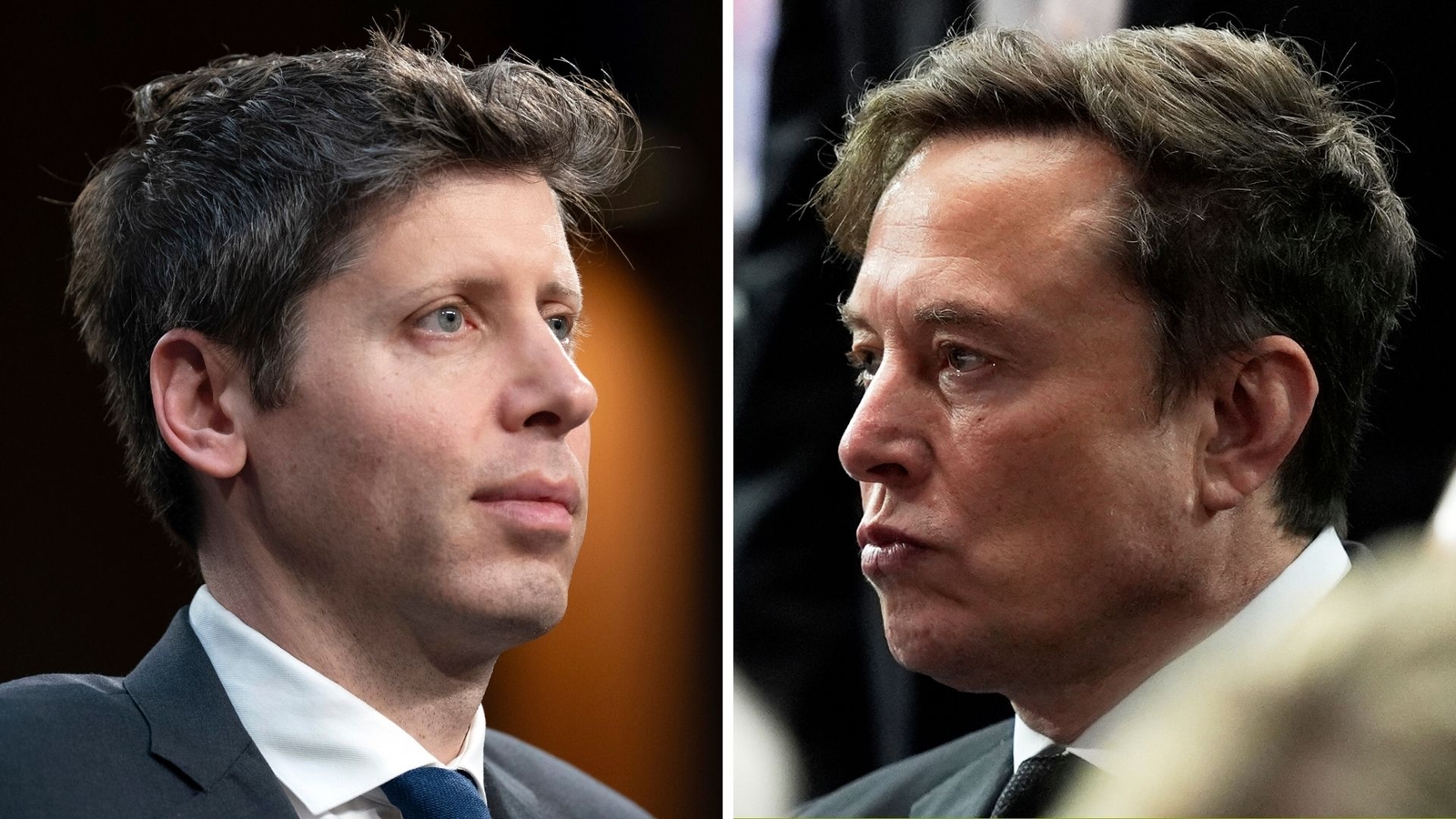
A high-stakes trial begins over Elon Musk’s 2015 role in founding OpenAI and his claims that Sam Altman and Greg Brockman diverted it from its nonprofit mission into a for-profit model now valued at $852 billion. Musk is seeking an unspecified amount to fund OpenAI’s charitable arm and Altman’s ouster from the board, while OpenAI argues the case is sour grapes and tied to Musk’s xAI rivalry. The case could influence perceptions of governance and control in the AI sector, but it is primarily a legal and competitive dispute rather than a direct operating update.
This is less about a courtroom binary and more about whether the AI capex flywheel slows at the margin. The market has largely treated OpenAI as a beneficiary of near-infinite strategic capital, so even a modest legal or governance setback can matter if it forces more conservative partner behavior, slower contracting, or tighter board controls. The first-order equities risk is not a crash in AI spend, but a delay in the pace at which money migrates from model risk-taking into monetization, which would pressure the highest-multiple AI beneficiaries first.
MSFT is the cleanest public-market transmission channel because it is the main conduit between frontier-model demand and enterprise distribution. If the dispute elevates scrutiny of OpenAI’s governance, Microsoft may gain negotiating leverage, but that also raises the odds of more explicit liabilities, more reserved disclosures, and a slower commercialization cadence. GOOGL is a relative beneficiary on any trust/gov shock because enterprise buyers who fear concentration risk are more likely to keep a second vendor warm; the second-order effect is not share theft overnight, but better retention and lower churn in large-account AI pilots.
TSLA is only indirectly exposed, but the trial’s subtext matters because it keeps Musk’s bandwidth and credibility under a microscope just as multiple capital-intensive stories compete for attention. Legal overhangs and character attacks can temporarily widen the discount on Musk-linked optionality, especially if the court record creates new headlines around governance and management distraction. PYPL is mostly a non-factor mechanically, but it can still trade as a sentiment barometer for Musk-era founder narratives if retail flows reprice “visionary premium” names.
The contrarian view is that the case may be noise relative to the structural AI demand curve. Even if the nonprofit-versus-profit framing becomes messy, the competitive pressure between MSFT/OpenAI and GOOGL/Anthropic-type ecosystems likely accelerates spending rather than slows it, because no strategic player can afford to look weaker in a market this early. The better trade is to fade any knee-jerk derating of the AI complex while keeping protection on the names most exposed to a governance shock.
AI-powered research, real-time alerts, and portfolio analytics for institutional investors.
Request DemoOverall Sentiment
neutral
Sentiment Score
-0.05
Ticker Sentiment
