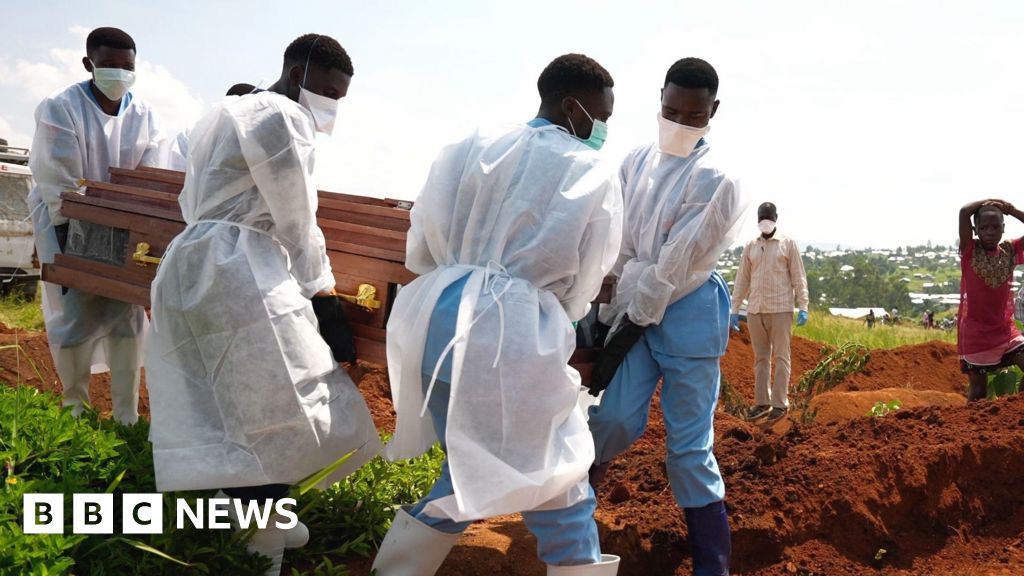
An Ebola outbreak in Bunia, Democratic Republic of Congo has killed almost 200 people in the last few months, with the current strain identified as the rare Bundibugyo species. The article highlights ongoing transmission risks, the need for strict safe-burial protocols, and efforts by WHO and IFRC teams to manage community resistance and misinformation. This is a public health crisis in an emerging market region, but it is not direct market-moving financial news.
This is less a direct market event than a regional stress test for fragile EM operating capacity. The primary economic damage is not from mortality alone but from behavioral spillovers: mobility suppression, labor absenteeism, and a self-reinforcing collapse in local commerce as households avoid clinics, schools, markets, and transport nodes. In outbreaks like this, the second-order effect often lasts longer than the headline case curve because trust rebuilds slower than epidemiology improves.
The most investable implication is for companies with operational exposure to the DRC and neighboring Great Lakes supply chains: miners, logistics providers, frontier banks, and NGOs/contractors with on-the-ground staffing. Expect a wider risk premium on assets dependent on manual labor, cross-border movement, and informal distribution networks; even a contained outbreak can interrupt staffing and permissions for weeks, while a larger urban spread would hit project timelines and cash conversion over multiple quarters. The real negative convexity is for businesses that rely on community consent and physical presence — site access risk rises before revenue does.
The counterintuitive beneficiary set is the healthcare logistics stack: PPE, infection-control consumables, portable cold-chain, and emergency transport. If the outbreak persists for months, procurement volumes can remain elevated even after case growth decelerates, because the operational response requires repeated burials, transport decontamination, and treatment-center throughput. That said, this is mostly a public-sector purchase cycle, so equity beta is limited unless a listed supplier has meaningful African outbreak-response exposure.
Consensus may be underpricing the reputational and political risk to local supply chains more than the direct epidemiological risk. The key catalyst is not the next fatality, but whether authorities lose burial compliance and community cooperation; once that breaks, transmission can accelerate abruptly and force harsher movement restrictions. Conversely, an effective trust-based burial protocol and visible case isolation can de-risk the event faster than expected, making the current selloff in local-risk proxies potentially short-lived.
AI-powered research, real-time alerts, and portfolio analytics for institutional investors.
Request DemoOverall Sentiment
strongly negative
Sentiment Score
-0.80
