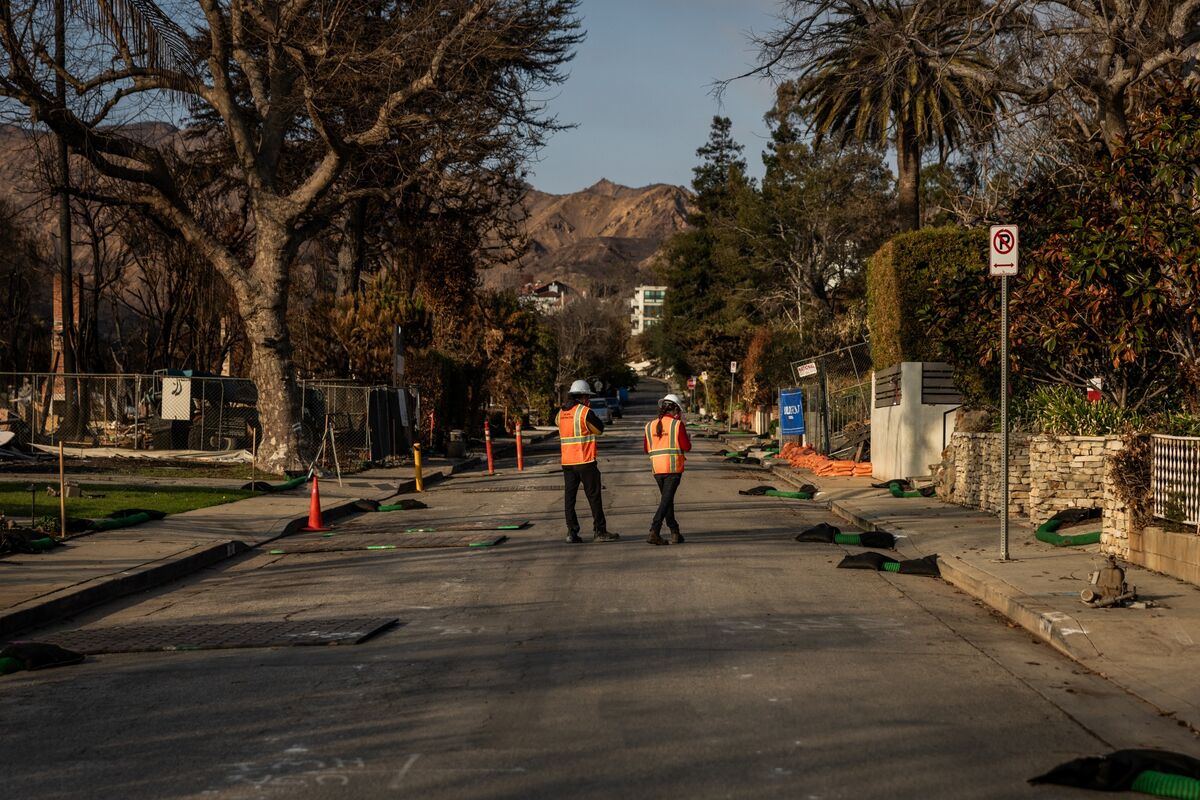
Utilities are deploying AI-guided vegetation management to trim trees near powerlines—one of the major ignition sources for destructive wildfires—with programs running across two continents that aim to reduce liability and save providers potentially billions. The newsletter also highlights two distinct post-fire forest-regrowth solutions, underscoring a combined prevention-and-restoration approach that can materially lower insurers' and utilities' risk exposure over time. Absent concrete contract or revenue disclosures, near-term market-moving effects are limited but the initiatives improve long-term operational and ESG profiles for power providers.
Market structure: Immediate winners are tech-enabled infrastructure contractors and geospatial/AI vendors that supply avionics, lidar/GIS and analytics (e.g., Quanta-like contractors, Trimble-like sensor/GIS providers, and AI compute suppliers). Regulated utilities (PG&E/PCG, EIX, NEE) and property insurers (Chubb/CB, Travelers/TRV) are secondary beneficiaries via lower expected liability; expect credit spread compression of ~10–50bps over 12–18 months if programs scale. Losers: commoditized timber/short-term salvage suppliers and legacy vegetation contractors without tech will see margin pressure as pricing power shifts to integrated, data-driven providers.
Risk assessment: Tail risks include regulatory reversal (mandatory shutoffs despite AI), a major fire proving tech ineffective (litigation resurgence), or drone/airspace rules that slow deployment; each could wipe out near-term vendor revenue and reprice utility credit. Timeline: pilots and vendor wins show up in days–weeks; measurable revenue and insurer reserve effects in 3–12 months; industry-wide adoption and balance-sheet improvements in 12–36 months. Hidden dependencies: frequency of aerial imagery, utility labor/union capacity, and reinsurance cycle dynamics; a single bad-weather season could accelerate or invalidate models.
Trade implications: Direct tradeable exposure favors contractors and software/hardware vendors (establish sized long positions in PWR-like and TRMB-like names) and AI compute (NVDA) as a leveraged play. Use 6–12 month call spreads to express bullishness while capping cost; pair trades (long tech-enabled contractor, short timber ETF WOOD) capture relative winners. Key catalysts: utility RFP awards, CPUC/PSC approvals, major insurer reserve adjustments, and the next wildfire season (May–Oct), which should concentrate alpha.
Contrarian angles: Consensus underestimates implementation friction — contracting bottlenecks and environmental/regulatory pushback could delay benefits 12–24 months, so near-term exuberance may be overdone. Conversely, markets may underprice recurring vegetation-management annuity-like revenues (multi-year contracts) that boost contractor valuations by 10–30% once proven; historical parallel: post-hurricane grid hardening. Unintended consequences include ecological/regulatory backlash or higher capex that pressures utility dividends despite lower liability.
AI-powered research, real-time alerts, and portfolio analytics for institutional investors.
Request DemoOverall Sentiment
mildly positive
Sentiment Score
0.35
