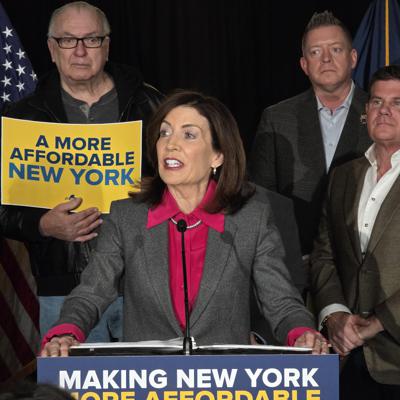
Governor Kathy Hochul is seeking to delay key implementing rules of New York's 2019 CLCPA (which includes a 40% carbon emissions reduction target by 2030), saying the intent is to prevent future utility bill increases rather than lower current high rates. Critics note CLCPA-related charges in bills rose sharply between 2023–24 and cite a 58% rise in residential electricity prices in New York since 2019 (versus a 36% national increase), while NYSERDA warned of potential 'thousands of dollars' in future rate increases under aggressive implementation. Environmental groups and judges have challenged the state's slow implementation; Hochul has not released formal amendment language but said she aims to address changes in the state budget due April 1 and expects to propose specifics this week.
Delaying aggressive implementation of New York’s climate statute increases policy risk and timing uncertainty without removing pre-existing cost drivers; the net effect is a rotational shock rather than an outright reversal. Expect a 6–24 month window where developers and tax‑equity providers re‑price NY project pipelines: financing spreads for NY utility‑scale PV+storage will likely widen by 100–200bps as state policy credibility is discounted, while national platforms reallocate projects to lower‑friction markets.
Regulated utilities in New York face a bifurcated outcome: near‑term cash flow is insulated via existing rate recovery mechanisms, but political and judicial catalysts create asymmetric downside to equity multiples if lawmakers impose rate mitigation or if courts force accelerated rulemaking. Conversely, large diversified renewables owners gain optionality — they can redeploy capital geographically, shortening payback periods by chasing higher IRR markets outside NY.
A delayed cap-and-invest reduces immediate hedging demand for allowance products and voluntary credits, pressuring nearby forward carbon curves for 6–18 months; if a court or budget deal crystallizes implementation, expect a sharp re-steepening as supply scarcity is repriced. Geopolitical shocks to fossil fuel supply act as an independent tail risk that can rapidly re‑tighten margins for ratepayers and increase political pressure, flipping policy outcomes within weeks.
Net positioning should favor regulated stability and large diversified platforms while shorting concentrated NY‑exposed developers and buying optional downside protection on carbon/energy‑intensive names. Key catalysts to watch: state budget negotiations by April 1, ongoing appeals over the judge’s ruling (months), and short‑term fossil fuel price shocks (days–weeks).
AI-powered research, real-time alerts, and portfolio analytics for institutional investors.
Request DemoOverall Sentiment
mixed
Sentiment Score
-0.05
