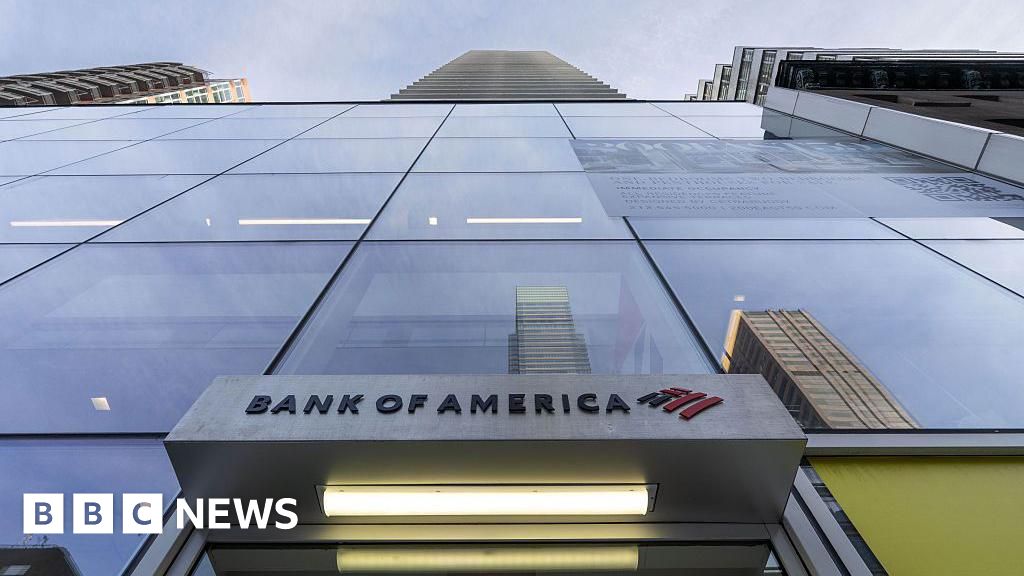
Bank of America has agreed to settle a class-action lawsuit brought by Jeffrey Epstein victims; settlement terms were not disclosed and the deal now goes to the court for approval. This marks the third major-bank settlement after JP Morgan Chase ($290m) and Deutsche Bank ($75m). The suit, filed in October, alleges the bank facilitated Epstein's sex-trafficking operation, cites use of Bank of America accounts and references more than $150m paid to Epstein by Leon Black via his BoA account; the parties will provide more information on 27 March with a hearing set for 2 April.
This settlement cluster materially reduces tail uncertainty for the industry but shifts the risk budget from ‘unknown litigation outcome’ to ‘higher baseline compliance, governance and reputational costs’ over the next 12–24 months. For large universal banks the immediate P&L hit will generally be absorbable within existing capital buffers, but the second-order effect is a structural uplift in remediation and monitoring spend that depresses return on equity by a few hundred basis points versus pre-shock trends unless offset by higher revenue or cost cuts.
Client segmentation will re-price: banks that choose to de-risk high-touch private banking and trust relationships will cede profitable UHNW flows to specialist custodians and boutique private banks, concentrating fee pools. Expect a mid-term winners/losers dynamic where low-cost, high-scale custodians and compliance-heavy trust platforms capture share of a shrinking but higher-margin client segment, while universal banks face margin pressure and migration risk.
Key catalysts to watch on a 0–12 month cadence are procedural court milestones and any parallel regulatory inquiries that expand scope beyond the civil settlement — each can create headline-driven repricing. The market can also reverse quickly if settlements functionally extinguish incremental litigation risk and filings dry up; that scenario would favor rebounds in entrenched large-cap banks.
Net-net, the event is more about governance and business-model adjustments than capital stress for systemically important banks. That makes tactical moves around relative valuation and volatility (short-duration, event-driven structures) higher expected Sharpe than directionally short balance-sheet exposure to large banks.
AI-powered research, real-time alerts, and portfolio analytics for institutional investors.
Request DemoOverall Sentiment
mildly negative
Sentiment Score
-0.35
Ticker Sentiment
