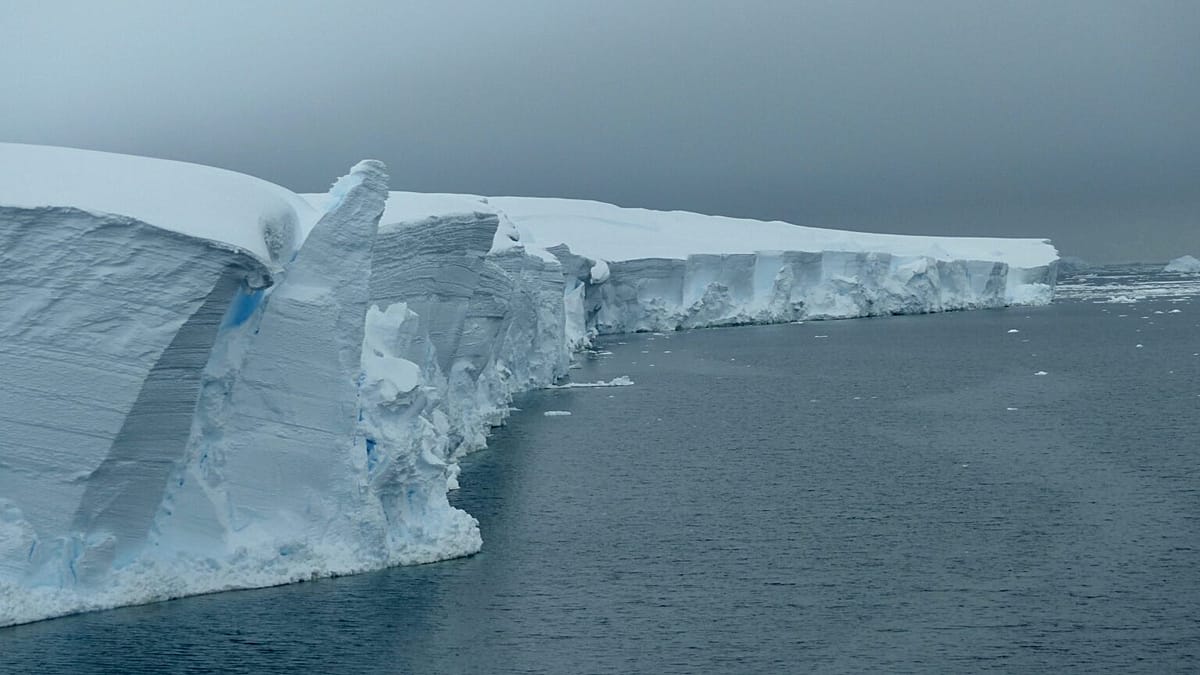
An international team has proposed the Seabed Anchored Curtain Project to erect a ~152m-tall, 80km-long seabed barrier to slow warm ocean water under Thwaites Glacier, a 192,000 km² West Antarctic ice mass that currently accounts for ~4% of annual sea-level rise and whose full collapse could add ~65cm (exposing ~6m people per cm to coastal flooding). The initiative includes a three-year R&D roadmap with a $10m fundraising target to design curtains, moorings and prototype tests, while parallel hot-water drilling will deploy instruments beneath the glacier to deliver at least a year of near-real-time data via Iridium to better constrain sea-level risk.
Market structure: The immediate beneficiaries are specialist offshore engineering and subsea-construction firms (mooring, curtain anchors, specialized vessels), satellite telemetry providers, and insurers/reinsurers that can price coastal risk; losers include residential coastal real-estate, municipal issuers in low-elevation zones, and generalist contractors without deepwater capability. Pricing power will accrue to owners of heavy-lift vessels and skilled design IP; supply (vessels, experienced crews) is tight and lead-times are 12–36 months, implying 20–50% margin upside for winners if large public funding arrives.
Risk assessment: Tail risks include legal/sovereign hurdles (Antarctic Treaty, Indigenous opposition), cost overruns (>3x base estimates), and engineering failure causing reputational/claims costs; probability medium but impact catastrophic. Near-term catalysts are drilling telemetry (daily data over 12 months) with first signals in weeks–months; what matters is evidence of warm-water flux >0.05°C/km below ice that would force accelerated spending.
Trade implications: Direct plays: overweight specialized subsea contractors and telemetry providers via equity and long-dated call spreads (12–36 months); hedge with short exposure to coastal homebuilders/REITs and reduce duration in coastal muni allocations. Options: buy 12–24 month call spreads on AKSO.OL and SUBC.OL, and 6–12 month calls on IRDM to capture telemetry/recurring airtime upside; target asymmetric returns 25–40% vs limited premium risk.
Contrarian angles: Consensus assumes fast capital deployment; financing, international law, and environmental backlash make operational delivery slow — market may underprice multi-year execution risk. Historical parallels (large coastal defense and geoengineering projects) show 3–5x cost and decade delays; mitigate with small, time-levered exposures (options, staged buys) until policy funding and prototype tests clear 12–36 month milestones.
AI-powered research, real-time alerts, and portfolio analytics for institutional investors.
Request DemoOverall Sentiment
moderately negative
Sentiment Score
-0.35
