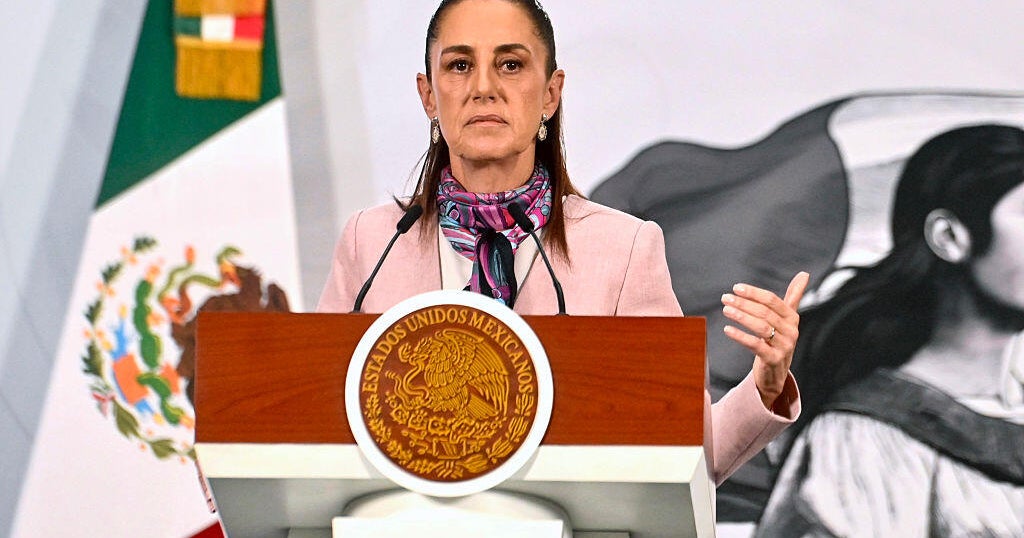
Mexico said two CIA employees killed in a crash in Chihuahua were not authorized to participate in operational activity in the country, while also stating that neither had formal accreditation. The incident involved two U.S. agents and two Mexican officers killed during a raid linked to the destruction of a clandestine drug lab, underscoring tensions over foreign operations on Mexican soil. The news is geopolitically sensitive but likely has limited direct market impact.
The market read is not about the incident itself; it is about the hardening of Mexico's stance on sovereign control and the likelihood of a bureaucratic chill in cross-border security cooperation. That tends to raise friction costs for U.S. operations, lengthen approval cycles, and reduce the odds of rapid, intelligence-led interdiction activity in the near term. The second-order effect is greater operational uncertainty for any counter-narcotics effort that relies on embedded coordination rather than overt bilateral channels.
For investors, the key issue is whether this becomes a one-off diplomatic flare-up or a template for more restrictive enforcement of foreign-agent activity over the next 1-3 months. If Mexico leans into formalism, expect slower coordination on security-related logistics, which can modestly benefit organized networks by reducing disruption frequency while also increasing headline risk for firms exposed to the border, logistics, and Mexico operating environment. The immediate equity impact is limited, but risk premia can widen for EM assets and for any U.S. contractor or defense-adjacent platform with Latin America security exposure if the story persists.
The contrarian view is that this may actually strengthen the bilateral framework over time by forcing cleaner lines of authority, reducing the chance of rogue or ambiguous activity that creates political backlash. That would be mildly positive for institutional stability over months, but negative for discretionary covert action in the next several weeks. The setup is thus less about directionally bearish Mexico and more about volatility in policy execution: the tail risk is a public dispute that spills into trade, migration, or security cooperation rhetoric.
Best risk/reward is to own volatility around any names or assets sensitive to Mexico policy headlines rather than taking a large directional macro view. A cleaner expression is to fade overreaction if MEXBOL/EMMX or Mexico-exposed cyclicals gap lower on headlines, while keeping hedges on until the diplomatic narrative stabilizes.
AI-powered research, real-time alerts, and portfolio analytics for institutional investors.
Request DemoOverall Sentiment
mildly negative
Sentiment Score
-0.25
