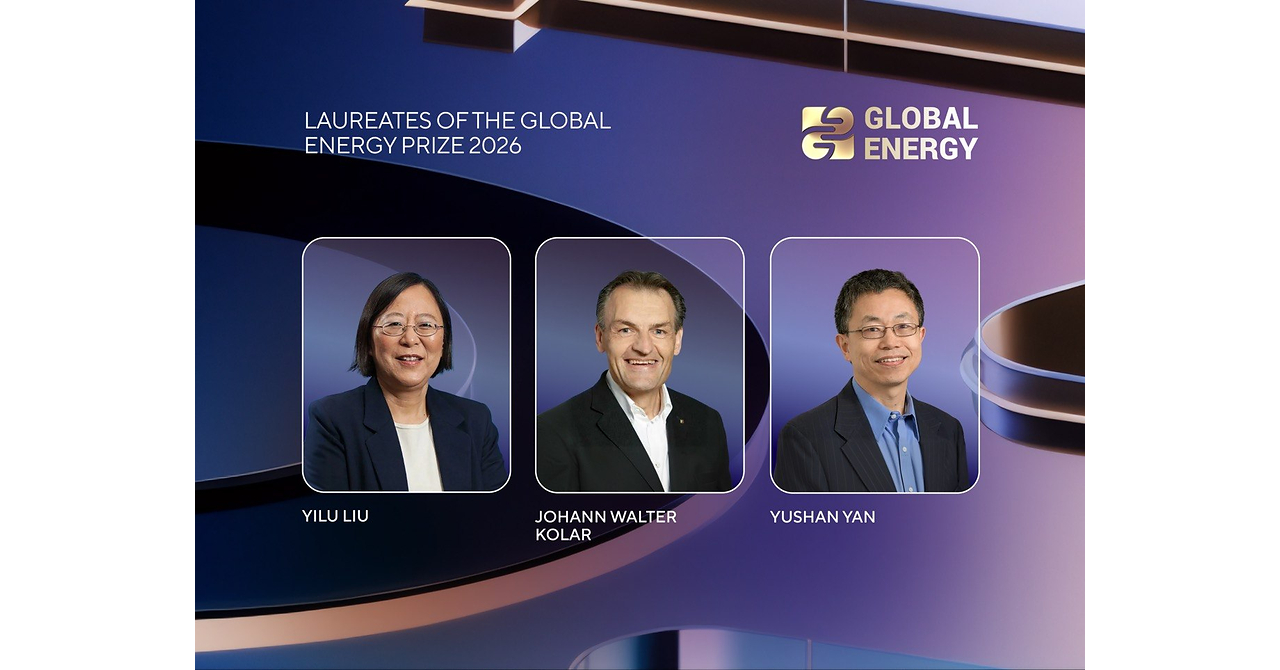
Le Global Energy Prize 2026 a récompensé trois chercheurs : Yilu Liu (énergies traditionnelles) pour des systèmes de surveillance/contrôle des réseaux intelligents à grande échelle, Yushan Yan (hydrogène propre) pour l’avancement de technologies d’hydrogène propre et leur passage vers des projets commerciaux, et Johann W. Kolar (nouvelles applications énergétiques) pour des innovations de conversion d’énergie améliorant l’efficacité et la mobilité électrique. L’annonce est globalement positive sur le plan innovation/transition énergétique mais sans impact chiffré direct sur les marchés.
This is not a direct market catalyst; it is a credibility signal for three investable subthemes that already trade on long-duration expectations: grid digitization, clean hydrogen, and power electronics. The real mechanism is not the award itself but the likelihood it slightly improves grant capture, university-to-industry partnerships, and the ability of those labs to influence utility procurement standards over the next 12-36 months. That matters most for established industrials and grid-software vendors with balance-sheet capacity, not for pre-revenue hydrogen names that still need cheap capital and bankable offtake.
The strongest second-order beneficiary is the broader electrification stack: grid equipment, power conversion, and utility automation should keep taking share even if hydrogen remains a longer-cycle optionality story. By contrast, pure-play hydrogen equities are vulnerable to the usual disconnect between scientific progress and commercialization timelines; the market repeatedly overprices conference-presentation risk and underprices permitting, capex, and project-finance constraints. The contrarian read is that this kind of recognition may actually be negative for speculative hydrogen baskets if it tempts investors to front-run adoption that still needs 1-3 years of policy and cost declines.
Catalyst path: in days, likely no measurable price effect; in 1-3 months, look for any follow-on partnerships, DOE awards, or utility pilots tied to the honored work; in 6-18 months, the real signal is whether capex budgets shift toward grid automation and power electronics versus blue/green hydrogen demonstrations. What would falsify the constructive view: no incremental contracts, no funding, and continued pressure from high rates on long-duration clean-tech valuations.
AI-powered research, real-time alerts, and portfolio analytics for institutional investors.
Request TrialOverall Sentiment
mildly positive
Sentiment Score
0.25
