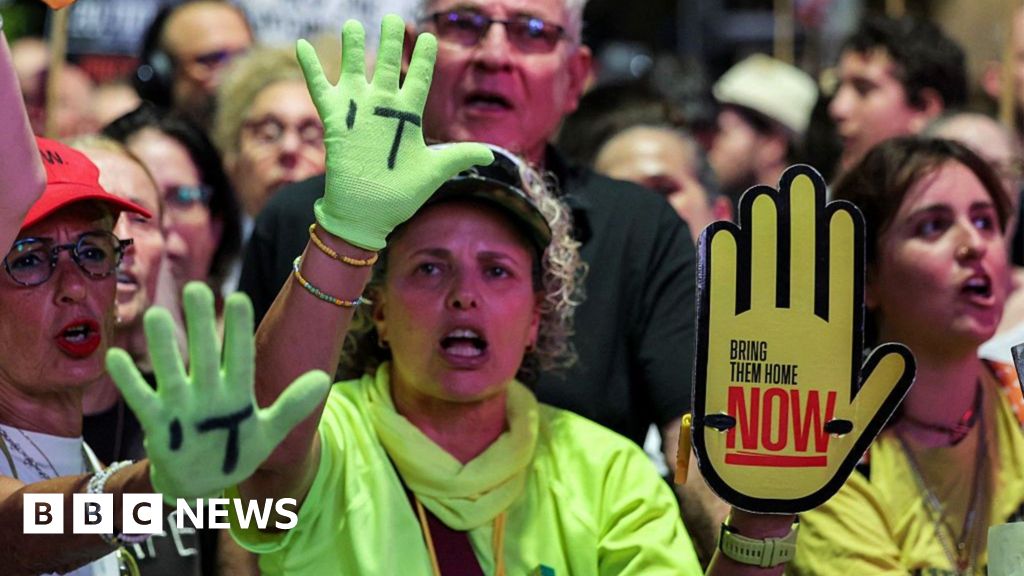
Thousands of Israeli protesters, including hostage families, are demonstrating against the government's plan to expand military operations in Gaza, citing risks to hostages and civilians. Prime Minister Netanyahu defends the strategy despite internal dissent from his army chief and widespread international condemnation, notably Germany halting military exports. This escalation exacerbates a severe humanitarian crisis in Gaza, marked by rising malnutrition deaths and urgent calls for increased aid, with the UN Security Council scheduled to convene on the matter.
The Israeli government's plan to expand its military operation in Gaza is facing significant and escalating pressure from both domestic and international fronts, creating a highly volatile geopolitical environment. Internally, dissent is widespread, manifesting in large-scale public protests, calls for a general strike by the opposition leader, and a notable refusal to serve by a group of over 350 soldiers. Critically, this opposition includes high-level military leadership, with the army's Chief of Staff reportedly warning the Prime Minister that the plan is a "trap" that endangers hostages. This internal fracture is compounded by severe international condemnation from key allies including the UK, France, and Canada, and has already triggered a direct economic consequence with Germany halting its military exports to Israel. The situation is further exacerbated by a dire humanitarian crisis, with UN-backed experts assessing that famine is "already playing out" and the Hamas-run health ministry reporting 217 deaths from malnutrition. The combination of domestic political instability, tangible economic repercussions like the German export ban, and intense diplomatic pressure ahead of a UN Security Council meeting indicates a period of heightened risk for assets linked to the region.
AI-powered research, real-time alerts, and portfolio analytics for institutional investors.
Overall Sentiment
strongly negative
Sentiment Score
-0.65
Ticker Sentiment
