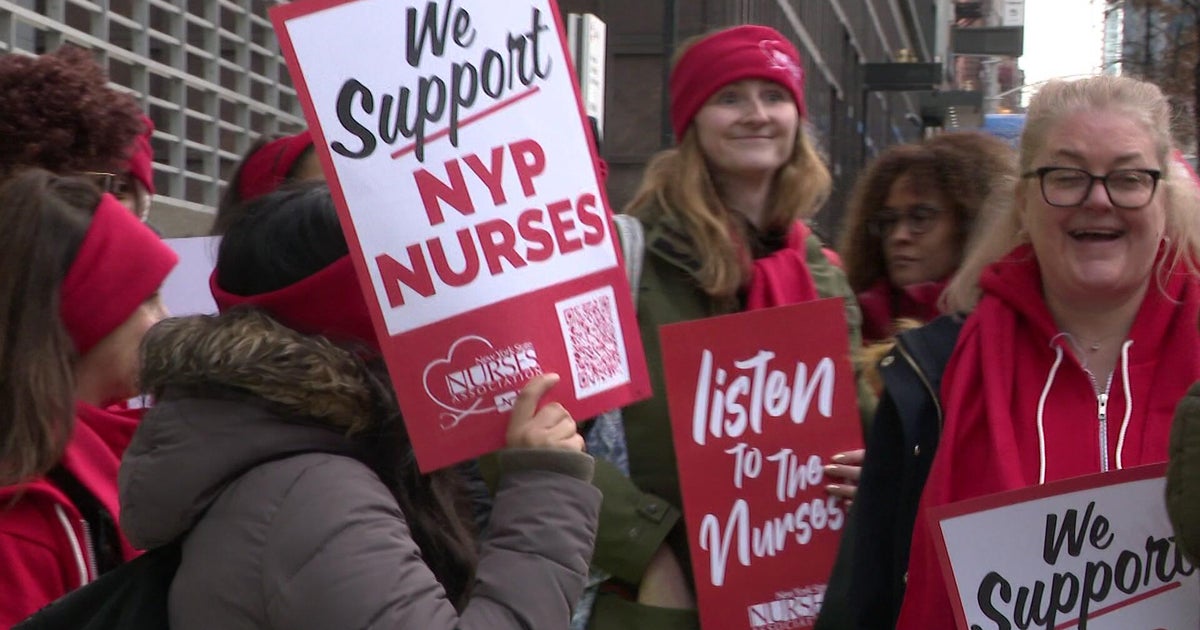
Nearly 16,000 New York State Nurses Association members at major NYC hospitals face a midnight deadline to avert a strike that would begin Monday and potentially last weeks, with walkouts planned at Montefiore, Mount Sinai campuses and NewYork-Presbyterian/Columbia. Core bargaining disputes center on health benefits, safe staffing and wages — NYSNA cites hospital cuts to benefits while hospitals call union demands 'reckless,' pointing to NYSNA demands they characterize as $3.6 billion including a near-40% wage increase. Montefiore is preparing for a multi-week work stoppage, some systems (notably Northwell facilities in Nassau County) have reached tentative agreements, and Gov. Kathy Hochul signed an executive order requiring Department of Health contingency planning.
Market structure: A NYC nurses strike is a localized shock that disproportionately benefits labor-shortage solution providers (travel/staffing firms AMN, CCRN) and telehealth/urgent-care alternatives (TDOC, urgent-care chains) while hurting inpatient-heavy operators with NYC exposure (HCA, THC) and medical office REITs (DOC, DOC/PEAK) via deferred elective procedures. Expect a concentrated revenue shift: ~16,000 nurses off the floor could raise travel-nurse demand +10–30% in metro rates within 1–3 weeks and depress elective volume in affected hospitals by 5–15% if strike >2 weeks.
Risk assessment: Tail risks include a multi-week strike (low probability, high impact) that materially widens credit spreads on municipally backed hospital debt and forces emergency state mandates increasing staffing costs 5–15%. Immediate horizon (days): operational disruption and volatility spike; short-term (weeks): revenue and margin impact for care providers; long-term (quarters): backlog re-routing to ambulatory/telehealth may permanently shift some volumes. Hidden dependency: insurers (UNH, CVS) may see claim timing shifts and short-term utilization changes, not net volume loss.
Trade implications: Primary tactical plays are long staffing/telehealth (AMN, CCRN, TDOC) via 45–90 day call spreads or outright small equity positions (1–3% portfolio) and hedges via short exposure to hospital operators/medical-office REITs (HCA, THC, DOC) sized 0.5–1%. Options: buy 60-day ATM calls on AMN or 1:2 call spreads to cap capital and target 20–40% returns; buy 30–60 day puts on DOC/PEAK if strike persists >7 days. Time entry on confirmed strike >48 hours; exit on settlement or after 30–90 days.
Contrarian angles: The market may overestimate systemic contagion — historical US hospital strikes typically resolve in days-weeks and long-term revenue loss is limited, so outright long positions in hospitals are likely over-penalized. Conversely, staffing firms’ spikes are often transient; use options to capture a 20–40% near-term move rather than large directional equity buys. Monitor union offers, governor intervention, and daily staffing-cost prints as catalysts that will reprice trades within 48–72 hours.
AI-powered research, real-time alerts, and portfolio analytics for institutional investors.
Request DemoOverall Sentiment
moderately negative
Sentiment Score
-0.45
