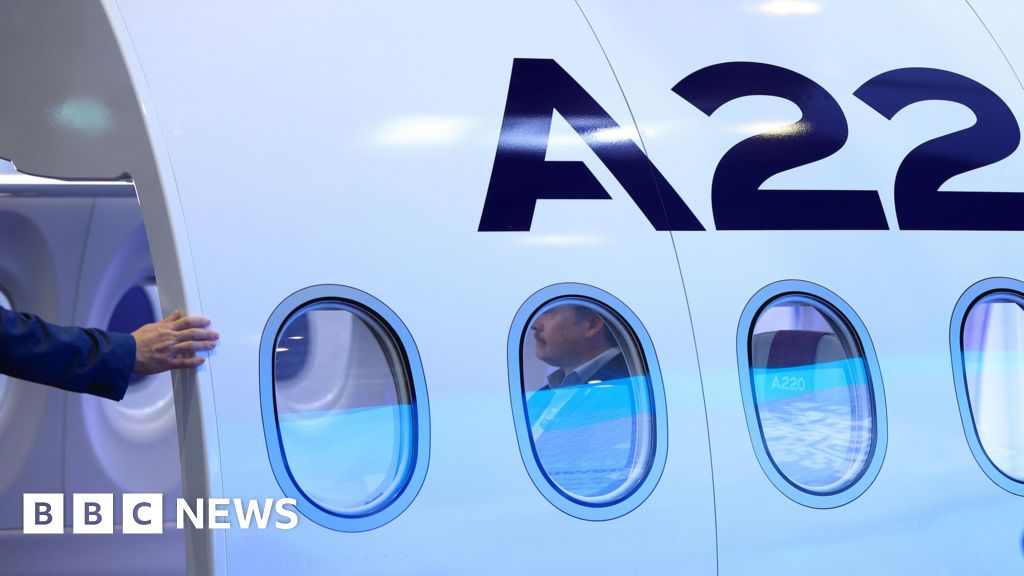
AirAsia has ordered 150 Airbus A220s, the largest A220 deal ever and enough to push total program orders above 1,000. The order is supportive for Airbus’s Belfast operation, which makes the A220 wings and mid-fuselage sections, reinforcing production ramp-up plans and local employment. Airbus has also been investing cash into Belfast to improve competitiveness, while industry speculation continues around a possible stretched A220 variant.
This is less a single-order story than a validation event for the A220 ramp thesis. The market should focus on utilization leverage at Belfast: once the fixed-cost base is absorbed, incremental wing/center-section volume can expand margins faster than headline unit growth suggests, especially if Airbus can hold quality through the ramp. The bigger second-order effect is supply-chain repricing in Northern Ireland—Tier-2 and labor constraints become the gating factor, so any execution slippage would show up first as cost inflation, not as demand weakness.
For Airbus, the optionality matters more than the order itself. A credible path toward a stretched A220 would expand the addressable seat-mile band and could re-rate program economics if it improves commonality and keeps the aircraft in a sweet spot versus larger narrowbodies. The risk is that a stretch forces a heavier industrial burden on an already tight production system; if the program announcement comes before Belfast demonstrates stable throughput, the market may treat it as backlog enthusiasm rather than value creation.
Boeing/Spirit is a more nuanced loser than the headline implies. Airbus winning large A220 commitments strengthens a competing platform in the same efficiency-oriented segment where airlines are most price-sensitive to fuel and maintenance economics. That can pressure Boeing’s adjacent single-aisle positioning and, over time, intensify competition for suppliers and skilled labor in Belfast, raising the bar for both OEMs on delivery reliability and margins.
The contrarian view is that investors may be overpaying for backlog visibility and underestimating execution risk. Aircraft orders are long-dated, and the value creation will depend on delivery cadence, not headline order count; if the program slips by even one quarter, the present value of the backlog drops meaningfully. The best setup is to buy the ramp if and only if management commentary confirms stable quality metrics and incremental capex translating into throughput, not just capacity.
AI-powered research, real-time alerts, and portfolio analytics for institutional investors.
Request DemoOverall Sentiment
mildly positive
Sentiment Score
0.40
Ticker Sentiment
