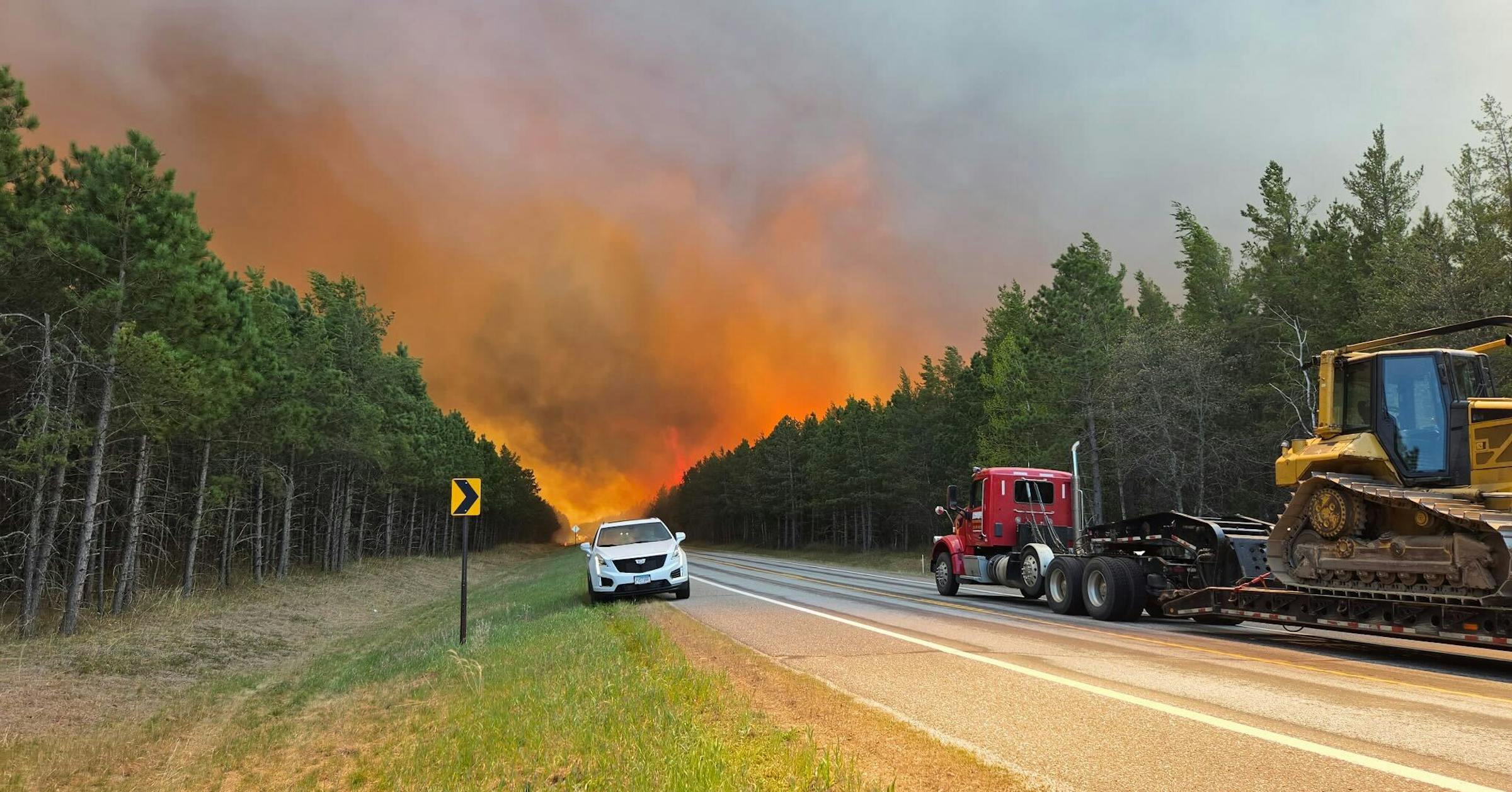
Wildfires spread across northern Minnesota over the weekend, with one blaze near Two Harbors burning 355 acres, destroying 34 structures including eight homes, and another 1,200-acre fire in Crow Wing County prompting a peacetime emergency and National Guard mobilization. An 11-mile stretch of Hwy. 61 remained closed, residents were evacuated, and aircraft plus local fire departments continued suppression and structure protection efforts. The events are materially negative for affected communities and nearby travel corridors, but the broader market impact is likely limited.
The first-order market impact is not in the fires themselves but in the forced repricing of “low-volatility” regional assets tied to tourism, lakefront hospitality, and exurban housing. A multi-day closure on a key corridor into a seasonal demand zone is enough to create a near-term revenue air pocket for resorts, restaurants, and destination retailers; the larger second-order effect is on booking behavior, as consumers substitute away from fire-adjacent leisure trips for the remainder of the peak planning window. Insurance investors should care more about the length of the claim tail than the current acreage: structures in wooded, dispersed communities are far more likely to generate high-severity property losses, litigation, and temporary loss-of-use claims than dense suburban events.
The more interesting trade is around infrastructure and emergency-response capacity. Aircraft, road closures, and guard mobilization imply a sustained operational burn that pressures state budgets and local contractors, while also highlighting scarcity in aerial firefighting and specialty remediation services. That tends to be a modest positive for defense-adjacent and disaster-response supply chains, but the real beneficiaries are niche service providers with regional scale and equipment availability; the losers are small local contractors that get displaced when large incidents pull labor, transport, and lodging capacity away from ordinary business.
Catalyst-wise, this is a days-to-weeks setup for travel and leisure names with direct Minnesota exposure and a months-long setup for insurers/reinsurers if the event expands into a broader wildfire season. A key reversal would be rainfall plus rapid containment, which would compress the immediate disruption premium; absent that, the bigger tail risk is renewed smoke/road interruptions that extend beyond the initial evacuation period and hit late-summer demand. The consensus is likely underestimating how much one visible highway closure can amplify cancellations across a whole leisure corridor, especially when alternative destinations are only marginally more expensive but much less operationally risky.
AI-powered research, real-time alerts, and portfolio analytics for institutional investors.
Request DemoOverall Sentiment
strongly negative
Sentiment Score
-0.68
