






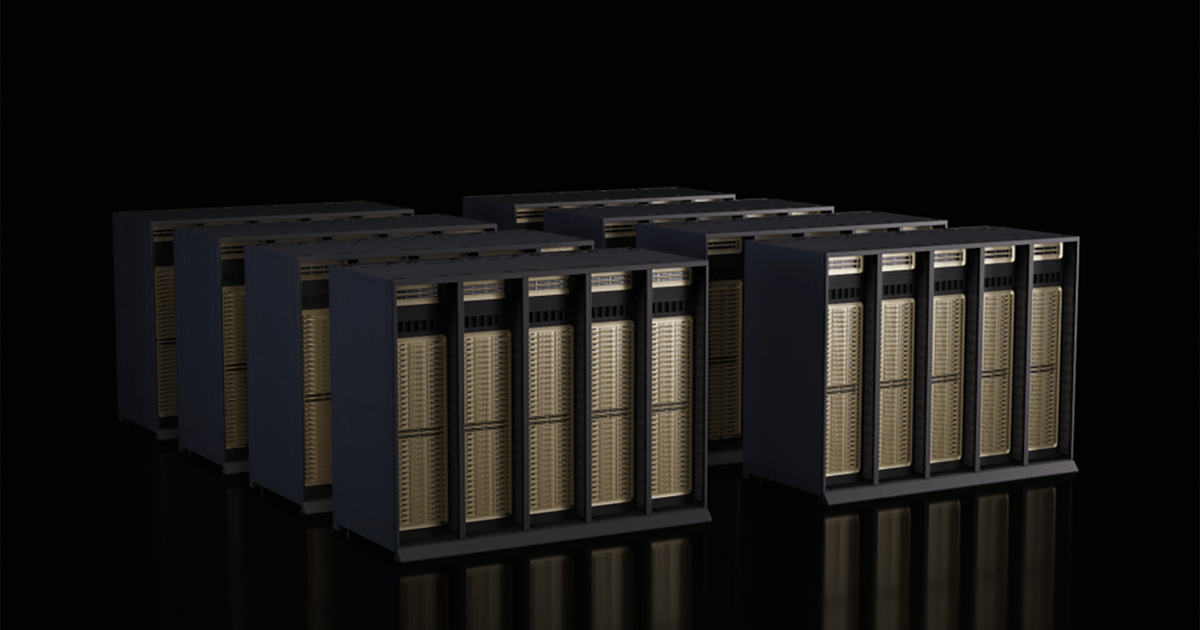
Nvidia said Vera Rubin and Vera CPU are in full production and on track to ship this fall, while unveiling DSX OS and DSX MaxLPS to improve AI factory efficiency and token throughput. The company also disclosed early Vera CPU adopters including Anthropic, OpenAI, and SpaceXAI, with additional support from Oracle Cloud Infrastructure, ByteDance, CoreWeave, Nebius, Nscale, and Lambda. Management framed Vera as a major growth driver, and said the platform delivers 1.8x the performance of x86 CPUs.
The key takeaway is that Nvidia is moving the value chain from "sell chips" to "sell operating leverage." DSX OS and the rack-level stack are designed to make compute denser, more predictable, and easier to schedule, which should raise realized utilization for customers and therefore support repeat orders even if unit growth slows. That is a subtle but important moat expansion: once the control plane becomes sticky, switching costs rise and the customer relationship shifts from procurement to platform dependency.
The near-term winners are the system integrators and infrastructure enablers with the fastest route to certified deployments, but the bigger second-order effect is on the economics of AI cloud operators. If power-constrained clusters can truly add meaningful GPU density inside the same envelope, the benefit accrues to whoever can finance and energize capacity fastest, which favors hyperscalers and well-capitalized neoclouds over smaller AI infra players. In contrast, older x86 CPU suppliers face a slow-burn competitive threat: the pitch here is not just better AI performance, but an attempt to pull general-purpose enterprise workloads into Nvidia’s ecosystem one deployment at a time.
The market may be underestimating the medium-term implication for non-Nvidia compute. If Vera lands with credible enterprise adjacency, the real displacement vector is not immediate share loss at AMD/Intel in datacenter CPUs, but gradual erosion of attach rates in AI factory builds and companion workloads over the next 6-12 months. The risk to the thesis is execution: software adoption must match the hardware cadence, and any slippage in power efficiency claims or customer qualification would compress the premium multiple quickly because the stock is already priced for infrastructure-platform dominance.
The contrarian angle is that the announcement is as much about protecting Nvidia’s own future margin structure as it is about adding new revenue pools. If customers adopt DSX-like tooling, some of the efficiency gain may be competed away into lower pricing per token or faster customer capacity expansion, rather than captured purely by Nvidia. That means the upside is real, but the cleanest trade is still relative rather than outright: long the platform, short the legacy CPU incumbents, and avoid paying for second-tier infra names unless they have clear certification momentum.
AI-powered research, real-time alerts, and portfolio analytics for institutional investors.
Request TrialOverall Sentiment
moderately positive
Sentiment Score
0.62
Ticker Sentiment
