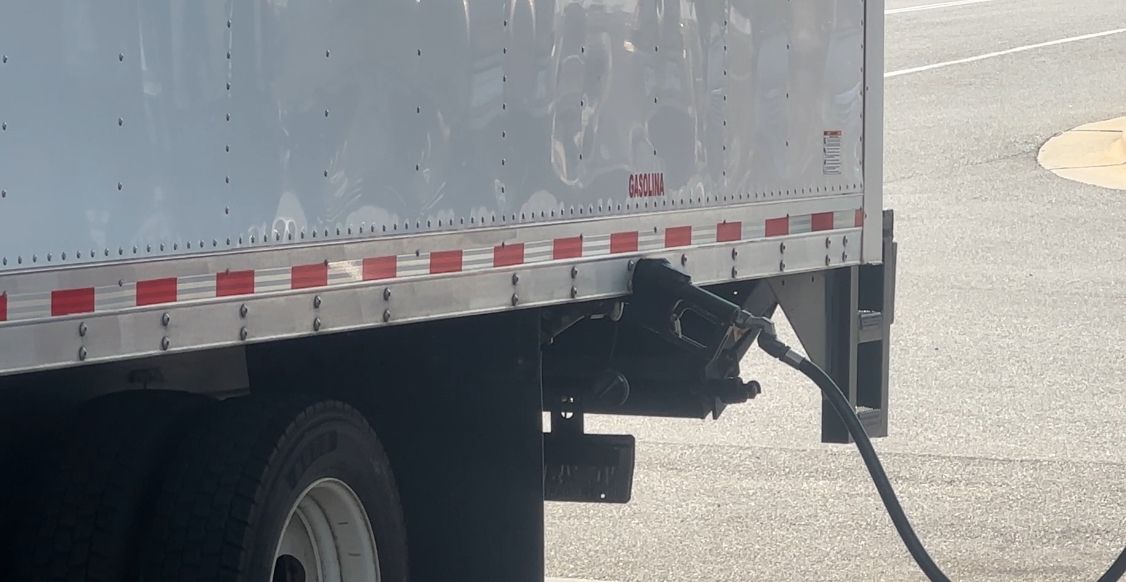
Diesel in North Carolina averages $4.25/gal, up about $0.70 week-over-week, with regular unleaded at $3.12 (+$0.36) and premium $3.97 (+$0.35). The spike, attributed to tightening oil supply amid the war with Iran (which President Trump said could last up to five weeks), is already squeezing diesel-dependent industries — e.g., a 300-gallon fill at ~$4/gal costs ~$1,200 — and may force higher consumer prices or service fees if sustained.
A localized spike in diesel driven by geopolitical risk will produce concentrated margin stress in diesel-intensive industries first, then broader inflation secondarily if the pressure persists beyond a few weeks. If diesel stays elevated for 4–12 weeks we should expect modal substitution: shippers will accelerate rail and barge routing for long-haul freight, creating near-term volume upside for Class Is that have spare capacity and pricing leverage. Trucking operators with tight fuel hedges, older fleets, or spot-heavy contracts will see earnings volatility and likely reduce spot capacity, amplifying short-term freight rate volatility.
Construction, agriculture and heavy-equipment rental chains face discrete input-cost pass-through decisions that will vary by regional competitive intensity; firms with strong local monopolies or differentiated services will pass costs and protect margins, while price-sensitive contractors will either absorb costs (hitting margins) or delay projects (hitting demand). Expect agricultural commodity basis adjustments as farmers front-load harvests or delay shipments to avoid high haul costs—this can temporarily widen basis and create trading opportunities in grain forwards and truck-to-rail basis trades. Retailers with integrated logistics and large bargaining power will neutralize some inflation exposure, making scale a key defensive quality.
The main catalysts that could reverse the move are rapid de-escalation, coordinated SPR releases, or prompt increases in floating supply from non-sanctioned producers; these operate on a days-to-weeks timescale. Tail risk is conflict escalation, shipping lane disruptions or sanctions that compress available tanker tonnage for months, which would push energy names higher and broaden inflationary effects into services. Position sizing should reflect this binary: asymmetric upside if supply disruption persists versus relatively quick mean reversion if politics diplomatically resolves the shock within weeks.
AI-powered research, real-time alerts, and portfolio analytics for institutional investors.
Request DemoOverall Sentiment
mildly negative
Sentiment Score
-0.30
