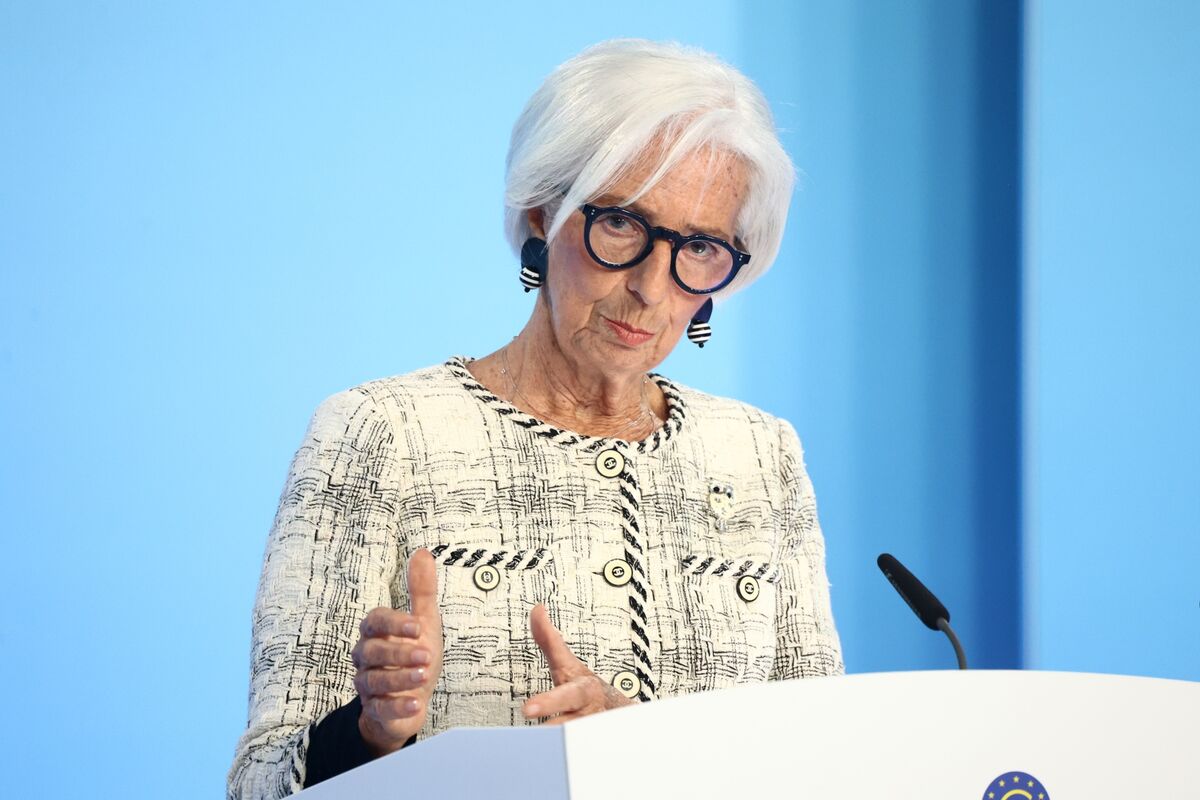
ECB President Christine Lagarde rejected the use of the 1970s stagflation label for the euro zone, saying current conditions do not amount to the same toxic mix of inflation and weak growth. Her comments frame the outlook as concerning but not comparable to classic stagflation, and align with a more measured central bank stance.
The key market signal is not the semantic rejection of “stagflation,” but the central bank’s need to preserve optionality. That usually reads as a policy stance that is still data-dependent, which keeps front-end rates volatile and caps any sustained rally in cyclicals until growth/inflation mix improves. In practice, this is mildly supportive for duration-sensitive assets if growth slows, but it also keeps real yields from collapsing because policy makers are signaling they will not pre-commit to easing.
The second-order effect is a widening regime gap between rate-sensitive defensives and parts of the cyclical complex. If inflation is still sticky enough to constrain easing while activity cools, margin pressure moves from consumers to balance-sheet levered companies first: discretionary, small-cap industrials, and lower-quality credit tend to absorb the downside before the broad index does. Financials are a mixed read: flatter-for-longer policy helps net interest income at the margin, but weaker loan demand and rising credit deterioration become the later-cycle offset over the next 3-6 months.
The market is likely underpricing the tail risk that policymakers remain rhetorically anti-stagflation while the data incrementally behaves like one. That creates a classic mismatch: the ECB can dismiss the label, but if inflation expectations re-accelerate while PMIs stay soft, rates can stay restrictive longer than consensus expects. The opportunity is to position for compression in economically sensitive earnings multiples without needing a hard recession call.
The contrarian view is that this is less about a macro turning point and more about central banks trying to prevent a self-fulfilling narrative from tightening financial conditions prematurely. If growth stabilizes even modestly, the market will quickly fade the stagflation debate and reprice toward a shallow-growth, disinflationary landing, which would hurt defensive overweights and steepener trades. For now, the asymmetry favors paying for downside protection in growth-sensitive exposure rather than extrapolating a full-blown 1970s analogue.
AI-powered research, real-time alerts, and portfolio analytics for institutional investors.
Request DemoOverall Sentiment
neutral
Sentiment Score
0.00
