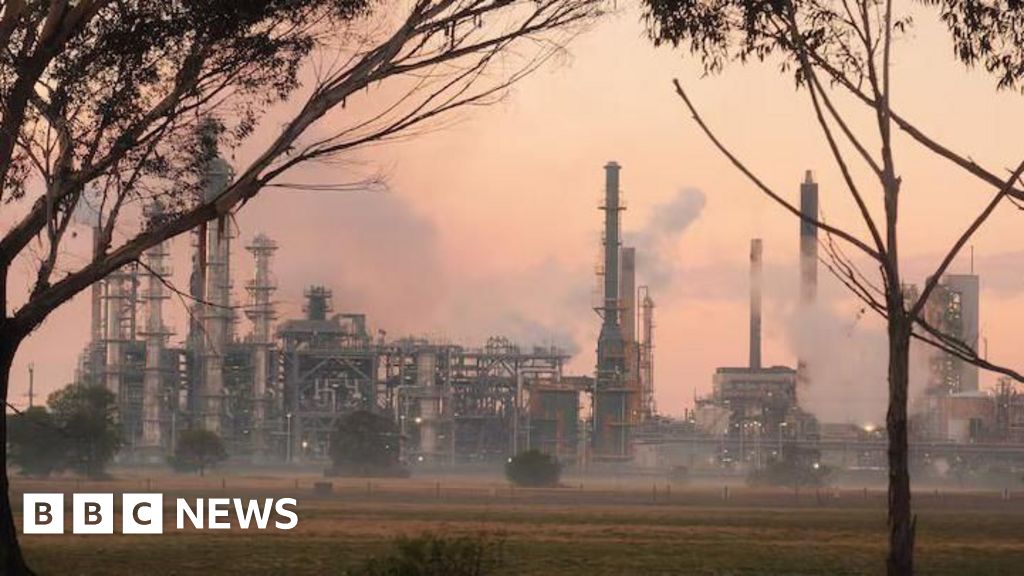
A major fire at Viva Energy's Corio refinery, which supplies about 10% of Australia's fuel and 50% of Victoria's, has been extinguished after 13 hours but has already raised concerns about petrol, diesel and jet fuel availability. The refinery processes roughly 120,000 barrels per day, and two petrol production units were affected, with output being reduced as a safety precaution. The incident comes amid a broader global fuel crunch and has the potential to tighten domestic fuel supplies and keep prices elevated.
This is less about one plant outage and more about a thin regional buffer meeting a global supply shock. When domestic refining capacity is already structurally underweight, even a temporary hiccup pushes Australia further up the marginal-cost curve for finished fuels, which usually shows up first in retail diesel/jet spreads before it hits headline gasoline availability. The immediate beneficiaries are upstream logistics and import-linked traders, while the losers are domestic mobility-sensitive sectors that cannot pass through fuel faster than weekly or monthly contract cycles.
The second-order risk is not a nationwide shortage, but a sequencing problem: product grades matter. Diesel and jet fuel are the tightest links because they feed freight, mining, and airline operations; that means margin compression can cascade into transport schedules, regional freight costs, and mining input inflation within days to weeks. If imports are rerouted into Australia, the hidden cost is longer working-capital cycles and wider landed spreads, which can persist for 1-3 months even after the refinery is back at full output.
The market may be underestimating how quickly this becomes a policy story. If consumer fuel inflation remains elevated into the next CPI print, there is a non-trivial chance of political pressure for temporary excise relief or strategic supply coordination, which would cap upside for local fuel prices but also compress retailer margins. On the other hand, if the refinery restart is slower than management guidance, the move can self-reinforce through precautionary buying, making the problem bigger than the physical outage itself.
Contrarian take: the headline is bearish for domestic fuel users, but not necessarily bullish for every global energy name. Australia’s import reliance means this is more of a distribution and pricing event than a crude-demand shock, so crude benchmarks may not respond much; the cleaner trade is in localized margin and logistics dislocations. The most attractive setup is to fade names tied to Australian discretionary travel and transport while staying selective on fuel suppliers that can capture regional spread widening without taking refinery downtime risk.
AI-powered research, real-time alerts, and portfolio analytics for institutional investors.
Request DemoOverall Sentiment
moderately negative
Sentiment Score
-0.45
Ticker Sentiment
