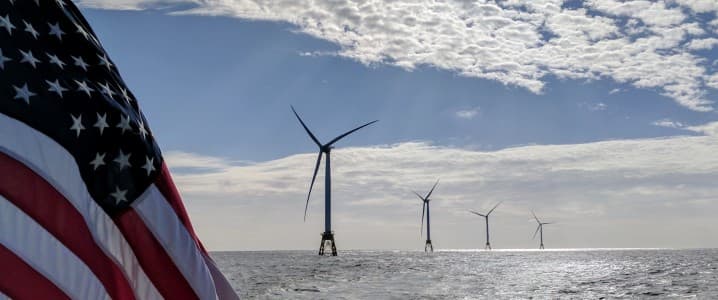
The Trump administration is reportedly weighing a roughly $928M (≈$1B) Justice Department payout to TotalEnergies in exchange for canceling two offshore wind leases (Attentive Energy off NY and Carolina Long Bay off NC). The move would effectively unwind Biden-era offshore wind development, follows $8B of U.S. clean-energy projects canceled or scaled back in Q1 2025, and could redirect TotalEnergies’ investment toward U.S. natural gas infrastructure. Leases would be canceled under the plan even if TotalEnergies rejects the payout, signaling active clearing of the offshore wind pipeline and heightened policy risk for renewables.
A visible administrative unwind of awarded clean-energy projects will become a structural shock to risk premia and the cost of capital for U.S. clean infrastructure. Models that assume a 6–8% WACC for offshore/utility-scale projects should add 150–300bps to reflect political-reversal risk — that alone raises LCOE by ~8–15% and renders many marginal projects uneconomic over 5–7 year build windows. Expect developers’ forward NPVs to compress by mid-teens percentages even before asset impairments are booked, because of higher financing spreads and longer contracting timelines.
Capital will reallocate to assets with shorter permitting cycles and tangible tolling or commodity cash flows: U.S. gas midstream and LNG exporters are the immediate beneficiaries as project sponsors redeploy capital to pipe and export infrastructure. The supply chain impact is asymmetric — turbine OEMs, specialized port construction contractors, and heavy-lift vessel providers face order book erosion and idiosyncratic credit stress, while well-capitalized global majors and US pipeline operators pick up M&A optionality for stranded project assets.
Key risk paths and catalysts: litigation/arbitration could produce multi-year tail liabilities that materially exceed one-off settlements, creating a stretched uncertainty window (12–36 months). Shorter-term catalysts that will reprice these exposures are federal filings/settlement notices (days–weeks), earnings revisions from developers/OEMs (quarterly), and election cycle shifts that could either harden or rollback the unwind (6–18 months). A meaningful reversal is possible if a subsequent administration reaffirms leases or courts find contractual violations — monitor filings and bondholder covenants for early signals.
AI-powered research, real-time alerts, and portfolio analytics for institutional investors.
Request DemoOverall Sentiment
moderately negative
Sentiment Score
-0.40
Ticker Sentiment
