
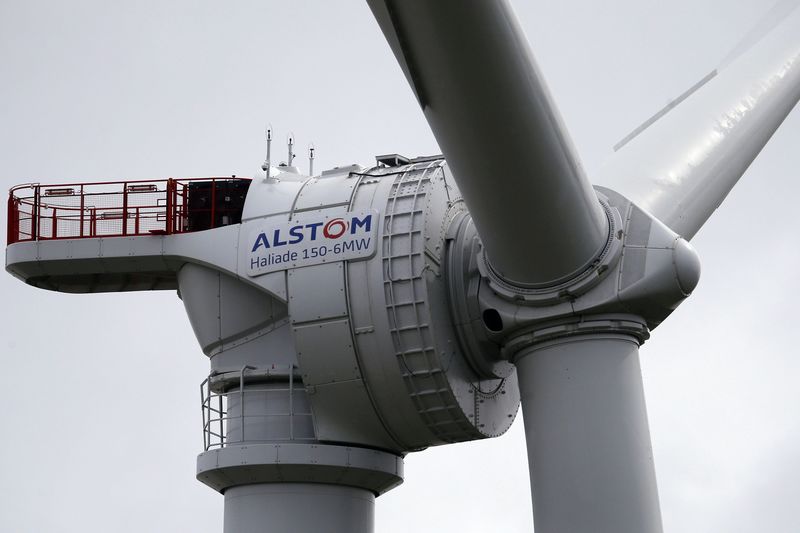
Alstom plunged about 28% after withdrawing its medium-term free cash flow target and warning it will not meet its 8-10% adjusted EBIT margin ambition by FY2026/27. The company now expects only "positive" FCF in FY2026/27, versus a prior €1.5 billion cumulative FCF goal, and flagged a roughly €1.5 billion H1 cash outflow versus ~€560 million expected. FY2025/26 sales rose 4% and organic growth was 7%, but EBIT margin came in near 6%, about 100 bps below guidance, and FY2026/27 outlook also trails consensus.
The market is repricing a credibility gap, not just a weaker cash flow path. When a capital-intensive operator with a large backlog still fails to convert demand into cash, the read-through is that execution friction is now the binding constraint; that tends to compress the multiple for the entire transport/OEM complex, especially names that rely on long-dated backlog narratives to justify premium valuations.
The second-order effect is on supplier and contractor economics: a slower ramp in new projects usually means a staggered working-capital unwind, delayed milestone billings, and greater pressure on subcontractors to absorb schedule slippage. In that setup, weaker counterparties can face a double hit—lower near-term revenue recognition and tighter payment terms—so the broader European rail supply chain may see margin dispersion widen even if end-demand stays intact.
The near-term catalyst path is asymmetric. Over days to weeks, the stock likely trades on balance-sheet anxiety and any further evidence that free cash flow guidance is too optimistic; over months, the key variable is whether management can show a sequence of improving project conversions rather than just orders. A reversal requires proof that the cash outflow was timing-related and that margin recovery is measurable in the next two quarters, otherwise the market will keep assigning a punitive discount for repeated guidance resets.
Contrarian view: the move may be overshooting the medium-term demand story. A backlog above prior records plus strong order intake means the revenue engine is not broken; if execution normalizes, the equity could rerate hard from depressed levels because the market is effectively pricing in a prolonged cash leakage scenario. The key is whether management has under-promised on demand but overpromised on conversion—if so, the eventual recovery can be sharp, but the timing is likely measured in quarters, not weeks.
AI-powered research, real-time alerts, and portfolio analytics for institutional investors.
Request TrialOverall Sentiment
strongly negative
Sentiment Score
-0.78
Ticker Sentiment
