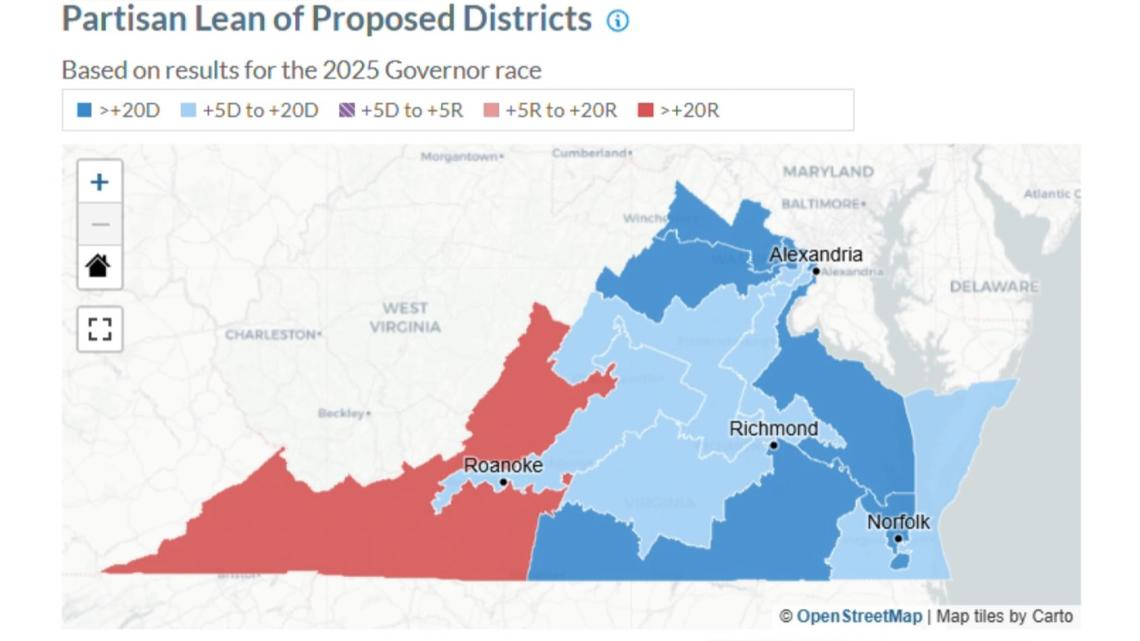
Virginia voters will decide on a constitutional amendment that could allow congressional districts to be redrawn before the 2030 census, potentially shifting the House balance by favoring Democrats in 10 of 11 districts versus the current 6-5 edge. Supporters frame it as a temporary response to GOP-led redistricting efforts in other states, while opponents argue it undermines Virginia's bipartisan anti-gerrymandering process. More than 1.3 million Virginians have already voted early, but polling suggests the outcome remains too close to call.
This is not a direct market event, but it is a meaningful governance signal for anyone trading the 2026 House control path. If the amendment passes, it materially improves the odds that one party can defend or expand its narrow chamber edge without waiting for the census cycle, which raises the probability of a more aggressive national redistricting cascade. That matters because the market impact is less about ideology and more about legislative math: a few seats can reprice policy odds on taxes, antitrust, healthcare reimbursement, defense spending, and regulated industries over a 12-18 month horizon.
The second-order effect is that the referendum functions like an early read on turnout infrastructure and donor enthusiasm ahead of 2026. A close result with heavy early voting suggests both sides are capable of mobilizing in low-information races, which increases the odds that 2026 congressional outcomes are driven by field operations rather than macro approval trends. That typically benefits names exposed to policy volatility — especially sectors where reimbursement, procurement, or rulemaking can swing with committee control.
The contrarian angle is that the immediate asset-market reaction is likely overstated because map changes do not translate cleanly into policy until after the next election and likely legal challenges. The more relevant risk is not the amendment itself, but the normalization of mid-decade redistricting: once both parties treat map-drawing as a live tool, the expected value of stable policy regimes falls. That can raise the political risk premium across long-duration domestic cyclicals and regulated equities, even if the headline vote is narrowly won or lost.
AI-powered research, real-time alerts, and portfolio analytics for institutional investors.
Request DemoOverall Sentiment
neutral
Sentiment Score
0.00
