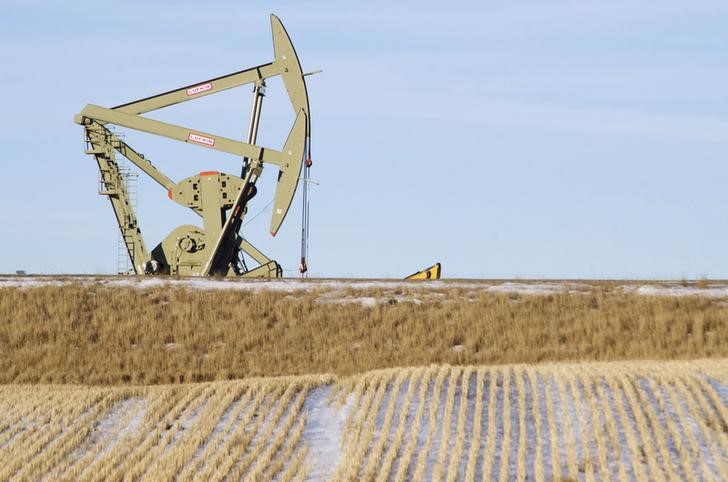
Brent crude fell 0.6% to $110.65/bbl and WTI dropped 0.9% to $99.05/bbl after hitting near three-week highs on Tuesday, as markets weighed the UAE’s exit from OPEC. The decline was limited by ongoing U.S.-Israel-Iran war uncertainty, with the Strait of Hormuz still closed and roughly 20% of global oil supply disrupted since late-February. The firmer dollar also pressured gold prices to about a one-month low.
The market is treating this as a simple geopolitical premium, but the more important second-order effect is that a sustained Hormuz disruption re-rates the entire global inflation path, not just crude. That means the first winners are not only energy producers, but also dollar-sensitive asset classes that get hit by tighter global financial conditions and higher import costs. In this setup, the dollar strength is doing part of the Fed’s tightening work for it, which keeps real rates elevated and leaves growth cyclicals with less room to absorb input-cost shocks.
The UAE’s break with OPEC is strategically meaningful even if it is not immediately supply-expansive. It signals that quota discipline is weakening just as spare capacity is being rendered unusable by logistics, which increases the probability of a more fragmented producer bloc and a less credible supply backstop. If shipping normalizes, the UAE becomes a latent short-term supply overhang; if it does not, the market is forced to pay for scarcity without the usual cartel coordination safety valve, which supports elevated backwardation and keeps front-month volatility bid.
The contrarian point is that the market may be overpricing the durability of the current surge while underpricing the policy response lag. Once headlines shift from escalation to containment, crude can mean-revert quickly because the move has been driven more by supply fear than by immediate physical shortfall in end-demand. But the better asymmetry near term is that the inflation impulse is already here, while any de-escalation benefit likely takes weeks to translate into inventory and freight normalization.
For SMCI and APP, the link is indirect but real: persistent dollar firmness and higher energy costs can pressure multiple expansion by keeping rates higher for longer, even if AI capex remains intact. That makes them more vulnerable to factor rotation than to a fundamental reset, so the trade is about duration and liquidity rather than demand destruction. The cleaner expression is to fade high-beta growth versus energy until there is evidence that Hormuz reopens or Brent loses the risk premium.
AI-powered research, real-time alerts, and portfolio analytics for institutional investors.
Request DemoOverall Sentiment
mildly negative
Sentiment Score
-0.15
Ticker Sentiment
