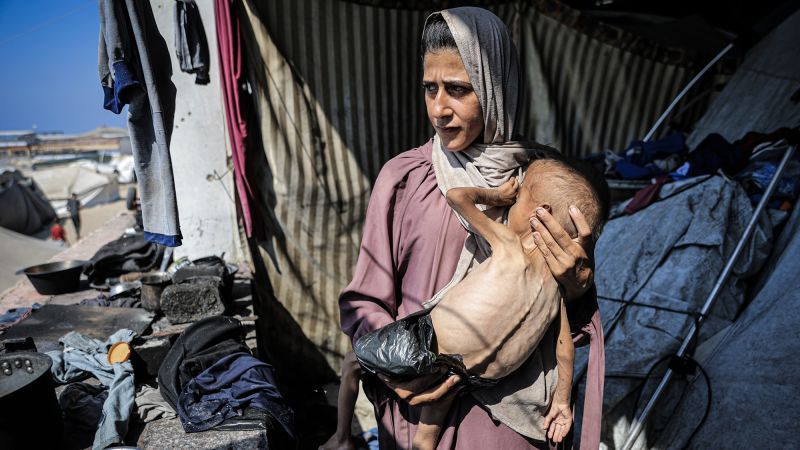
The Gaza Strip is experiencing a severe man-made mass starvation, with all 2.1 million residents food insecure and daily aid truck deliveries drastically reduced from pre-war levels due to Israel's ongoing blockade. This has led to accusations of using food as a weapon and hindering UN aid, while a controversial new Israel- and US-backed aid group (GHF) has failed to alleviate conditions, with over 1,000 deaths reported at aid distribution sites. The escalating humanitarian catastrophe is drawing mounting international condemnation, including from Western allies, intensifying geopolitical pressure on Israel amid its stated efforts to prevent Hamas involvement in aid delivery.
The Gaza Strip is facing a man-made humanitarian catastrophe characterized by what the World Health Organization terms "mass starvation," with the entire population of 2.1 million now food insecure. This crisis is a direct result of a severe reduction in aid flow, which has plummeted from a pre-war level of 500-600 trucks per day to an average of just 28, following Israel's imposition of a "complete siege." The operational landscape for aid has been radically altered by the replacement of the UN's role with a new, controversial Israel- and US-backed entity, the Gaza Humanitarian Foundation (GHF). This shift has failed to alleviate the crisis and has coincided with a sharp increase in violence, with the UN reporting over 1,000 fatalities near aid distribution sites since the GHF began operating in late May. The GHF's credibility is undermined by the pre-launch resignation of its director over an inability to adhere to humanitarian principles and its operational model, which critics state violates neutrality. Compounding the issue is a breakdown in civil order, marked by looting and the emergence of armed gangs, a situation partly attributed to Israel's controversial arming of local militias. Despite escalating international condemnation, including from 25 Western nations, Israeli policy remains focused on preventing aid from reaching Hamas, creating a tense geopolitical standoff. The extremely negative sentiment is contrasted by a low market impact score, suggesting investors currently view this as a contained regional crisis rather than a systemic threat, though the potential for escalation remains a significant tail risk.
AI-powered research, real-time alerts, and portfolio analytics for institutional investors.
Request DemoOverall Sentiment
extremely negative
Sentiment Score
-0.85
