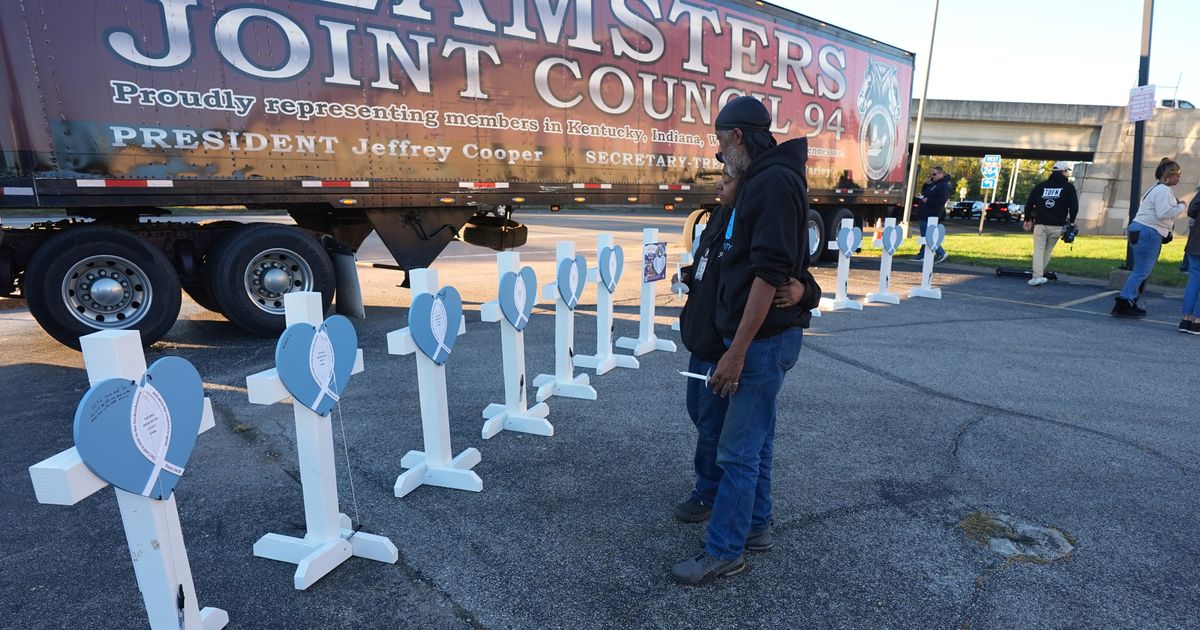
A UPS MD-11 cargo jet crashed after takeoff from Louisville on Nov. 4, killing multiple people and raising the overall death toll to 15 with the recent death of a scrapyard worker, Alain Rodriguez Colina. The NTSB found cracks where the engine attached to the wing, the FAA has grounded all MD-11s, and wrongful-death suits alleging inadequate maintenance on older aircraft name UPS and General Electric, creating legal and operational risk. The grounding and litigation pose short-term logistics disruption risks at Louisville's major UPS hub and potential reputational and financial exposure for UPS and GE as federal investigators continue their probe.
Market structure: UPS is the clear immediate loser — expect near-term revenue/margin pressure in air-forwarding operations and spot pricing power for urgent freight to rise 2–5% over 1–3 months as capacity is reallocated. Competitors with flexible freighter capacity (FDX) and integrators with truck/rail options (AMZN/Amazon Air indirectly, JBHT, CSX) should capture share; insurers and GE (engine maker) face contingent liabilities, shifting capital toward claims and legal reserves.
Risk assessment: Tail risks include an extended FAA MD‑11 grounding (beyond 60–90 days), a findings-led regulatory crackdown that forces accelerated fleet retirement, or multi-billion dollar class-action suits assigning maintenance negligence — each could widen UPS 5Y CDS by 50–150 bps and cut EPS by an estimated 3–8% over 4–12 quarters. Immediate (days) risk is volatility and headline-driven flows; short-term (weeks–months) is capacity and lease/charter cost inflation; long-term (quarters–years) is higher capex and contract pricing pressure.
Trade implications: Tactical trades: short UPS volatility and credit, long FDX/ground-transport exposure; use options to asymmetrically hedge near-term. Key catalysts to act on: NTSB interim reports and FAA directives (next 30–90 days) and UPS quarterly guidance (next earnings). If CDS or stock-implied vol rises >30% relative to sector, increase hedges.
Contrarian angles: The market may overprice structural damage — MD‑11s were aging and represent a modest share of total capacity, so a 3–6 month operational deceleration is likelier than permanent market-share loss. Consider limited, time‑boxed recovery exposure (12‑month OTM calls) because a cleared NTSB/Federal outcome or rapid fleet substitution could produce a sharp rebound within 3–9 months.
AI-powered research, real-time alerts, and portfolio analytics for institutional investors.
Request DemoOverall Sentiment
moderately negative
Sentiment Score
-0.35
Ticker Sentiment
