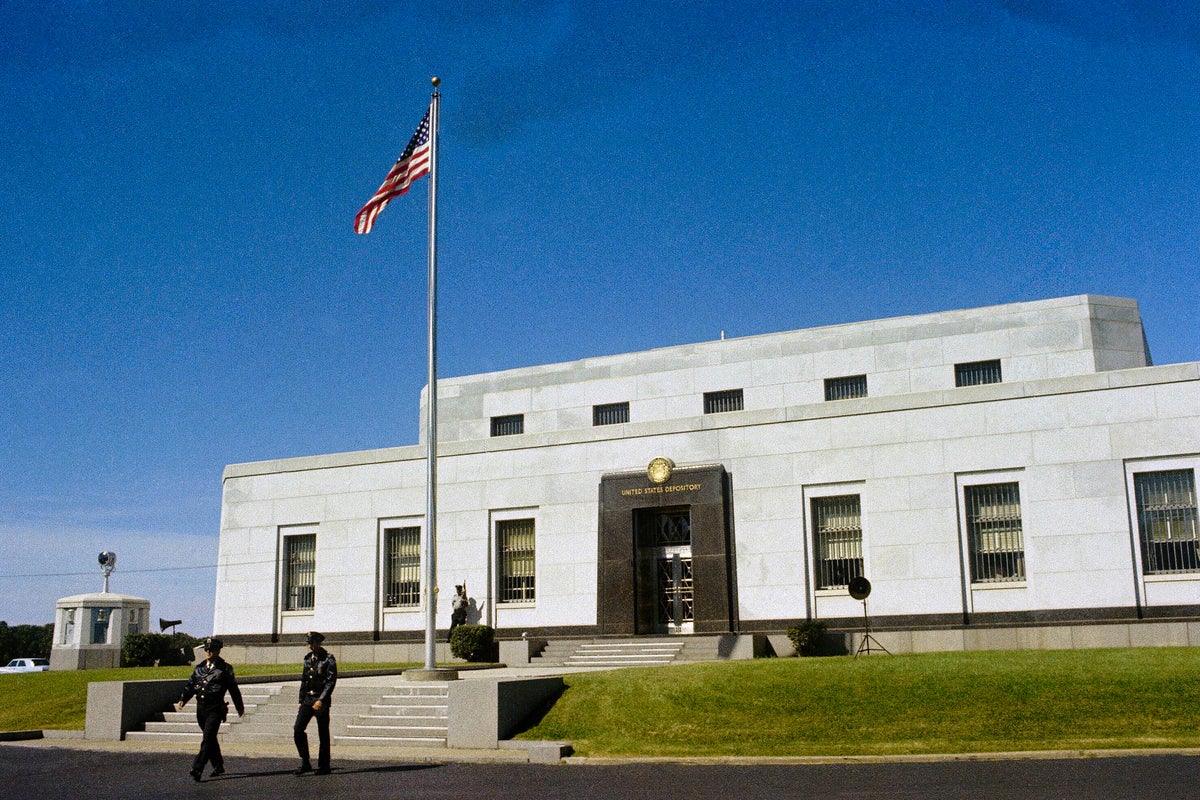
Trump said he still wants to visit Fort Knox to verify that the U.S. gold reserves are present, after repeating concerns that "they steal a lot." The article notes Fort Knox holds 147,341,858.382 fine troy ounces of gold and is audited annually by Treasury Secretary Scott Bessent, who said all gold is present and accounted for. The piece is largely political commentary and does not indicate an immediate policy change or market-moving development.
The market impact is not about gold inventories; it’s about signaling. When the executive branch publicly questions the integrity of a sovereign reserve, it cheapens institutional credibility at the margin and nudges investors toward hard-asset hedges, but only modestly unless the rhetoric broadens into a broader audit or accounting dispute. The first-order beneficiary is sentiment for gold and gold-adjacent miners, but the more durable effect is a small increase in the probability that reserve transparency becomes a political theme in 2025–26.
Second-order, this is a governance trade rather than a commodity trade. If the topic sticks, it reinforces a broader narrative of mistrust in fiscal institutions, which tends to steepen demand for inflation hedges, T-bill alternatives, and foreign reserve diversification. That matters most if it coincides with higher real rates falling or a renewed deficit debate; absent those catalysts, the move likely fades within days and becomes headline noise.
The contrarian read is that the administration is more likely to generate optics than action: an actual audit would probably confirm the status quo and deflate the story. That means chasing a large gold rally here is low-conviction unless there is follow-through from Congress or Treasury. The better setup is to own optionality into any escalation, not spot exposure today.
AI-powered research, real-time alerts, and portfolio analytics for institutional investors.
Overall Sentiment
neutral
Sentiment Score
0.00
