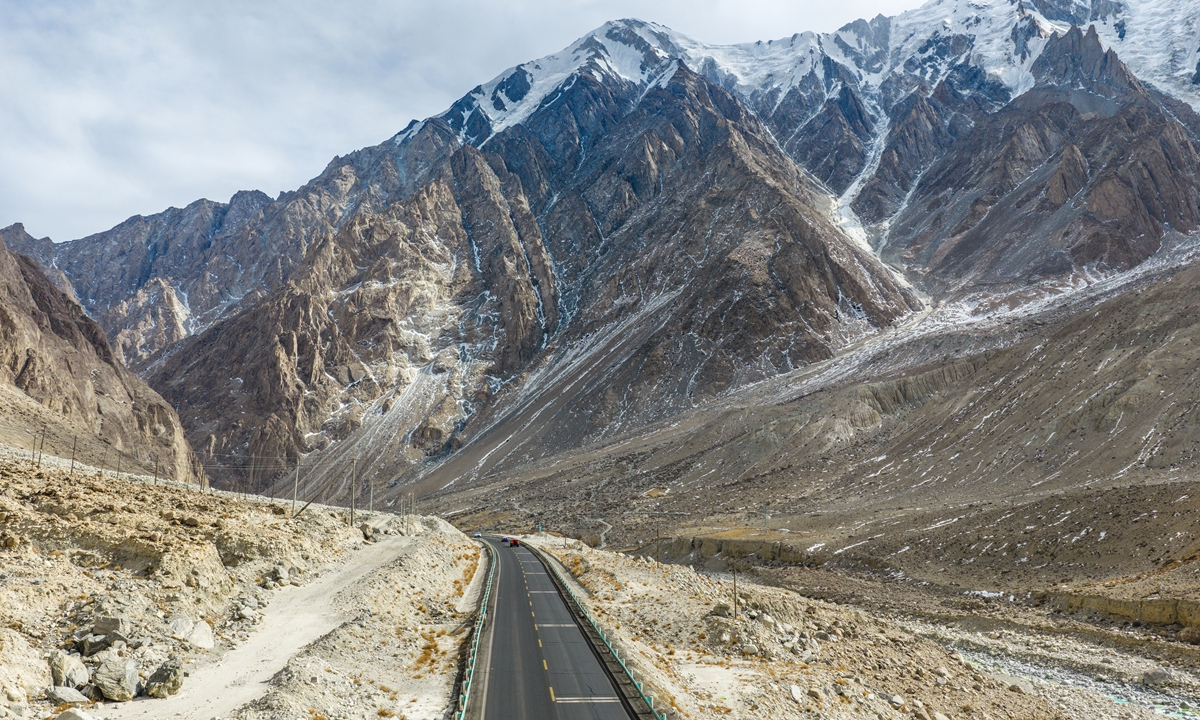
Pakistan-China ties are presented as entering a new phase after 75 years, with cooperation expanding from the Karakoram Highway and CPEC into industrial modernization, digital connectivity, green development, and scientific collaboration. The article highlights deeper educational and research links, including a growing pipeline of Pakistani talent trained in China. Overall tone is constructive but largely diplomatic and thematic rather than event-driven, implying limited immediate market impact.
This is a soft-power signal, but the marketable content is the shift from legacy infrastructure rhetoric to bankable themes: industrial upgrading, digital connectivity, green transition, and human-capital transfer. That mix favors a second-order re-rating of Chinese contractors, grid/renewables supply chains, and select EM education/tech enablers more than headline CPEC beneficiaries, because the next phase is likely to be smaller-ticket, higher-margin, and more localized than the original roads-and-power buildout.
The bigger implication is supply-chain de-risking around Pakistan as a corridor node. If even a modest share of Chinese industrial capacity, processing, or assembly is pushed westward into Pakistan-linked zones, the winners are logistics, transmission, and services providers that can sit between China’s overcapacity and South Asian demand. The losers are more likely to be commodity-heavy EPC names dependent on new megaproject awards, because the incremental capex mix is moving toward software, research, and resilience rather than concrete.
From a timing standpoint, this is not a days-trade catalyst; it is a 6-24 month policy drift story with intermittent headline risk. The main tail risk is execution: Pakistan’s FX stress, security environment, and financing constraints can easily turn “high-quality cooperation” into a slower rollout, which would cap the earnings translation for any adjacent beneficiaries. A second tail risk is geopolitics — if broader US-China tensions intensify, technology-transfer and digital cooperation could become more constrained than the diplomatic language implies.
The contrarian point is that consensus may still be underpricing the green and education angle. If Pakistan-China cooperation continues shifting toward power management, agri-tech, and training pipelines, the value may accrue in recurring service revenues and component supply, not in one-off project wins. That argues for selective exposure to companies with recurring China-linked service/technology revenue and for fading the reflexive trade in pure construction proxies.
AI-powered research, real-time alerts, and portfolio analytics for institutional investors.
Request DemoOverall Sentiment
mildly positive
Sentiment Score
0.20
