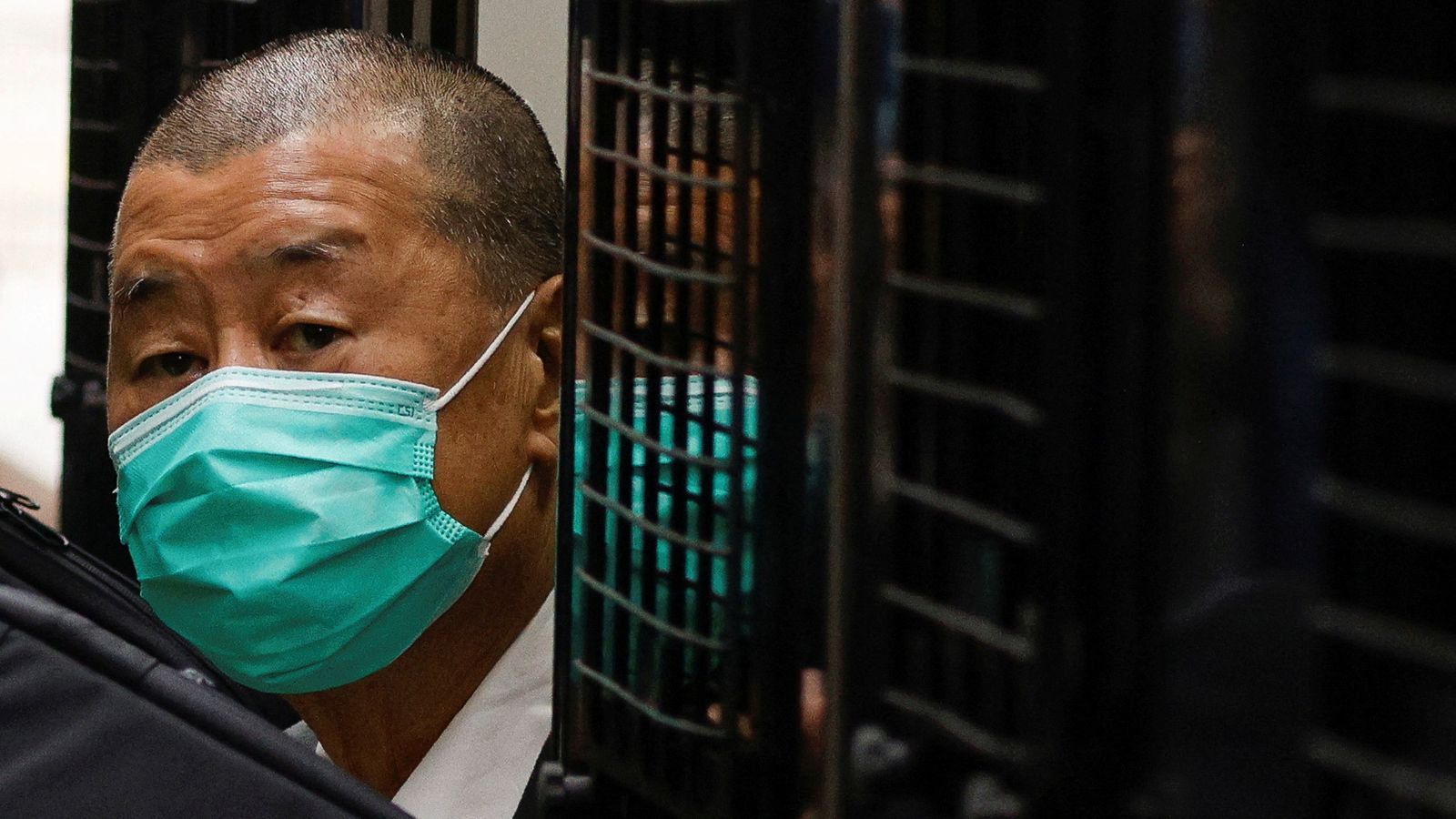
A Hong Kong court has quashed Jimmy Lai's 2022 fraud conviction (a 5 years 9 months sentence), but he remains imprisoned after being sentenced to 20 years under China's national security law for conspiracy to collude with foreign forces and publishing seditious materials; judges had allowed only two years to be served concurrently so the quashing only slightly reduces his total term. The outcome reinforces persistent political and legal risk in Hong Kong — particularly for media businesses and rule-of-law perceptions — a continued negative factor for investor sentiment toward Hong Kong/China exposures.
Market structure: The quashing of one fraud count but retention of a long national-security sentence keeps Hong Kong political risk elevated; direct losers are HK-listed media, small-cap pro-democracy-linked names and IPO pipeline participants (higher risk premia), while global safe-haven sovereigns and USD benefit modestly. Competitive dynamics tighten for any independent media/consumer-discretionary plays in HK—pricing power of state-aligned conglomerates and SOEs is insulated and may modestly improve as capital reallocates. Cross-asset: expect short-term bid to USTs (yields −10–30bp) and JPY/USD flows; HKD remains stable via peg but volatility in HSI and Hong Kong small-cap ETFs (EWH) should rise 20–40% implied vol over 1–3 months.
Risk assessment: Tail risks include wider sanctions/asset freezes, broader clampdown on foreign capital leading to outflows >5% of HK market cap (low probability, high impact). Immediate (days): knee-jerk HSI down 3–6%; short-term (weeks–months): higher volatility and selective de-rating of HK media/tech; long-term (quarters+): structural increase in country-risk premium, higher cost of capital for HK listings. Hidden dependencies: liquidity in HK secondary market, margin-call dynamics of leveraged retail, and timing of PRC regulatory calendar (NPC/PLA anniversaries) are catalysts; a coordinated regulatory move or new charges within 30–90 days would materially worsen sentiment.
Trade implications: Direct plays — short concentrated HK exposure via EWH or 2800.HK, size 1–3% portfolio, or buy 3-month EWH puts 10–15% OTM as insurance; hedge with 2–3% long TLT for rate-driven risk-off. Pair trade — long FXI (China state champions) vs short EWH to express a rotation from politically sensitive HK small/mid caps into mainland SOEs if distress selling appears; scale into FXI after a >10% HSI drop. Options — buy near-term puts on EWH (30–90 day) and sell covered calls on TLT to finance hedges; target implied vol >25% on EWH as entry.
Contrarian angles: Consensus focuses on politics — but market may overshoot and create buyable opportunities in SOE-backed utilities, banks and property names with implicit state support; historical parallels: 2015/2020 China selloffs recovered 15–40% in 3–12 months when policy support arrived. Reaction may be overdone if Beijing avoids broad financial escalation; unintended consequence of aggressive selling could force state intervention and rapid snapback, making short HK positions time-sensitive and suggesting options hedges rather than large naked shorts.
AI-powered research, real-time alerts, and portfolio analytics for institutional investors.
Request TrialOverall Sentiment
moderately negative
Sentiment Score
-0.40
