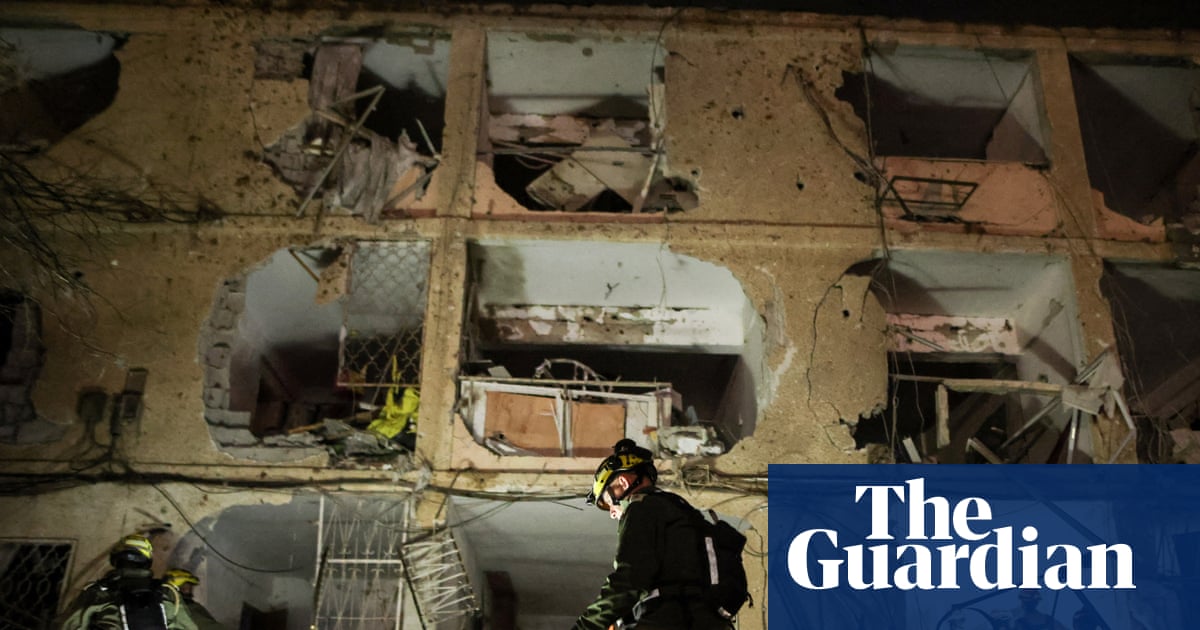
An Iranian missile struck the Israeli town of Dimona (near a suspected nuclear facility), with Israeli first responders treating 33 people at multiple sites and a 10-year-old in serious condition; Iran said the strike was retaliation for reported attacks on its Natanz nuclear site. The incident, concurrent US strikes (including 5,000-pound bombs on an Iranian coastal facility per US CENTCOM) and Iran's restrictions around the Strait of Hormuz — which handles roughly one-fifth of global seaborne crude — have driven Brent crude >50% higher over the past month to comfortably above $105/bbl, heightening supply and shipping risks and prompting a risk-off market response.
Immediate market mechanics: sustained risk to Gulf transit elevates a structural premium in seaborne crude transport and insurance that is likely to persist for weeks-to-months. If insured transit capacity is effectively reduced by even 5-8% (via higher premiums, rerouting or convoy requirements), expect an incremental $1–$3/bbl logistics and insurance cost embedded into benchmark spreads and refiners’ landed cost within 30–90 days. That amplifies Brent volatility and increases backwardation risk for near-dated barrels.
Defense and industrial second-order effects favor accelerated procurement cycles for theatre air‑defence, ISR and hardened facilities with decision windows measured in quarters not years. Order-book acceleration (formal requests for proposals, emergency purchases) typically converts to revenue for primes within 3–12 months and to aftermarket/munitions revenue inside 6–18 months; margin capture is much higher on urgent production runs and spare-parts supply than on baseline aerospace programs. Conversely, regional tourism, cargo volumes and local SMEs face earnings compression as travel risk premia and security costs rise.
Macro and credit channels: expect episodic safe-haven flows into gold/bonds and episodic widening in EM sovereign and corporate spreads (we would model +50–150bps in stressed episodes). The main catalysts for reversal are rapid diplomatic de‑escalation, a decisive interdiction of strike capabilities, or credible assurance of Hormuz re‑opening — each could compress the premium within 2–8 weeks. Absent those, plan for a multi‑month elevated baseline in energy/shipping risk premia and a multi‑quarter uplift in defense capex.
AI-powered research, real-time alerts, and portfolio analytics for institutional investors.
Request DemoOverall Sentiment
strongly negative
Sentiment Score
-0.75
