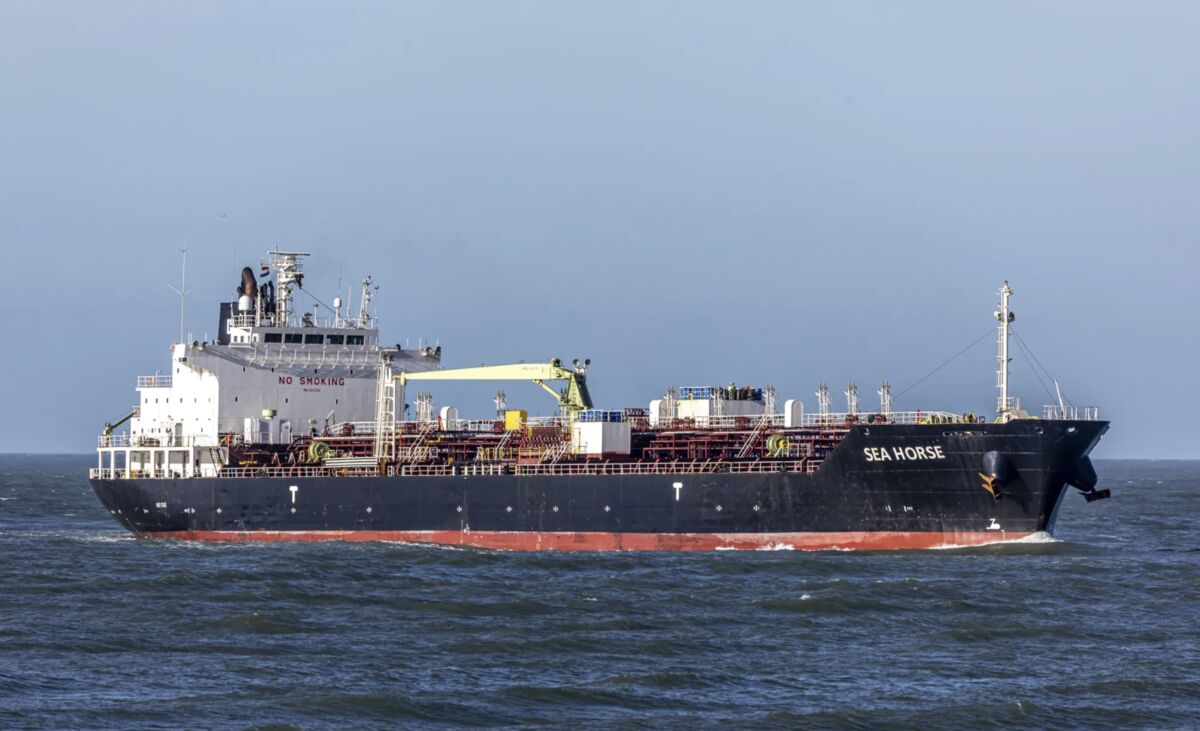
200,000 barrels: the tanker Sea Horse, believed to be carrying roughly 200,000 barrels of Russian gas oil/diesel, updated its destination to Trinidad and Tobago after the US clarified Cuba remains ineligible to receive Russian fuel. The vessel had earlier halted mid-Atlantic amid what is described as a de facto US fuel blockade of Cuba, highlighting enforcement risk and potential rerouting or supply-chain friction for regional fuel shipments.
The US enforcement signal is a marginal cost shock to the Atlantic refined product logistics chain rather than a one-off political headline: expect higher transaction friction (insurance, vetting, STS transfers) to raise effective delivered cost of gasoil/ULSD by $1.50–$3.50/bbl on routes that previously relied on opaque or sanctioned-origin barrels. That friction is concentrated on MR/Handysize product trades and the Caribbean-to-Atlantic corridors, so freight (MR TCEs) can rerate 20–40% within 1–3 months as cargoes detour to compliant ports and longer ballast legs reduce available tonnage.
Second-order winners will be compliant regional hubs and refiners with proximate export capability — Trinidad & Tobago, Guyana-adjacent load points, and European importers that can legally absorb incremental volumes — which will capture margin via increased throughput and slightly higher crack spreads. Conversely, counterparties that underwrite risk (private P&I clubs, smaller brokers, and traders dependent on opaque documentation) face higher claims and capital costs; expect re-pricing of credit lines and a 5–10% working-capital hit for mid-sized commodity traders over the next 6–12 months.
Tail risks: a stricter, broader embargo or escalation (e.g., secondary sanctions on reflagging/STSs) could freeze entire classes of product flows, lifting Atlantic basin cracks $4+bbl and spiking war-risk premiums beyond $20k/day for affected routes within weeks. The reversal catalyst is either a diplomatic carve-out/waiver process that restores legal cover for alternate delivery mechanisms or a surge in product exports from non-Russian sources (India, West Africa) within 2–4 months that increases effective supply to pre-shock levels; both outcomes would swiftly compress freight and crack premiums.
AI-powered research, real-time alerts, and portfolio analytics for institutional investors.
Overall Sentiment
neutral
Sentiment Score
0.00
