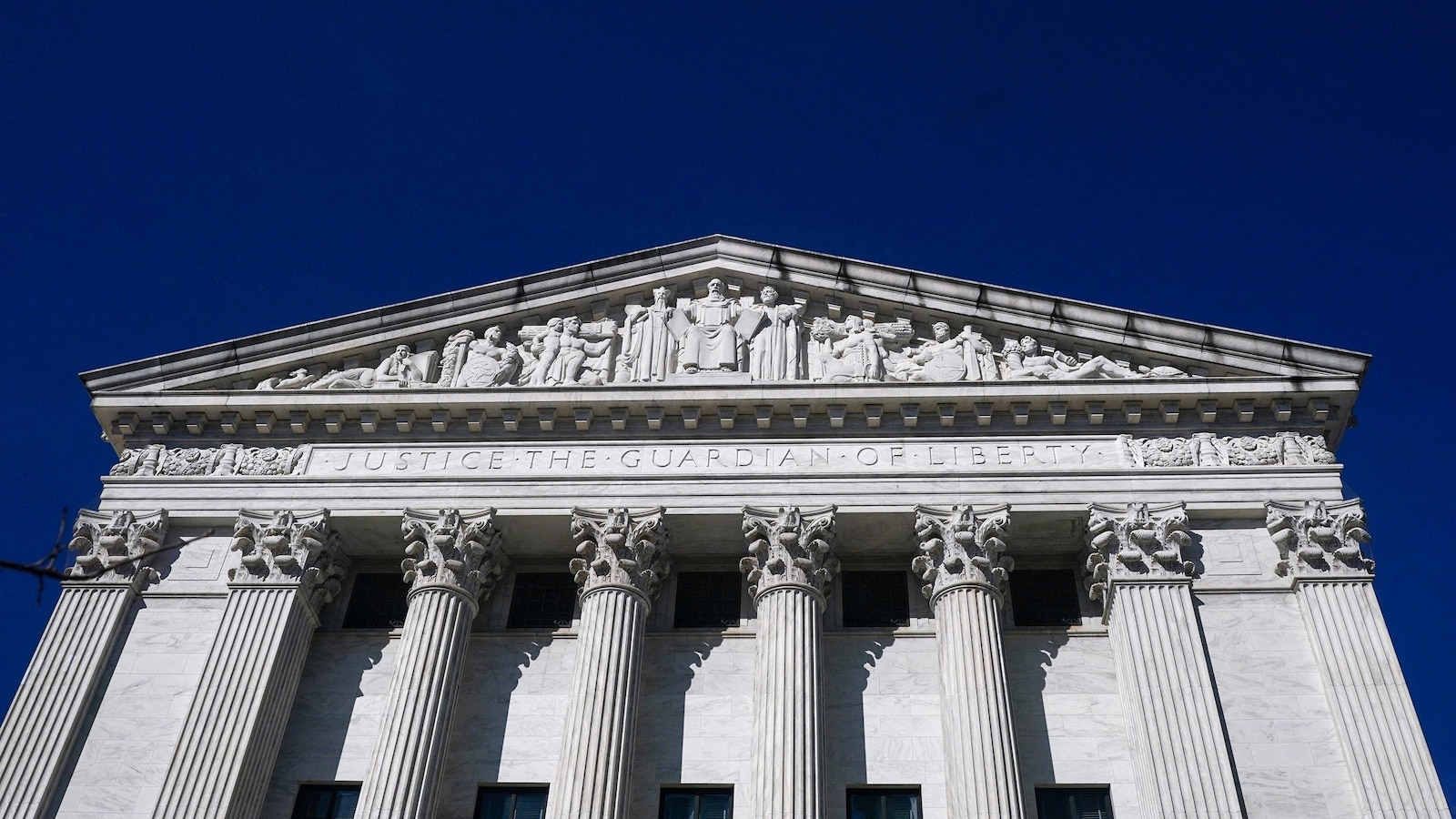
The Supreme Court's 6-3 ruling in Louisiana v. Callais struck down Louisiana's second majority-Black congressional district and held race-conscious redistricting under Section 2 of the Voting Rights Act unconstitutional. The decision materially weakens Section 2 enforcement, potentially affecting up to a quarter or more of the Congressional Black Caucus and roughly a tenth of the Congressional Hispanic Caucus through future map changes. Beyond Louisiana, the ruling could reshape redistricting nationwide and invite broader challenges to disparate-impact civil rights frameworks.
The market read-through is not about direct P&L for DIS, but about a structural increase in election-law uncertainty that raises the value of every company with exposure to state-level regulation, local franchise approvals, and public-sector advertising budgets. When district lines become more permissive for legislatures, the next-order effect is not just more partisan maps; it is a higher probability of policy whiplash in statehouses that oversee media licensing, school-board politics, content rules, and tax policy. That tends to widen the dispersion between businesses that rely on stable local regulatory compacts and those that can arbitrage political fragmentation.
For Disney specifically, the risk is asymmetric even if this ruling is not directly about the company: its Florida experience showed that governance fights can quickly migrate from courts into budgeting, zoning, and education-policy arenas that affect theme parks, sports, and local labor relations. A more partisan map environment increases the odds that future state executives and legislatures feel less constrained by swing-district backlash, which can prolong adversarial policy cycles. The stock is unlikely to react in a single-day vacuum, but the relevant horizon is 6-18 months as redistricting reshapes the 2026 House and state legislative battlefield.
The contrarian point is that the headline may overstate the immediate economic impact. Most corporate cash flows are not driven by minority-opportunity districts, and the first-order change is legal rather than operational. The real tradable implication is second-order: more volatile local governance should modestly benefit policy-defense spend, outside counsel, and firms with strong state-capital lobbying infrastructure, while penalizing names exposed to politically sensitive local permits or school-related controversies. If the ruling triggers broader equal-protection challenges to disparate-impact law, the tail risk expands beyond politics into labor, housing, and compliance regimes over a 12-24 month window.
AI-powered research, real-time alerts, and portfolio analytics for institutional investors.
Request DemoOverall Sentiment
moderately negative
Sentiment Score
-0.45
Ticker Sentiment
