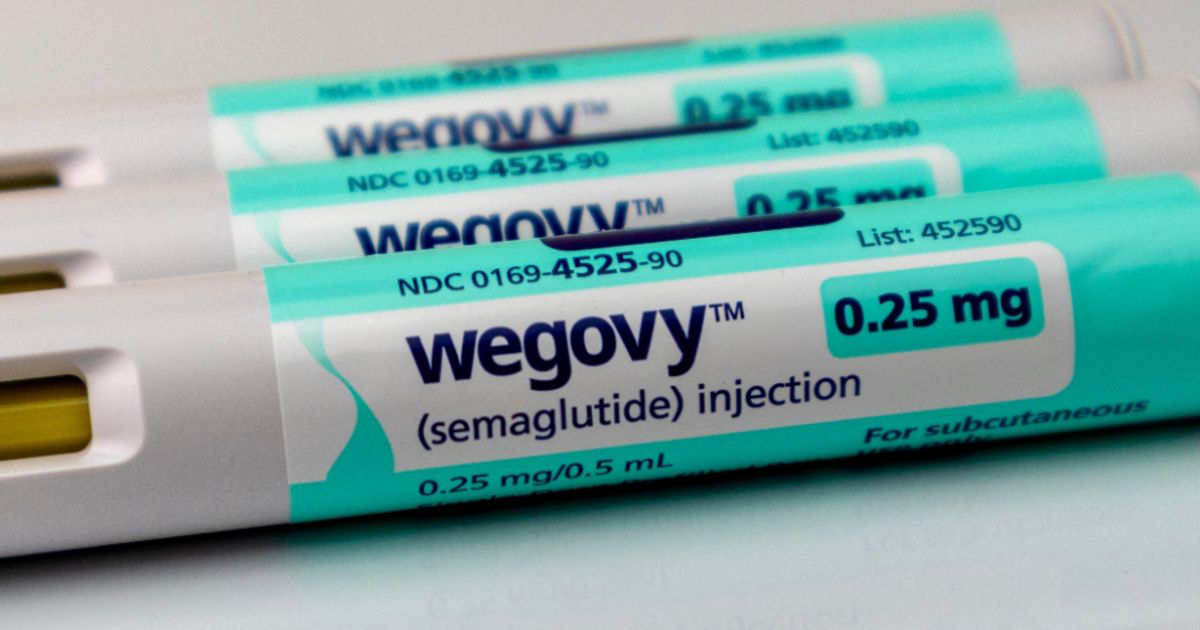
Novo Nordisk is planning to offer its weight-loss drug Wegovy in vial presentations, with some vial formats launching this year and others later, as a strategic response to competition from Eli Lilly’s Zepbound. Lilly’s pricing and dose expansion helped Zepbound overtake Wegovy in US prescriptions in 2025; Novo’s announcement accompanies a modest market reaction, with shares down about 0.9% to $48 on Thursday and roughly 5% lower year-to-date, highlighting pressure on market share and potential near-term revenue risks.
Market structure: Lilly (LLY) is a clear near-term beneficiary as vial presentations compress per-dose price and lower switching friction; PBMs, big retailers and patients gain from lower-cost vials. Novo (NVO) faces incremental share loss pressure—Zepbound already overtook Wegovy in US scripts in 2025—and could see 200–500bps gross-margin erosion in the US channel if price-led vial competition accelerates over 6–12 months. Cross-asset: expect modestly higher NVO equity implied volatility and downside skew (short-term), limited sovereign/bond impact, and potential slight DKK/USD FX sensitivity if Danish revenues shift materially (>3–5% top-line impact).
Risk assessment: Tail risks include an adverse safety signal or emergent CMS/payer policy that restricts reimbursement (low-probability, high-impact), or a manufacturing bottleneck for vial fills that flips supply constraints into scarcity and price support. Immediate (days) risk is elevated IV and headline-driven moves; short-term (weeks–months) is market-share jockeying and payer negotiations; long-term (quarters–years) outcome depends on net volume expansion versus price erosion and patent/litigation outcomes. Hidden dependencies: PBM contracting cycles, vial fill capacity, and cross-label substitution dynamics; catalysts: Q1 US prescription data (30–90 days), CMS formulary updates (60–120 days), and LLY price/pack changes.
Trade implications: Favor relative-long LLY vs short NVO exposure sized conservatively (1–2% notional each) over a 3–6 month horizon to capture share momentum; implement via equity or option spreads to limit tail gamma. For NVO use 3-month put spreads to cap premium (e.g., buy 1×3-month 45/40 put spread if NVO ~48) and add on break below $46; for LLY use 3–6 month 8–12% OTM call spreads sized 1% portfolio with 20% profit target. Rotate out of broad healthcare ETFs (e.g., XLV) by 1–2% into large-cap pharma winners with durable pricing power if vial competition persists.
Contrarian angles: The market may be underestimating vials' potential to expand total addressable market by lowering price per dose and increasing adherence—volume expansion could offset unit-margin loss if uptake increases >10–15% annually. Reaction may be partially overdone: if NVO stabilizes US share within 6 months or posts mixed-but-growing global uptake, downside is limited; historical parallels (drug-presentation-driven share swings) show incumbents can reclaim ~3–6ppt share within 12–18 months with coordinated pricing and supply moves. Watch for unintended consequences: aggressive price cuts invite stricter payer controls, but a balanced vial rollout could protect long-term franchise value if executed without widescale discounting.
AI-powered research, real-time alerts, and portfolio analytics for institutional investors.
Request DemoOverall Sentiment
mildly negative
Sentiment Score
-0.25
Ticker Sentiment
