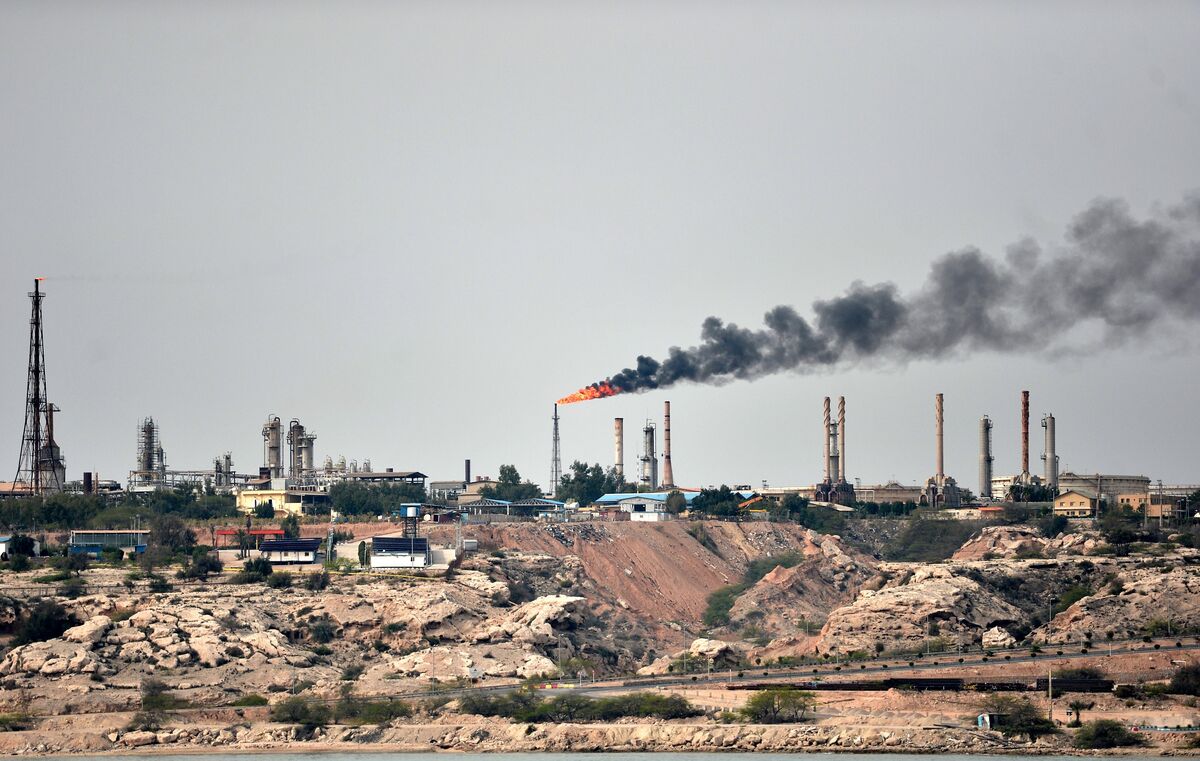
Trump briefly revived, then abandoned, a threat to capture Kharg Island, which handles the vast majority of Iran’s oil exports and is a critical energy infrastructure node. The move underscores elevated geopolitical risk around Iran’s oil revenue and export capacity, with potential spillovers for crude markets and regional security. The reversal highlights a high-wire policy environment that could still produce sharp market moves if rhetoric turns into action.
The market’s real signal here is not the threatened asset itself, but the regime uncertainty around how far the U.S. is willing to escalate versus back away. That creates a classic volatility spike in crude, tanker rates, and regional defense names, but the bigger second-order effect is on expected policy continuity: if Iran believes infrastructure is now a plausible target, it may preemptively harden export routes, increase asymmetric harassment in the Gulf, or compress inventories through faster ship-loading cycles. Those behaviors can tighten physical supply even without an actual strike, which means energy can remain bid on headlines while refined-product differentials and shipping insurance costs do the heavier lifting.
The most asymmetric losers are not just Iranian producers, but any marginal Asia-bound importer exposed to Middle East disruption risk, because risk premia transmit through freight, insurance, and inventory financing before spot barrels move materially. U.S. integrateds and shale names benefit tactically from a higher geopolitical floor, but the cleaner trade is in infrastructure/security beneficiaries and in option convexity on crude rather than outright beta, since the policy reversal shows how quickly gains can fade if diplomacy reasserts itself. Conversely, airlines, chemical producers, and transport-heavy cyclicals face a two-layer hit: higher fuel costs plus wider input volatility, which compresses margins faster than consensus models typically assume over a 1-3 month horizon.
The key tail risk is a misread by either side: a rhetorical threat can still trigger defensive Iranian actions, while a real attack could produce a sharp but potentially brief price spike if the market decides retaliation will be contained. That argues for focusing on event-window optionality over directional cash exposure. The contrarian view is that the reversal is mildly bearish for crude’s immediate upside because it signals a high willingness to de-escalate, but that same pattern raises the probability of repeated short-notice disruptions, which is supportive for vol and skew even if spot doesn’t trend hard upward.
AI-powered research, real-time alerts, and portfolio analytics for institutional investors.
Request DemoOverall Sentiment
moderately negative
Sentiment Score
-0.35
