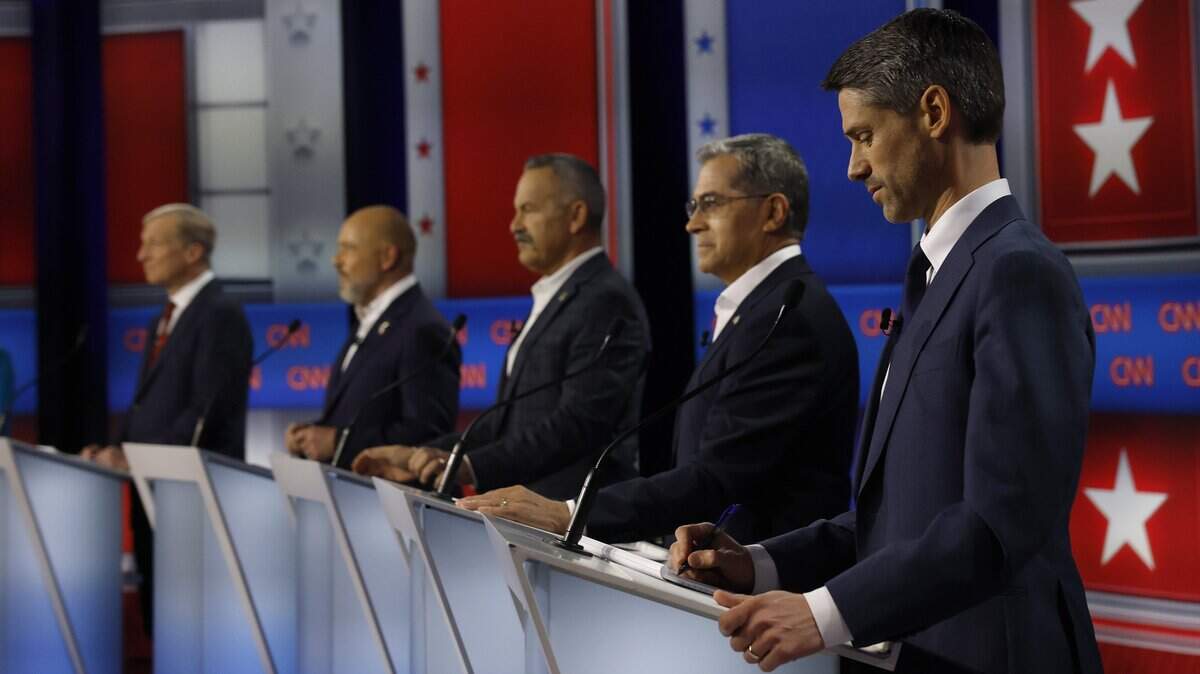
California’s governor race intensified at a 120-minute CNN debate, with Xavier Becerra facing attacks over leadership, a Chevron donation of $39,200, single-payer healthcare, and a corruption scandal involving a former aide. Rivals Matt Mahan, Katie Porter, Antonio Villaraigosa, Tom Steyer, Steve Hilton and Chad Bianco all used the forum to sharpen contrasts ahead of the June 2 primary. The article is primarily political and carries minimal direct market impact.
The market implication is not the debate itself, but the shift from a Becerra coronation narrative to a higher-volatility primary that may force all candidates to spend more time validating execution credibility than attacking Washington. That matters for policy priors: if the field keeps converging on affordability, healthcare realism, and anti-incumbent messaging, the eventual nominee likely has to moderate on expensive left-tail promises, which reduces the odds of abrupt sector-specific policy shocks in the first 6-12 months of a new administration.
CVX is the only directly exposed ticker, and the Chevron contribution line is more important as a signal of future regulatory posture than as a donation headline. If Becerra sustains momentum, the more likely second-order effect is not an immediate punitive action against one company, but a broader California enforcement environment that is stricter on permitting, emissions, and local litigation risk — a slow-burn negative for West Coast upstream, refining, and infrastructure projects over 12-24 months. However, the debate also highlighted how hard it is to implement costly state-level healthcare commitments, which should temper expectations for sweeping fiscal expansion and reduce the probability of near-term tax shocks.
The contrarian read is that the market may be overestimating how much this race can move fundamentals before the June primary. California gubernatorial contests often matter more for process than pricing power: even a governor with aggressive rhetoric still faces legislative and budget constraints. That means the better trade is on volatility around headline risk rather than a directional macro bet, especially since the most credible candidate may end up being the least policy-extreme one by the general election.
The real risk is a fast-moving enforcement narrative if Becerra wins and immediately seeks to prove independence from corporate donors by targeting high-profile energy or healthcare issues. The time horizon for that risk is months, not days, because it would likely show up through appointments, AG-style investigations, and budget language before it reaches direct earnings impact.
AI-powered research, real-time alerts, and portfolio analytics for institutional investors.
Request DemoOverall Sentiment
neutral
Sentiment Score
-0.05
Ticker Sentiment
