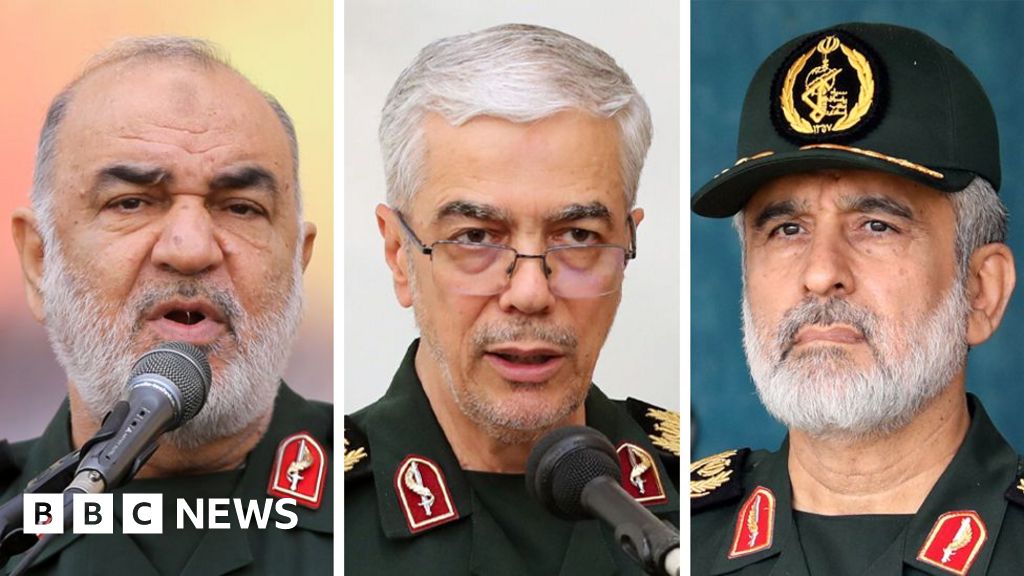
Israel conducted strikes across Iran, dubbed "Operation Rising Lion," targeting nuclear facilities, military sites, and residences, resulting in the deaths of several high-ranking Iranian military commanders and nuclear scientists. Key figures killed include Mohammad Bagheri, chief of staff of Iran's armed forces, Hossein Salami, commander-in-chief of the IRGC, Gholamali Rashid, head of the IRGC's Khatam-al Anbiya Central Headquarters, Amir Ali Hajizadeh, commander of the IRGC's Aerospace Force, and nuclear scientist Fereydoon Abbasi, alongside other nuclear scientists. These attacks have led to the appointment of replacements for key positions, potentially altering the trajectory of Iran's military and nuclear strategies and escalating regional tensions.
Israel's "Operation Rising Lion" has resulted in the targeted elimination of several high-ranking Iranian military commanders and key nuclear scientists, representing a significant escalation with substantial implications for Iran's military and nuclear capabilities. Key figures killed include Mohammad Bagheri, Chief of Staff of Iran's armed forces; Hossein Salami, Commander-in-Chief of the IRGC; Gholamali Rashid, head of the IRGC's Khatam-al Anbiya Central Headquarters; and Amir Ali Hajizadeh, Commander of the IRGC's Aerospace Force. The operation also neutralized nuclear scientist Fereydoon Abbasi, a former head of Iran's Atomic Energy Organisation, and at least four other nuclear scientists, including heads of university nuclear engineering departments. While Iran has swiftly appointed replacements, such as Abdolrahim Mousavi as the new Chief of Staff (notably an army general, not from the IRGC ranks) and Mohammad Pakpour as the new IRGC commander, the loss of these experienced leaders—particularly Hajizadeh, who was central to the missile program, and the cohort of nuclear experts—is likely to create operational disruptions and potential setbacks for Iran's strategic programs. The reported killing of civilians, including children, adds a humanitarian dimension and potential for broader international condemnation. The associated market impact score of 0.8 and strongly negative sentiment of -0.7 underscore the event's perceived severity and its potential to destabilize regional security and affect market sentiment.
AI-powered research, real-time alerts, and portfolio analytics for institutional investors.
Request DemoOverall Sentiment
strongly negative
Sentiment Score
-0.70
