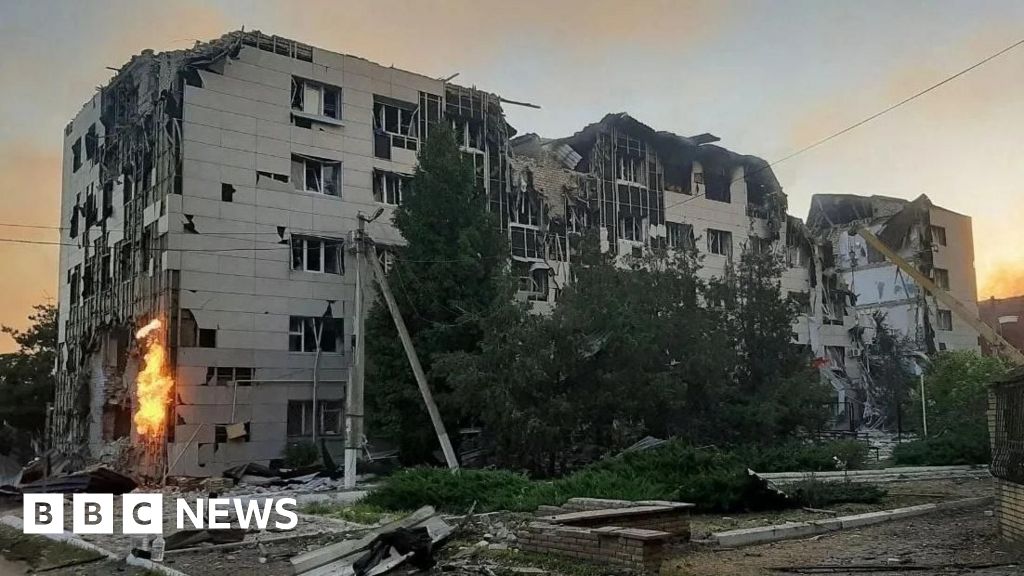
A reported drone strike on a college dormitory in Russian-occupied Starobilsk killed 21 people and wounded 42, triggering Russian accusations, a UN Security Council emergency session, and vows of retaliation. Moscow calls the incident a terrorist strike and says there was no military target nearby, while Ukraine says it struck a Russian military unit in the area. The episode raises escalation risk in the Russia-Ukraine war and could intensify near-term geopolitical volatility.
This is less a single-event market shock than a process accelerator: it raises the probability of a retaliation cycle that broadens beyond the immediate theater. The first-order market effect is on European risk premia rather than global growth — higher tail risk for energy infrastructure, cross-border logistics, and any assets with direct exposure to Black Sea/near-frontline disruption. The second-order effect is on policy: every escalation makes Western capitals less flexible on sanctions relief, air-defense transfers, and munitions replenishment, which supports a persistent defense-spending bid over the next 6-18 months.
The more interesting read-through is that Russia’s response space is constrained, so the most likely “retaliation” is not a decisive battlefield shift but selective strikes that keep headline volatility elevated. That is bullish for defense primes, electronic warfare, missile defense, and counter-drone systems, but also for firms supplying hardened communications and critical infrastructure protection. The downside tail is an accidental expansion of theater into assets perceived as connected to Europe, which would rapidly reprice utility, industrial, and transport exposures in the region.
Consensus will likely treat this as another noisy escalation and fade it, but that may miss the cumulative effect on procurement urgency. After repeated incidents, procurement decisions move from discretionary to emergency, compressing the sales cycle for air defense and munitions replenishment from quarters to weeks. The contrarian risk is that headline intensity outruns actual operational escalation; if retaliation stays symbolic, the move in defense equities could be overbought after an initial gap, especially where valuations already discount multi-year rearmament.
AI-powered research, real-time alerts, and portfolio analytics for institutional investors.
Request DemoOverall Sentiment
strongly negative
Sentiment Score
-0.80
