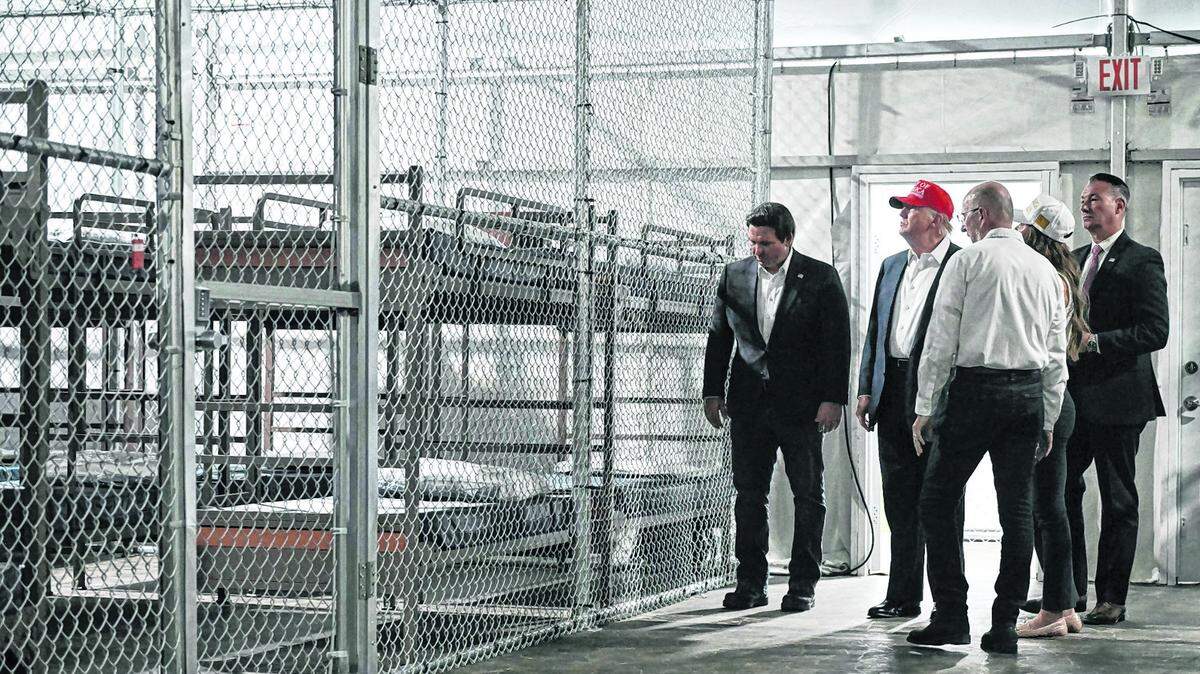
Florida’s state-run immigrant detention center “Alligator Alcatraz” is winding down operations less than a year after launch, despite claims it supported roughly 22,000 deportations. The facility reportedly cost close to $1 million per day, and Florida has sought about $608 million in federal reimbursement that has not yet been approved, leaving taxpayers exposed to hundreds of millions in potential costs. The closure creates political risk for Gov. Ron DeSantis while underscoring criticism that the project was more political theater than durable policy.
The immediate market read is not about immigration policy; it is about fiscal leakage and signaling risk inside Florida’s governance premium. A high-profile state project that appears to have converted political theater into a large, unplanned budget item raises the probability of tighter scrutiny on future state-led “pilot” programs, especially anything requiring emergency procurement, contractor pass-throughs, or contingent federal reimbursements. That matters most for private vendors tied to public-sector detention, corrections, security, and construction workflows: the headline risk is not just contract cancellation, but slower award velocity and more aggressive payment audits over the next 1-3 quarters.
The second-order political effect is more interesting than the shutdown itself. If MAGA-aligned figures conclude the project was a wasted showpiece, DeSantis’ ability to monetize spectacle into future influence weakens just as he needs a post-governorship lane; if they conclude it was effective but fiscally sloppy, the lesson becomes that conservative voters reward posture but punish visible overruns. That creates a narrow path for similar state-level enforcement initiatives: governments may still announce them, but they will likely be structured with shorter durations, more federal backstops, and less capex intensity to avoid being stranded with the bill. In other words, the next version of this trade is likely smaller, faster, and financed differently.
The contrarian point is that the political damage may be overstated because the base often values action over efficiency. If the operation is reframed as a temporary capacity bridge rather than a permanent facility, the broader enforcement narrative survives, and the real loser is the taxpayer rather than the politician. The bigger medium-term risk is precedent: once a state takes on quasi-federal enforcement and then gets stuck with reimbursement uncertainty, every future governor will demand contractual protections, which could slow deployment of similar projects and shift bargaining power back toward vendors with balance-sheet strength.
For markets, the cleanest lens is governance and procurement, not ideology. A prolonged reimbursement dispute would pressure Florida-linked contractor cash flows and increase headline volatility around any company or fund exposed to detention, corrections, or state infrastructure buildouts. The trade is about pricing a higher policy risk premium into small-cap service providers and lower confidence in public-private “rapid deployment” models generally.
AI-powered research, real-time alerts, and portfolio analytics for institutional investors.
Request DemoOverall Sentiment
mildly negative
Sentiment Score
-0.20
