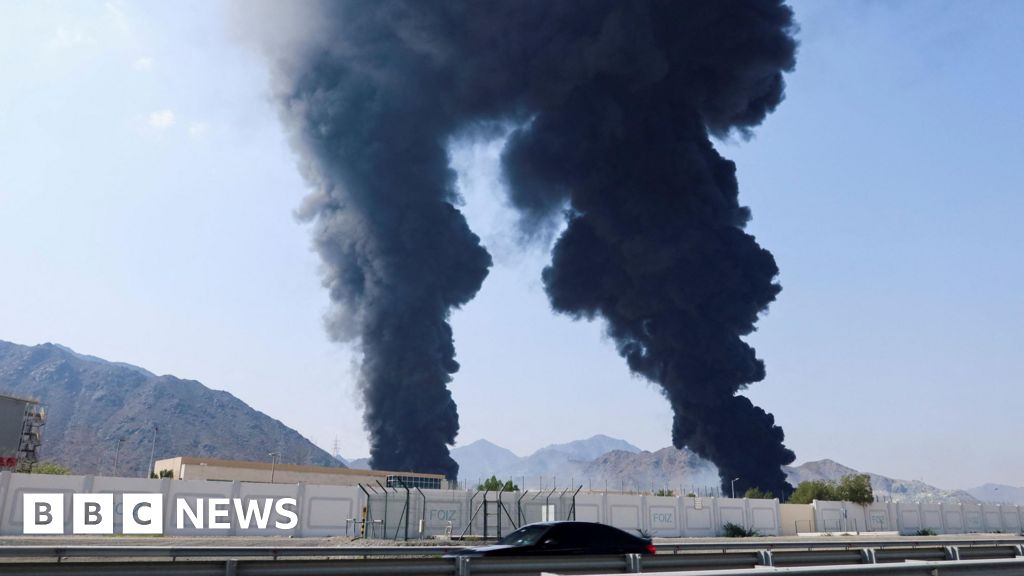
UAE air defences intercepted six ballistic missiles and 21 drones after attacks that struck Fujairah (a major oil storage and loading hub) and Dubai International Airport; Iran has launched over 1,900 missiles/drones at the UAE since the wider conflict began. Flights were temporarily suspended and oil loading at Fujairah was halted for damage assessments after a storage tanker and oil facilities were hit; there was at least one fatality from a rocket attack in Abu Dhabi. Expect elevated upside pressure on regional oil risk premia, higher shipping/insurance costs for Gulf routes, and continued volatility for aviation and energy-related assets while escalation risk persists.
Attacks on Fujairah and Dubai create a durable wedge between physical crude flows into Asia and the global paper market; expect short-term dislocation in spot Dubai/Platts-Dubai differentials and a 5-15% bump in regional tanker voyage costs as owners reroute, wait for inspections, or demand risk premia. That freight and storage tightness will compress onshore working inventories in Singapore and push up prompt Asian refinery feedstock costs, putting upward pressure on light/heavy crude spreads that Asian refiners arbitrage.
Second-order winners are infrastructure owners with flexible storage and short-haul product tonnage — public storage operators that can earn time-charter-like rents and product/product-tanker owners that can re-deploy to bunkering and intra-Asia lifts; losers are airport/hospitality franchises concentrated in Dubai and regional logistics providers facing higher insurance and P&I costs. Insurance and reinsurance pricing is likely to move first and stick longest: a 20-40% repricing in kidnap/war exclusion premiums is plausible within 1-3 months, which raises operating costs for all Gulf-linked energy logistics.
Tail risks are asymmetric: a sustained campaign that degrades Fujairah’s ability to load could shave 0.5–1.0 mb/d effective Asian supply for weeks and prompt an oil risk premium that lasts 1–3 months; a diplomatic de-escalation or decisive defensive suppression could erase >70% of the premium in 30–90 days. Watch three catalysts closely — visible damage assessments at Fujairah, P&I/war-risk premium notices from insurers, and any coalition naval/air interdiction — as each moves the probability mass between 0–100% disruption.
Consensus is pricing a lasting supply shock; we view much of the price move as front-loaded and tradeable. Favor convex, time-limited exposures to shipping and storage tightness while buying insurance against a deeper geopolitical escalation with short-dated energy call protection rather than large outright crude longs.
AI-powered research, real-time alerts, and portfolio analytics for institutional investors.
Request DemoOverall Sentiment
strongly negative
Sentiment Score
-0.65
