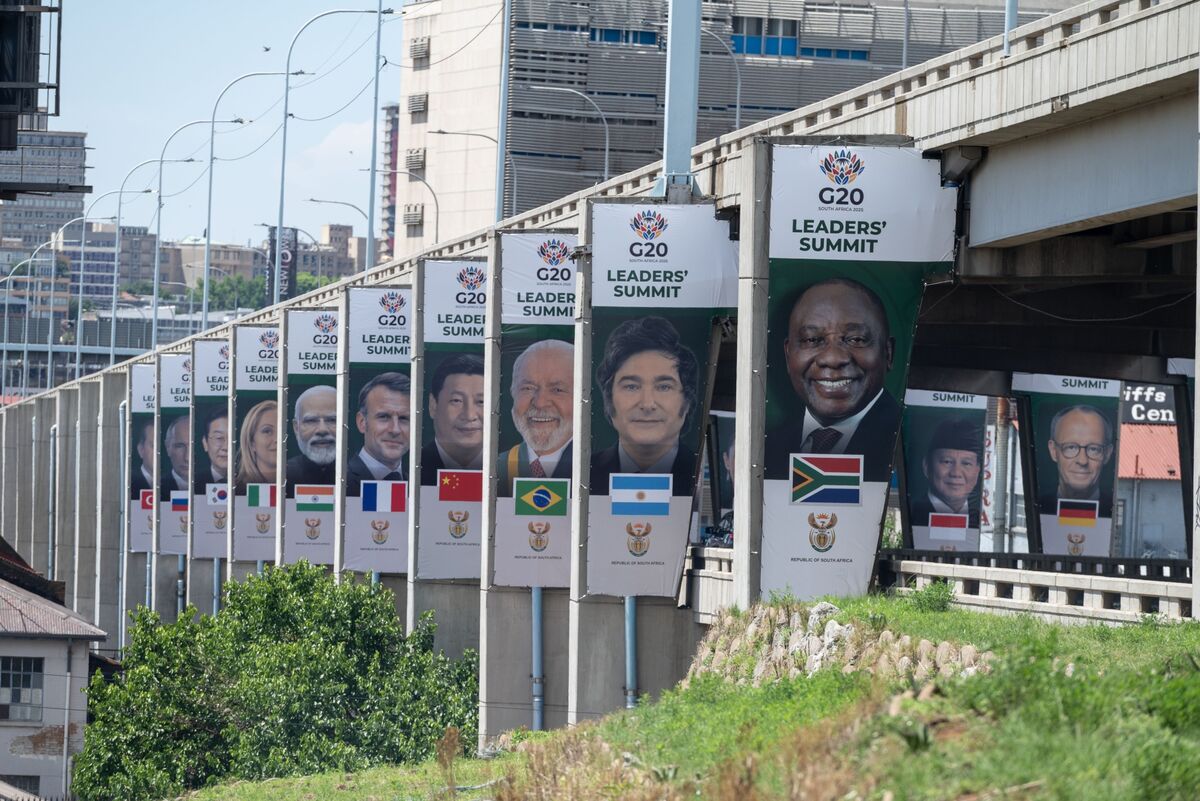
South African President Cyril Ramaphosa publicly pushed back against former U.S. President Donald Trump in a bid to preserve the coherence of the G-20 summit, with an explicit focus on salvaging outcomes relevant to Africa. The episode highlights diplomatic friction but ultimately seeks to maintain multilateral engagement and reduce the risk of geopolitical fragmentation that could unsettle trade relations and investor sentiment toward African markets.
Market structure: Ramaphosa’s public defiance signals stronger pan‑African multilateralism and a tilt away from unilateral US trade pressure, which favors commodity exporters (PGMs, gold, base metals) and large domestic financials that benefit from renewed capital‑flow narratives. Expect South African equity beta to EM to rise; a cautious quantitative target is a 5–12% relative outperformance of SA miners vs global miners over 6–12 months if capital inflows resume and ZAR stabilizes by >3–5%. Import/export service winners include logistics and ports exposure; import‑dependent retailers and US‑centric exporters face margin pressure if preferential US ties weaken.
Risk assessment: Tail risks include a sharp USD/ZAR move (>8% in 1–4 weeks) from geopolitics, sudden IMF/credit‑rating downgrades, or a contested domestic election leading to capital flight; probability low‑medium but impact high. Near term (days–weeks) expect FX and EM vol spikes; medium term (3–12 months) political and trade negotiations will determine credit spreads (South African 10y local yields could move ±75–150bps). Hidden dependencies: China commodity demand and BRICS financing; catalysts include G20 communiqués, IMF announcements, and Moody’s/Fitch reviews.
Trade implications: Tactical trades should overweight SA resource names and FX carry while hedging macro risk: target 2–4% positions in EZA and 1–2% in PGMs like NYSE:SBSW or NGLOY, with stop‑losses at −8% and 6–12 month upside targets of 15–25% if ZAR strengthens 5–10%. Use 3‑month USD/ZAR put options to buy ZAR upside or 6–9 month call spreads on SBSW to limit premium spend if realized vol jumps >30%. Rotate out of US‑exposed African consumer names into materials and banks.
Contrarian angles: The market may underprice the speed of institutional capital returning if multilateral trade deals are signed — that would compress South African credit spreads and push equities higher; conversely consensus could be overconfident in political stability, underestimating a 10–20% ZAR drawdown risk in a crisis. Historical parallels: post‑BRICS summit re‑rating of EM miners (2010–2012) but beware the opposite outcome if US policy pivots back quickly. Unintended consequence: stronger BRICS ties could reroute Chinese trade away from Western suppliers, hurting European exporters to Africa.
AI-powered research, real-time alerts, and portfolio analytics for institutional investors.
Request DemoOverall Sentiment
neutral
Sentiment Score
0.00
