


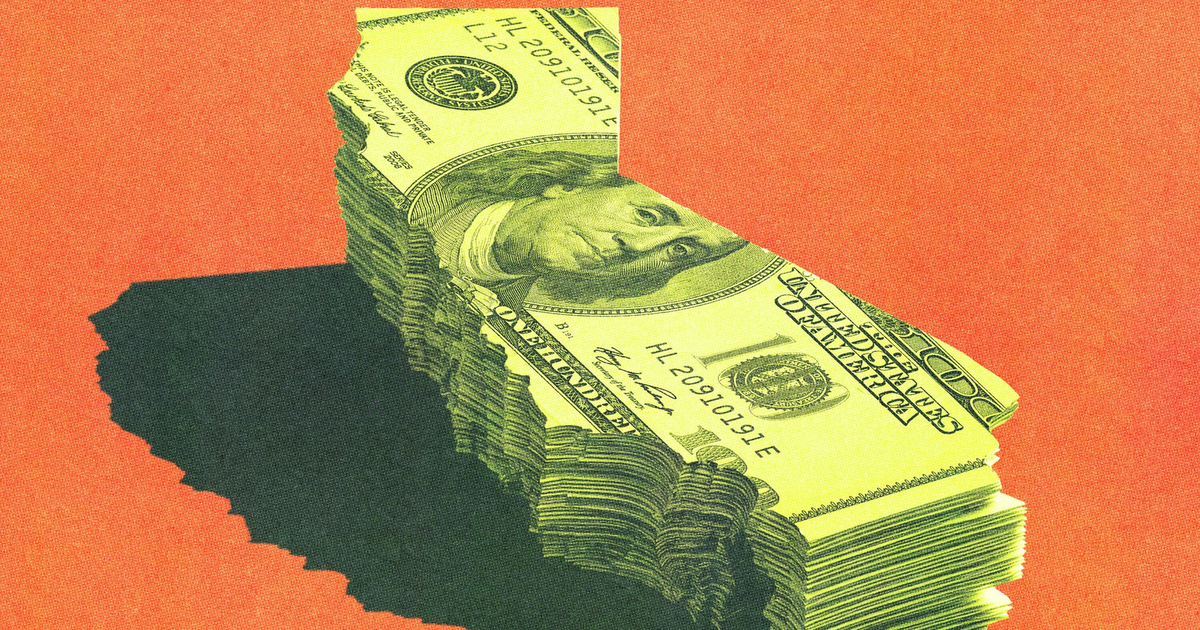
California’s 2026 governor race and related ballot measures have attracted roughly $400 million in total spending, including more than $200 million from billionaire Tom Steyer in a high-risk primary gamble. Opposition to the proposed Billionaire Tax Act has already drawn more than $100 million, while San Francisco tax propositions and local races are being shaped by major tech and labor donors. The article frames this as a major political-money story with limited direct market impact, though it highlights growing scrutiny of billionaire influence and tax policy.
The clean takeaway is not “political ad spend is high,” but that a small set of affluent stakeholders is trying to convert local elections into a regulatory moat. That matters for GOOGL, DASH, and YELP because the marginal benefit is less about one ballot outcome than about preserving a business-friendly policy stack in California and San Francisco that can be replicated elsewhere if it works. The second-order effect is that these companies are buying optionality on future tax and labor-rule containment while also signaling to employees, founders, and investors that they can shape the policy environment rather than simply absorb it.
The more interesting risk is that this kind of visible intervention can backfire by hardening voter suspicion of tech capital, especially in a cycle where wealth is already politically salient. That makes the expected value of spending asymmetric: above a certain threshold, additional dollars may have diminishing persuasion and increasing reputational cost. For YELP specifically, a negative local tax/regulatory outcome would be a cleaner relative winner/loser signal because the company is smaller, more domestically exposed, and less able to diversify away policy drag than GOOGL or DASH.
From a market perspective, the near-term catalyst window is the next 1-3 months, but the real payoff period is 6-24 months if these donor networks help keep hostile tax regimes off the ballot or soften implementation. The contrarian view is that consensus is overestimating direct vote-buying power and underestimating the signaling benefit to incumbents: the same spending that angers voters can reassure policymakers that these firms will remain well-capitalized and politically active. In other words, the trade is less about winning today’s race and more about preventing an adverse policy regime from compounding into valuation pressure later.
The cleanest risk is a media-driven backlash cycle: if the electorate interprets the spending as capture, it could strengthen progressive organizing, worsen employee morale, and increase the odds of future tax/proxy battles. That tail risk is not immediate, but it would show up first in SF-specific policy outcomes and then in broader California legislative rhetoric over the next 6-18 months.
AI-powered research, real-time alerts, and portfolio analytics for institutional investors.
Request TrialOverall Sentiment
neutral
Sentiment Score
-0.05
Ticker Sentiment
