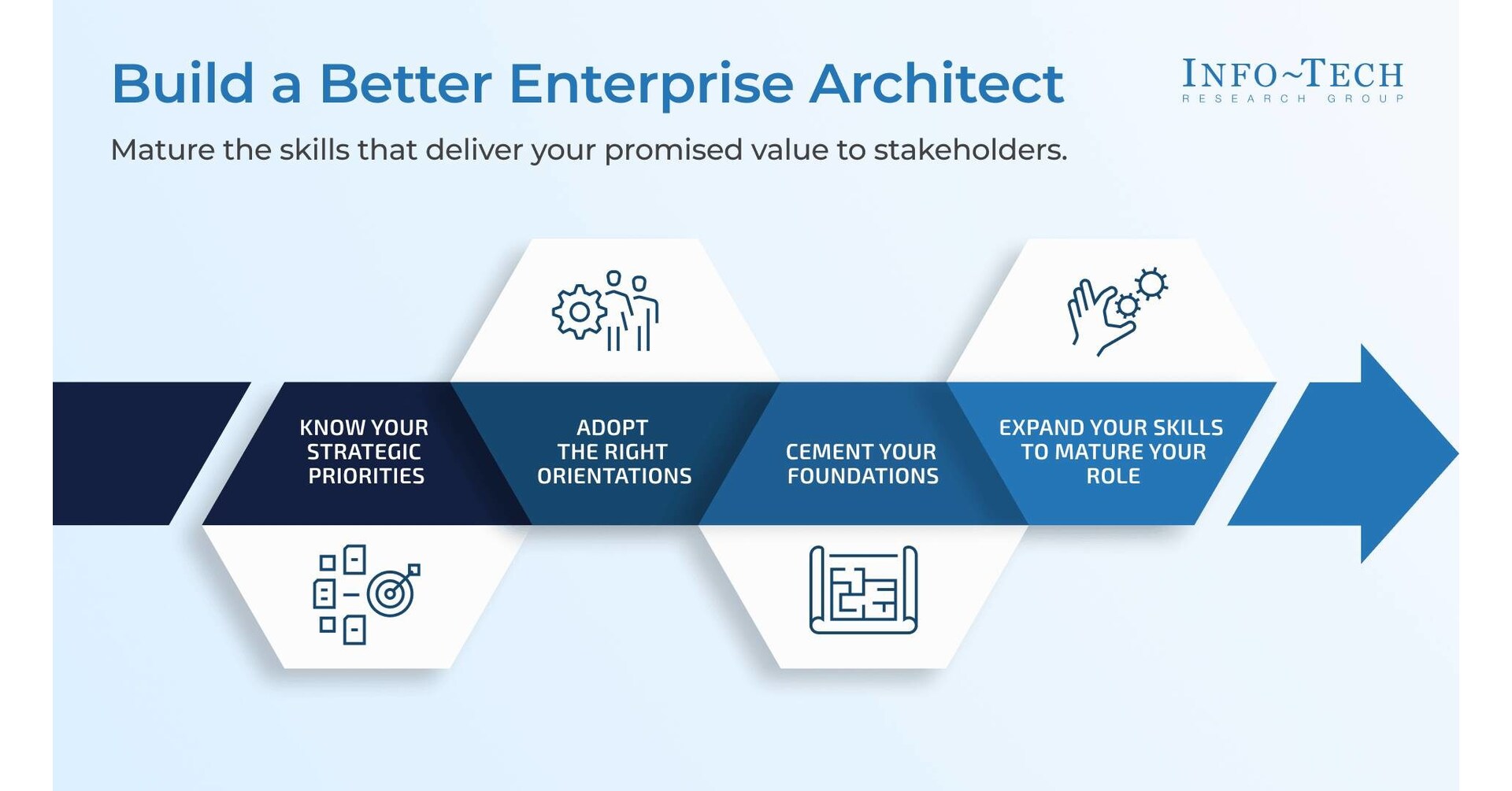
Info-Tech Research Group says CIOs need a clearer, outcome-anchored enterprise architect role to improve credibility, stakeholder alignment, and measurable ROI, warning that generic expectations can erode momentum. The firm’s “Build a Better Enterprise Architect” blueprint proposes a 3-phase framework: define a context-specific role and orientation (Phase 1), assess priority EA skill gaps (Phase 2), and set SMART objectives with metrics and milestones (Phase 3). The article provides tools like an EA Skills Assessment and an Enterprise Architect Role Profile template, but it does not cite any company financials or quantify market impact.
This reads more like procurement discipline than a demand inflection. The marginal beneficiary is not the advisory firm itself but software and platform vendors that can translate governance into workflow, reporting, and auditability; that favors embedded enterprise tooling over labor-heavy consultancies. The second-order loser is generic transformation capacity: when CIOs insist on explicit outcomes and role scope, billable-hours models get squeezed first, and the burden of proof shifts from “strategy support” to measurable throughput or cost takeout.
Near term, there is no obvious P&L catalyst: EA budgets are small, and role-definition initiatives usually happen inside reorganizations, not as standalone spend sprees. Over 1-3 months, the only tradeable signal would be commentary from software vendors or IT services firms on increased architecture/governance projects; over 6-18 months, tighter EA operating models can modestly improve software attach rates while compressing consulting utilization. The contrarian read is that this is often a defensive move in response to budget scrutiny, so headline enthusiasm around “strategic architecture” can mask a headcount and overhead cleanup rather than incremental investment.
What would falsify the thesis is evidence that CIOs are expanding EA headcount or tool budgets without offsetting services cuts; absent that, this is a governance trend, not a growth catalyst. For FRMUF/TCHC, I see no direct earnings sensitivity today, so the correct posture is watchlist-only unless there is evidence that either name monetizes EA tooling, training, or advisory subscriptions more effectively than peers.
AI-powered research, real-time alerts, and portfolio analytics for institutional investors.
Request DemoOverall Sentiment
neutral
Sentiment Score
0.02
Ticker Sentiment
