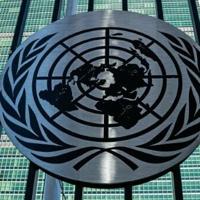
Four contenders are competing to replace Antonio Guterres as UN secretary-general, with the selection shaped by Security Council veto power and geopolitical positioning. The article highlights the UN's budget crisis, war-related instability, and candidate-specific diplomatic controversies, including U.S. pressure for alignment with American interests. Market impact is limited, but the leadership contest reflects broader geopolitical and governance risk.
This is less about a UN succession race than a pricing signal on how much geopolitical risk premium will be embedded into multilateral policy over the next 12-18 months. The real market variable is not the personality of the secretary-general but whether the office becomes a more active convening mechanism for sanctions coordination, ceasefire monitoring, and emergency financing — all of which can modestly reduce tail risk for EM sovereigns and commodities if credibility improves, or do nothing if the veto structure remains dominant.
The most investable second-order effect is on Kyiv-linked assets and broader Eastern Europe risk. A secretary-general with stronger legitimacy on ceasefire architecture could slightly improve odds of incremental humanitarian corridors and monitoring capacity, which matters more for shipping insurance, grain flows, and local FX than for the war itself; the market impact would likely show up first in Ukrainian hard-currency bonds and select regional agribusiness within weeks of any perceived mandate shift. Conversely, a polarized appointment could reinforce the current drift toward bilateralism, raising the value of bilateral defense and sanctions-enforcement channels versus UN-dependent diplomacy.
The budget crisis is the underappreciated catalyst. If Washington’s arrears posture hardens, the UN may be forced into a prolonged service-level downgrade: hiring freezes, delayed procurement, and lower mission tempo. That is bearish for contractors and logistics tied to UN programs, but mildly bullish for private humanitarian delivery, defense-adjacent peacekeeping tech, and non-UN development finance institutions that can capture displaced activity over 6-24 months.
Consensus is likely overestimating the probability that the next leader meaningfully changes outcomes on wars, while underestimating the operational impact of who can unlock donor confidence. The better trade is to position for headline volatility around the Security Council veto process, not the public Q&A, and to fade any immediate market reaction once it becomes clear that the appointment is constrained by great-power bargaining rather than personal diplomacy.
AI-powered research, real-time alerts, and portfolio analytics for institutional investors.
Request DemoOverall Sentiment
neutral
Sentiment Score
-0.10
Ticker Sentiment
