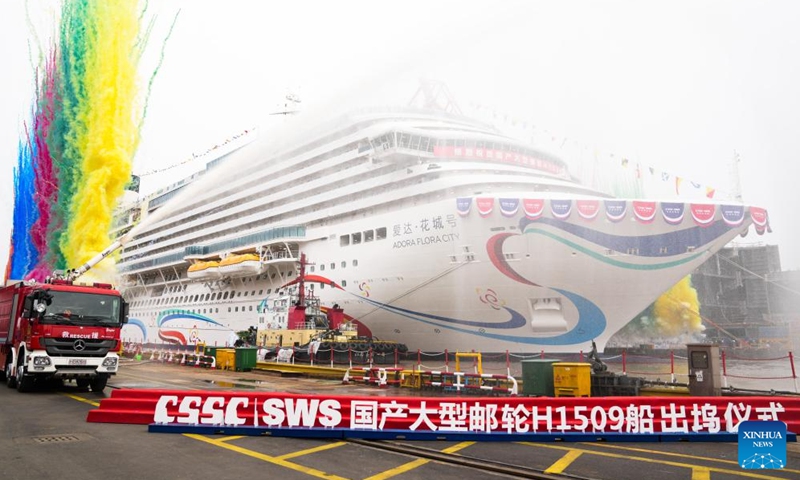
Adora Flora City, China's second domestically built large cruise ship, was undocked in Shanghai on March 20, 2026 and has entered the wharf commissioning stage. Adora Cruises plans to accelerate interior installations and systems commissioning with delivery scheduled by end-2026; the vessel will launch international routes from the Nansha International Cruise Home Port in Guangzhou.
Domestic large-cruise construction in China is a structural accelerator for local marine-capex demand rather than a one-off vanity project. Expect a multi-year cascade: higher content spends on engines, power and automation (30–50% of incremental shipyard revenue), larger port/terminal investments to handle international itineraries, and a recurring aftermarket stream (refit, spares, crew training) that compounds annually.
Second-order winners are equipment and systems vendors that supply electrification, automation and hotel services (power conversion, HVAC, wastewater treatment) where OEM margins are high and local content can be captured; steel/steel-processing benefits are smaller and more commoditized. Competitive losers are foreign yards that rely on mid-market Asian refit and newbuild contracts — China’s domestic capability can take 20–40% share of regional newbuild/refit volumes within 3 years, pressuring export yards’ utilization and pricing.
Key risks: a soft Chinese outbound travel recovery, safety/regulatory setbacks in early domestic deployments, or export controls on high-end marine components could slow adoption. Catalysts to watch over the next 3–12 months are commissioning/trial results, port slot announcements for international routes, and first large aftermarket contracts; a negative safety incident or supply-chain tech embargo would compress upside materially and could reverse orders within 6–18 months.
AI-powered research, real-time alerts, and portfolio analytics for institutional investors.
Overall Sentiment
mildly positive
Sentiment Score
0.25
